Mujaddid IOS Centre for Arts and Literature and Delhi Art Gallery Jointly Organise Programme on ‘The City as a Museum: Delhi Edition-2’
Mujaddid IOS Centre for Arts and Literature and Delhi Art Gallery Jointly Organise Programme on ‘The City as a Museum: Delhi Edition-2’
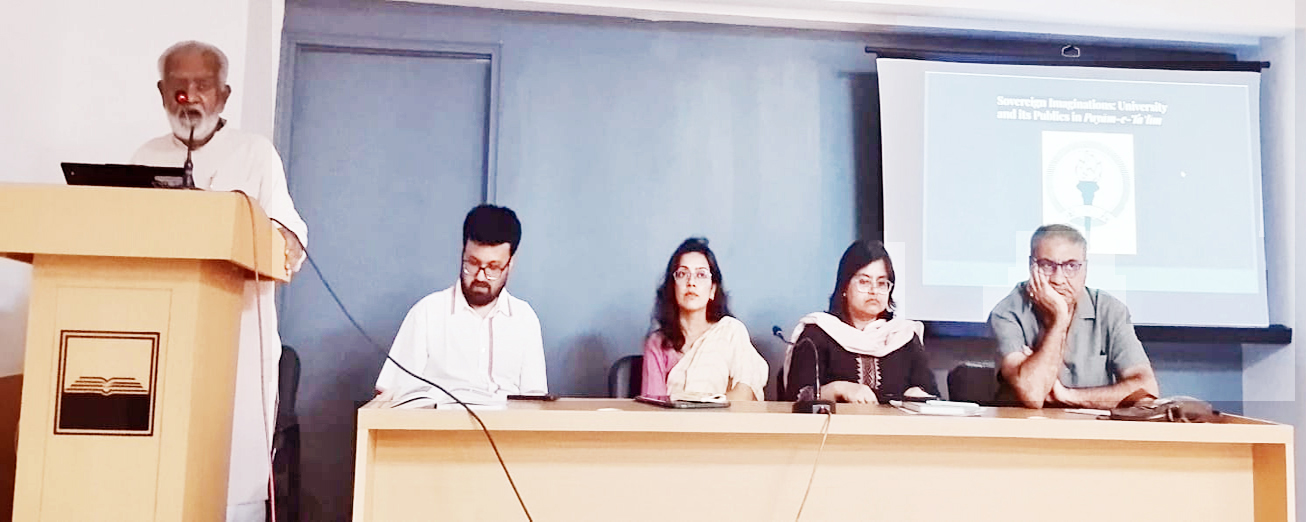
New Delhi: The Mujaddid IOS Centre for Arts and Literature, in association with the Delhi Art Gallery (DAG), organised a special programme titled ‘The City as a Museum: Delhi Edition-2’ at the Institute’s Auditorium on September 19, 2026. Focusing on the theme ‘Jamia and its Publics’, the programme explored the rich social, literary, cultural and intellectual life of Jamia Millia Islamia (JMI) and its surrounding neighbourhood.
The programme brought together intellectuals, literary figures, educationists and enthusiasts of art and culture to reflect on the historical evolution of Jamia and its relationship with the wider urban and cultural landscape of Delhi. The discussions highlighted how educational institutions, neighbourhoods, literary publications, public spaces and collective memories contribute to the making of a city's cultural identity.
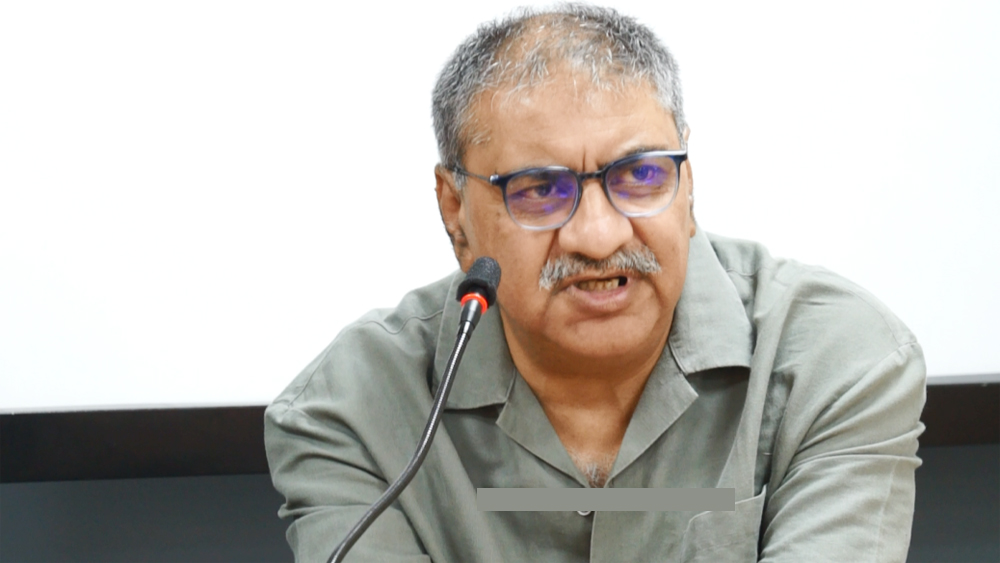
The programme was presided over by eminent journalist, Jamal Kidwai, who shared his personal reminiscences of Agha Mohammad Ashraf and his son, noted Urdu poet Shahid Ali. His reflections offered insights into the literary and intellectual personalities associated with Jamia and their contribution to its cultural environment.
Delivering her presentation, scholar Dr. Anab Naiyer explored the history of Jamia Millia Islamia and its surrounding areas through a range of literary, cultural and historical perspectives. She referred to the art of poetic lamentation, memories of student movements and a periodical that promoted arts- and crafts-based education for the nation. Through these diverse references, she highlighted the multiple dimensions of Jamia's historical experience and its contribution to the intellectual and cultural life of Delhi.
Making the Maktaba Jamia journal ‘Payam-e-Taaleem’ the focal point of her presentation, Dr. Naiyer drew attention to Jamia's literary and intellectual traditions. She explained that the history of Jamia could not be viewed merely through the development of an academic institution; rather, it was closely connected with the larger project of national reconstruction, literary expression, cultural engagement and educational innovation. These interconnected activities, she observed, had given Jamia a distinctive and prominent place in Delhi's intellectual landscape.
Urban Studies scholar Ghazala Jamil presented a paper titled ‘Jamia Millia and Jamia Nagar in Delhi’s Changing Urban Perspective’. Her presentation examined the changing urban character of Jamia and Jamia Nagar, with particular attention to their mohallas, newly constructed buildings, collective memories and the mutual relationships among the different communities living in the area.
Her discussion brought into focus the relationship between urban transformation and the social experiences of people inhabiting a neighbourhood. It also highlighted the importance of understanding urban spaces not simply in terms of physical structures and architectural changes, but also through the memories, relationships and everyday experiences that give them meaning. The presentation thus offered an understanding of Jamia and Jamia Nagar as evolving social and cultural spaces within Delhi's changing urban landscape.
On the occasion, IOS Vice-Chairperson Prof. Haseena Hashia appreciated DAG's efforts to study and document the changing face of urbanised Delhi. She emphasised the importance of initiatives that encourage engagement with the city's historical, social and cultural dimensions. Expressing confidence in the continuation of such collaborative programmes, she said that similar initiatives would continue to be organised in the future.
Earlier, in his welcome address, Anjum Naim, Convenor of the Mujaddid IOS Centre, explained the significance of organising a programme around the theme ‘The City as a Museum’. He highlighted the importance of exploring the historical and cultural dimensions of urban spaces and understanding the ways in which different communities, institutions and traditions shape the character of a city.
Formally proposing the vote of thanks, he emphasised that the speakers had underlined the need to understand Delhi not merely as a cluster of buildings, roads and physical structures, but as a living museum, vibrant with cultural, literary and intellectual activities.
He observed that Delhi's identity is reflected not only in its monuments and historical architecture but also in its educational institutions, mohallas, libraries, public spaces and collective memories. These diverse elements preserve and showcase the city's civilisational and cultural heritage, making it a living repository of historical experiences and intellectual traditions.
The programme provided an opportunity to look at Jamia and its neighbourhood beyond their conventional institutional and geographical identities, bringing into focus the people, memories, literary traditions and social relationships that have shaped their distinctive character. It also reinforced the idea that understanding a city requires an engagement with its living cultural heritage and the everyday experiences of its people.
The function was attended by a fairly good number of scholars, litterateurs, art lovers and researchers.
Go Back