Shah Waliullah Award
.jpg)
Institute of Objective Studies
A brief Introduction
The Institute of Objective Studies (IOS) was established in the year 1986 with the cooperation of Muslim scholars and intellectuals and formally registered under the Societies Registration Act of Govt. of India on April 13, 1987. The objectives of the Institute are:
a. To undertake objective studies relating to Islam and Indian Muslims.
b. To undertake studies on major Indian religions.
c. To study and analyse issues and problems relating to Indian Mims in particular and the country in general.
Since its inception, the Institute of Objective Studies has been devoting to the promotion of empirical and conceptual studies in the social sciences, humanities and law in an Islamic perspective and to studies and issues concerning the Muslim ummah, the nation and the humanity as a whole.
The Institute functions in a democratic manner with its headquarters located at New Delhi and five branches at Aligarh, Chennai, Calicut, Kolkata and Patna, which are known as IOS Chapters. Researches are initiated and supervised by 23 Academic Committees in different disciplines.
The activities and programmes carried out under the aegis of the Institute have been widely recognised and appreciated in India and abroad. The various projects sponsored by the Institute have fulfilled a long felt need for reliable and authentic information and analysis on problems and issues pertaining to the Muslim community in India.
So far 480+ research projects, reports and translations of important books have been completed and published by the Institute.
The Institute has brought together a number of eminent Muslim social scientists and ulama. The cooperation extended by the ulama has greatly benefited the Institute in carrying out its multi-faceted programmes and activities.
From time to time, the Institute organises national and international seminars/conferences and workshops on issues and problems relating to Indian Muslims, to the country and to the larger humanity. So far, the Institute has organised 1360+ seminars/conferences, workshops and meets. Most of the reports of these seminars and workshops have been published. The Institute also organises monthly lectures on topical themes which are delivered by eminent scholars and ulama.
As a result of meetings between the ulama and social scientists and intellectuals, organised by the Institute, many of the ulama have agreed to include modern subjects in the curriculum of Madaris in India. They have invited Muslim scholars from different universities to address the students of Madaris on modern disciplines.
A serious problem in the study of Indian Muslims is the paucity of reliable and authentic data. In order to fill in this lacuna the Institute has set up a Data Bank.
The Institute publishes two bi-annual academic journals, namely, ‘Journal of Objective Studies’ and ‘Religion and Law Review’ and a quarterly Urdu journal ‘Mutaleaat’. A monthly newsletter in English and a quarterly newsletter in Urdu and web magazines ‘Current Affairs’ and ‘Nuqta-e-Nazar’ under IOS website www.iowworld.org are brought out for the purpose of disseminating information about the activities and programmes of the Institute.
Shah Waliullah: An Introduction
Shah Waliullah (1703-1763) was one of the most outstanding Muslim scholars of eighteenth century India. He was a rare polymath who made highly original and seminal contributions to a variety of Islamic disciplines, including the translation and exegesis of the Qur’an, Hadith, Fiqh, historiography, Kalam, Tasawwuf and Islamic philosophy. He played a pioneering role in the revival and regeneration of the intellectual, moral and cultural legacy of Islam and thereby influenced and inspired several generations of Muslims in the Indian subcontinent.
One of the most important and enduring contributions of Shah Waliullah relates to the Holy Qur’an. Four distinctive but interrelated dimensions of his approach to the Holy Qur’an and his contributions to Qur’anic studies are noteworthy.
He emphasised the pivotal role of the Qur’an in the Islamic ethos and considered it incumbent on every Muslim to understand its meaning and message. Realising that a majority of Muslims in India were not sufficiently conversant with the Arabic language, he undertook a translation of the Qur’an into Persian. Subsequently, two of his sons rendered the Qur’an, on the basis of his Persian translation, into Urdu, the lingua franca of Muslims in large parts of the country. These translations paved the way for the translation of the Holy Qur’an into other vernacular languages.
Shah Waliullah firmly believed that religious instruction in Islamic madaris should begin with the learning of the Qur’anic text, followed by its translation and explanation of difficult words and passages as well as a brief commentary in the local language. He believed that this should form an inseparable part of the curriculum of Islamic madaris.
He realised, to his dismay, that the scholars and ulama of his times were deeply enamoured of Greek philosophy and attached undue importance to philology and grammar. He cautioned them against the insidious consequences of this preoccupation and urged them to turn instead to the fundamental sources of Islam—the Qur’an and Hadith, which alone could provide a true understanding of Islamic teachings and principles.
Shah Waliullah was acutely aware of the need to interpret and project the teachings and principles of Islam in the contemporary academic and literary idiom. He worked out, for this purpose, a comprehensive and cogent system of Islamic philosophy and scholasticism based essentially on the edifice of the Qur’an and Hadith but presented in the idiom and style of his time.
Shah Waliullah Award
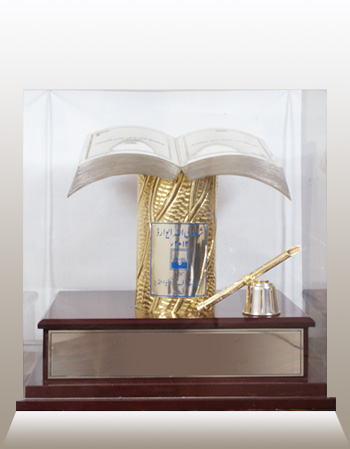
To commemorate the outstanding services of Hazrat Shah Waliullah and to promote the Islamic values, the Institute of Objective Studies instituted an award known as Shah Waliullah Award to honour eminent scholars who have done outstanding work in Social Sciences, Humanities, Law and Islamic Studies. The Award is in the form of a cash of one Lakh rupees, a memento, a shawl and a scroll of honour containing citation which is given annually to the best scholar of the year. The scheme was started in 1999.
The scheme is administered by an independent Board which nominates a Panel of Experts consisting of eminent scholars to recommend the scholar to be honoured. The subject or the field of the Award is decided by the Board for each year.
List of the Recipients of IOS Shah Waliullah Award
|
S.No.
|
Topic
|
Conferred upon
|
Photographs
|
Date & Venue
|
|
1st
|
Uloom-e-Islamia
(Islami Uloom)
|
Maulana Syed Abul Hasan Ali Nadvi (R.A), received by Maulana Syed Mohammad Rabey Hasni Nadvi
|

|
November 3, 2000 at Ansari Auditorium, Jamia Millia Islamia, New Delhi
|
|
2nd
|
Islamic Fiqh
(Islami Fiqh)
|
Hazrat Maulana Qazi Mujahidul Islam Qasmi
|

|
August 26, 2001 at Faculty of Engineering Auditorium, Jamia Millia Islamia, New Delhi
|
|
3rd
|
Islamic Economics
(Islami M‘ashiyaat)
|
Prof. Mohd. Nejatullah Siddiqi
|

|
May 19, 2003 at Hamdard Convention Centre, Jamia Hamdard, New Delhi
|
|
4th
|
Qur’anic Disciplines and Contemporary Context (Qurani Uloom aur Asr-e-Haazir)
|
Maulana Mohammad Shihabudddin Nadvi received by Maulana Jamilur Rahman Nadvi
|

|
March 27, 2004 at Ansari Auditorium, Jamia Millia Islamia, New Delhi
|
|
5th
|
Historiography in Islamic Perspective
(Tareekh Nawesi Islami Tanaazur Mein)
|
Prof. Yaseen Mazhar Siddiqi
|

|
September 24, 2005 at Faculty of Engineering, Auditorium, Jamia Millia Islamia, New Delhi
|
|
6th
|
Qur’anic Exegesis and its Principles
(Tafseer aur Usool-e-Tafseer)
|
No award was conferred
|
------------
|
------------
|
|
7th
|
Islamic Law in Comparative Perspective
(Asr-e-Haazir Kay Tanaazur Mein Islami Qanoon)
|
Prof. (Dr) Tahir Mahmood
|

|
July 11, 2009 at Constitution Club of India, New Delhi
|
|
8th
|
Hadith Literature
(Uloom-e-Hadees)
|
Prof. Taqiuddin Nadwi
|

|
February 26, 2011 at Hamdard Convention Centre, Jamia Hamdard,
New Delhi
|
|
9th
|
Sociology/Social Anthropology in Islamic Perspective
(Samajiyaat aur Bashariyaat Islami Tanaazur Mein)
|
Dr. M. Khaleel Abbas Siddiqui (M.K.A.Siddiqui)
|

|
December 22, 2012 at Bhartiya Bhasha Parishad Hall, Shakespear Sarani, Kolkata
|
|
10th
|
Islamic Mysticism (Islami Tasawwuf)
|
Mualana Shah Qadri Syed Mustafa Refai Jilani Nadwi
|

|
August 23, 2014 at Darul Uloom Sabeelur Rashad, Bangalore
|
|
11th
|
Education in Islamic Perspective
(Taleem Islami Tanazur Mein)
|
Hazrat Maulana Mohd. Rabey Hasani Nadwi
|

|
August 1, 2015 at Faculty of Engineering, Auditorium, Jamia Millia Islamia, New Delhi
|
|
12th
|
Media, Society and Indian Muslims
(Zarae Iblaagh, Samaj aur Hindustani Musalman)
|
Mr. S. Iftikhar Gilani
|

|
April 3, 2017 at FTK Centre for Information Technology, Near Ansari Auditorium, Jamia Millia Islamia, New Delhi
|
|
13th
|
Islam and Political Science
(Islam aur Ilm Siyasiyaat)
|
Prof. Obaidullah Fahad
|

|
September 27, 2019 at Hamdard Convention Centre, Jamia Hamdard, New Delhi
|
|
14th
|
Islamic D‘awa
(D‘awat-e-Islami)
|
Mualana Syed Jalaluddin Umri
|

|
June 20, 2021 (in an Online Programme)
|
|
15th
|
An Objective Study of Indian History and Culture (Hindustani Tareekh wa Tahzeeb ka Maroozi Mutaleaa)
|
No award was conferred
|
-------------
|
-------------
|
Rules relating to the conferment of
the Shah Waliullah Award
- The Award will be administered by an autonomous Board appointed by the Governing Council of the Institute of Objective Studies.
- The Board shall nominate a Panel of Experts to identify and recommend the recipient of the Award. The Panel shall consist of at least three eminent scholars from disciplines or fields in which the Award is to be given. The composition of the Panel will change every year according to the discipline or field in which the Award will be given.
- The subject or theme of the Award shall be determined by the Board every year.
- Only Indian citizens shall be eligible for the Award.
- The Institute of Objective Studies shall solicit the opinion of scholars, heads of university departments and the ulama for nominating the recipient of the Award.
- If the work of a nominated scholar happens to be in a language other than Urdu, Arabic and English the publications will be required to be submitted along with a brief summary in English for the consideration of the Panel of Experts.
- Self-nomination shall not be entertained.
- The bio-data of the scholars nominated for the Award should be submitted as per the prescribed format.
- While making the nominations, the totality of the work of the nominated scholar would be kept in view.
- The recipient of the Award will not be eligible for the award for the second time for the next 5 years.
- Nominations should be accompanied by a brief bio-data of the nominated scholar and at least two of his/her works, which are supposed to constitute his/her most important contribution.
- The decision of the Board regarding the selection of the awardee shall be final.
- The Board may defer or withhold the Award in a given year, if nobody is found suitable for the Award.
- In a situation where there is no clear nomination for the award, or where the opinions of the proposers are divided, or where the person nominated by the Board for the Shah Waliullah Award declines the award, the Board Administering the Shah Waliullah Award will have the authority to nominate an eminent scholar for the Award.
- The Award may be given posthumously, provided the death of the nominated scholar has not occurred more than five years before the last date prescribed for submission of the nominations.
Essay Writing Competition
(under Junior Category)
on
“The Role of Islamic Thought in the establishment of World Peace”
[Last date for submission of essays: June 30, 2026]
The Institute of Objective Studies invites essays on the topic of “The Role of Islamic Thought in the establishment of World Peace” by young scholars and researchers. The best essay will receive a cash award of Rs. 25,000/-.
List of the Awardees for Essay Writing Competition
|
Sl. No.
|
Theme/Topic
|
Award presented to
|
Date & Venue
|
|
1
|
Shah Waliullah’s Approach to the Qur’an (Shah Waliullah ki Qur’ani Fikr)
|
Janab Mahboob Farogh Qasmi from Darul Uloom, Deoband, U.P.
|
March 27, 2004 at Ansari Auditorium, Jamia Millia Islamia, New Delhi
|
|
2
|
Human Rights in Islamic Perspective (Huqooq Insani Islami Tanazur mein)
|
Ms. Tajmus Sahar Tahsin from Chikmaglor Karnataka and Mufti Md. Sirajuddin Qasmi from Islamic Fiqh Academy, New Delhi
|
September 24, 2005 at Faculty of Engineering Auditorium, Jamia Millia Islamia, New Delhi
|
|
3
|
Intra-Community Dissension and the unity of Muslim Ummah (Ikhtilaaf Ummat aur Milli Ittihaad ki Sabeel)
|
Mr. Anis Ahmad Falahi from Jamiatul Falah, Azamgarh, U.P.
|
November 03, 2007 at IOS Auditorium, New Delhi
|
|
4
|
Constitutionalism in Islamic Perspective (Islami Qanoon kay Tanazur mein Nizaam-i-Aaeen)
|
Prof. Faizan Mustafa from National Law University, Cuttack and Dr. Afroz Alam from KIIT Law School, Bhubaneshwar, Odisha
|
July 11, 2009 at Constitution Club of India, New Delhi
|
|
5
|
Education in Islamic Perspective (Taleem Islami Tanazur mein)
|
Ms. Najmus Sahar and Mr. Kifayatullah, Research Scholars from Deptt. of Islamic Studies, Jamia Hamdard, New Delhi
|
August 1, 2015 at Faculty of Engineering Auditorium, Jamia Millia Islamia, New Delhi
|
|
6
|
Media, Society and Indian Muslims (Zaraae Ablaagh, Samaj aur Hindustani Musalman)
|
Dr. (Ms.) Nasheed Imtiaz from Deptt. of Psychology, Aligarh Muslim University, Aligarh
|
April 3, 2017 at FTK Centre for Information Technology Auditorium, Jamia Millia Islamia, New Delhi-110025
|
|
7
|
Political System in Islam: Relevance to Modern Times (Islam ka Siyasi Nizaam aur Asri Masaael.)
|
Dr. Meraj Ahmad Meraj from Aliah University, Kolkata and Dr. Anita Kumari from Shobhit University, Meerut
|
September 27, 2019 at Jamia Hamdard, New Delhi
|
|
8
|
Islamic Dawah and Call of the Modern Age (Dawat-e-Islam aur Asr Haazir kay Taqaazay)
|
Ms. Faridah Hussaini from Department of Psychology, AMU, Aligarh
|
June 20, 2021 in online mode.
|
|
9
|
Treatment of Muslim rulers to Non-Muslims in India (Hindustan mein Ghair Muslimon kay saath Muslim Hukmaraanon ka Bartaao)
|
Dr. Mufti Mohd. Salahuddin Ayyubi from Toli Chowki, Hyderabad
|
The award will be presented to him on the occasion of the 16th IOS Shah Waliullah Award function.
|
Guidelines for the Essay Writing Competition
(under Junior Category)
Candidates who wish to participate in the competition are required to submit their essay in accordance with the following guidelines:
i) The candidate should be below 45 years of age.
ii) The essay should have a high academic standard and should not exceed 10,000 words. Detailed references should be appended at the end of the essay.
iii) The essay should be submitted in quadruplet, along with the Bio-data of the candidate.
iv) The essay which is submitted for the competition should not have received any award from any other organisation or institution in India or abroad.
v) If the essay wins the award, the IOS will have the exclusive right over its publication.
vi) The decision of the IOS on the selection of the best essay shall be final.
vii) The essay may be written in English, Urdu and Hindi.
أضواء على جائزة الإمام ولي الله الدهلوي لمعهد الدراسات الموضوعية منذ 1999م
بهدف تخليد خدمات جليلة للإمام ولي الله الدهلوي ونشر القيم الإسلامية أنشأ معهد الدراسات الموضوعية جائزة توصف بـ "جائزة الإمام ولي الله"، يتم من خلال تفويضها تكريم أبرز الباحثين الهنود الذين قاموا بأعمال مميزة في العلوم الاجتماعية والإنسانية والدراسات الإسلامية. وتتمثل الجائزة في مبلغ مالي قدره مائة ألف روبية هندية ودرع تذكاري والشّال (قطعة قماش نفيس أبيض توضع على المنكبين وتلفّ على الصدر) وشهادة الإشادة والثناء المحتوية على أهم المنجزات. ويتم تفويض الجائزة إلى أفضل الباحثين للسنة.
علما بأن تفاصيل الجائزة التي فوضت أولا عام 2000م. تذكر فيما يلي:
| الرقم التسلسلي |
العنوان |
الشخصية / الجهة المفوضة |
التاريخ ومكان التفويض |
| الأولى |
العلوم الإسلامية |
سماحة الشيخ السيد أبو الحسن علي الحسني الندي يرحمه الله، تم استلام الجائزة من قبل فضيلة الشيخ رابع الحسني الندوي حفظه الله |
3 نوفمبر 2000م. في قاعة الأنصاري للمحاضرات بالجامعة الملية الإسلامية، نيودلهي |
| الثانية |
الفقه الإسلامي |
سماحة القاضي مجاهد الإسلام القاسمي |
26 أغسطس 2001م. بقاعة المحاضرات لكلية الهندسة في الجامعة الملية الإسلامية، نيودلهي |
| الثالثة |
الاقتصاد الإسلامي |
البروفيسور نجات الله الصديقي |
19 مايو 2003 في مركز الندوات لجامعة همدرد بجامعة همدرد، نيودلهي |
| الرابعة |
العلوم القرآنية والسياق المعاصر |
سماحة الشيخ شهاب الدين الندوي، تم استلامها من قبل فضيلة الشيخ جميل الرحمن الندوي |
24 مارس 2004م. في قاعة الأنصاري للمحاضرات بالجامعة الملية الإسلامية، نيودلهي |
| الخامسة |
التأريخ من المنظور الإسلامي |
البروفيسور يسين مظهر الصديقي |
24 سبتمبر 2005م. في قاعة المحاضرات بكلية الهندسة في الجامعة الملية الإسلامية، نيودلهي |
| السادسة |
تفسير القرآن الكريم ومبادئه |
لم يتم التفويض لعدم التمكن من تحديد شخص / جهة مناسبة |
- |
| السابعة |
القانون الإسلامي ومبادئه |
البروفيسور طاهر محمود |
11 يوليو 2009م. في المنتدى الدستوري بنيودلهي |
| الثامنة |
أدبيات الحديث النبوي
|
الدكتور تقي الدين الندي |
26 فبراير 2011م. في جامعة همدرد، نيودلهي |
| التاسعة |
العلوم الاجتماعية والإنسانية من المنظور الإسلامي
|
الثامنةالدكتور محمد خليل عباس الصديقي |
22 ديسمبر 2012م. في صالة بهارتيه بهاشا باريشد، شيكسبير سرائي، كولكاتا |
| العاشرة |
التصوف في الإسلام
|
فضيلة الشيخ سيد مصطفى الرفاعي الجيلاني الندوي |
23 أغسطس 2014م. في صالة دار العلوم سبيل الرشاد، بنغلور |
| الحادية عشرة |
التعليم من المنظور الإسلامي
|
سماحة الشيخ رابع الحسني الندوي |
1 أغسطس 2015 في صالة المحاضرات لقسم الهندسة بالجامعة الملية الإسلامية، نيودلهي |
| الثانية عشرة |
الإعلام والمجتمع والمسلمون الهنود
|
السيد افتخار الجيلاني، رئيس تحرير جريدة الشئون الاستراتيجية ورئيس الهيئة الوطنية لتحليل الأنباء اليومية |
3 أبريل 2017م. في مركز إيف تي كي لمعلومات التكنولوجيا قربا من قاعة أنصاري للمحاضرات بالحامعة الملية الإسلامية، نيودلهي. |
| الثالثة عشرة |
العلوم الإسلامية والسياسية
|
البروفيسور عبيد الله فهد، رئيس قسم الدراسات الإسلامية بجامعة عليجراه الإسلامية |
الجمعة، 27 سبتمبر 2019م. بقاعة المؤتمرات لجامعة همدرد بنيودلهي من قبل معهد الدراسات الموضوعية، نيودلهي |
| الرابعة عشرة |
الدعوة الإسلامية
|
الشيخ السيد جلال الدين العمري، نائب رئيس هيئة الأحوال الشخصية للمسلمين لعموم الهند |
الأحد، 20 يونيو 2021م. في المؤتمر الافتراضي الذي عقد من قبل معهد الدراسات الموضوعية، نيودلهي |
SHAH WALIULLAH AWARD
INSTITUTE OF OBJECTIVE STUDIES
162, Jogabai Main Road
Jamia Nagar, New Delhi - 110025
Tel.: 91-11-26981187, 26989253, 26987467
Fax: 91-11-26981104
E-mail:
ios.newdelhi@gmail.com,
info@iosworld.org
DOWNLOADS
Brochure English Urdu
Form English Urdu
Online Form