IOSCHCS Symposium on “Gandhi Ji’s Ideals and Vision for Modern India”
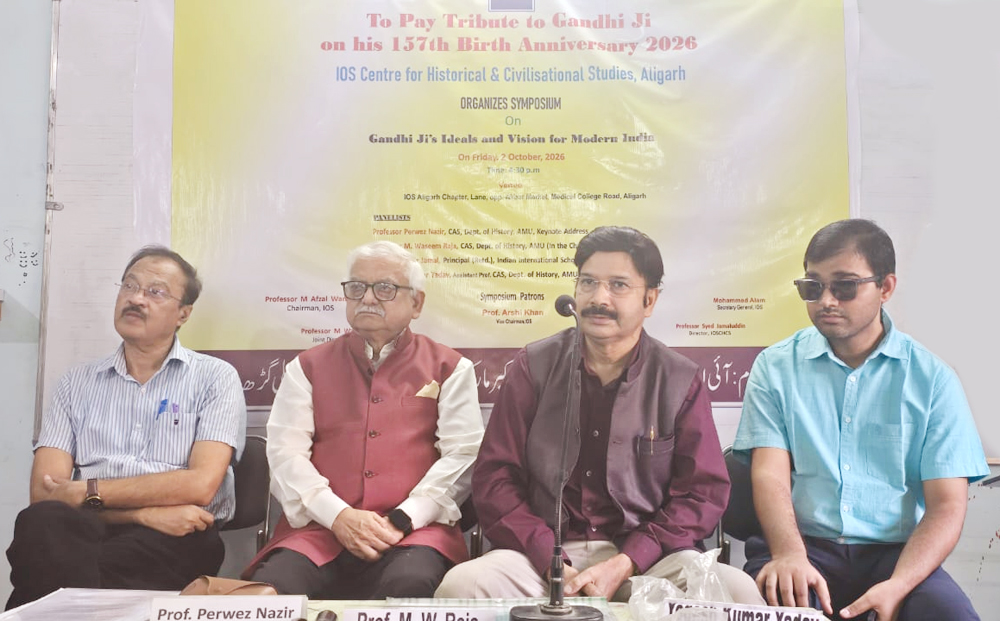
IOSCHCS Symposium on “Gandhi Ji’s Ideals and Vision for Modern India”
Aligarh: The IOS Centre for Historical and Civilisational Studies (IOSCHCS), Aligarh, organised a symposium on ‘Gandhi Ji’s Ideals and Vision for Modern India’ on October 2, 2026, at 4:30 p.m. at the IOS Aligarh Chapter, Aligarh, to commemorate the 157th birth anniversary of Mahatma Gandhi.
Professor M. Waseem Raja, Joint Director, IOSCHCS, presided over the proceedings. The programme began with the recitation of a few verses from the Holy Qur’an, followed by a patriotic song written by poet Pradeep and sung by Himadri.
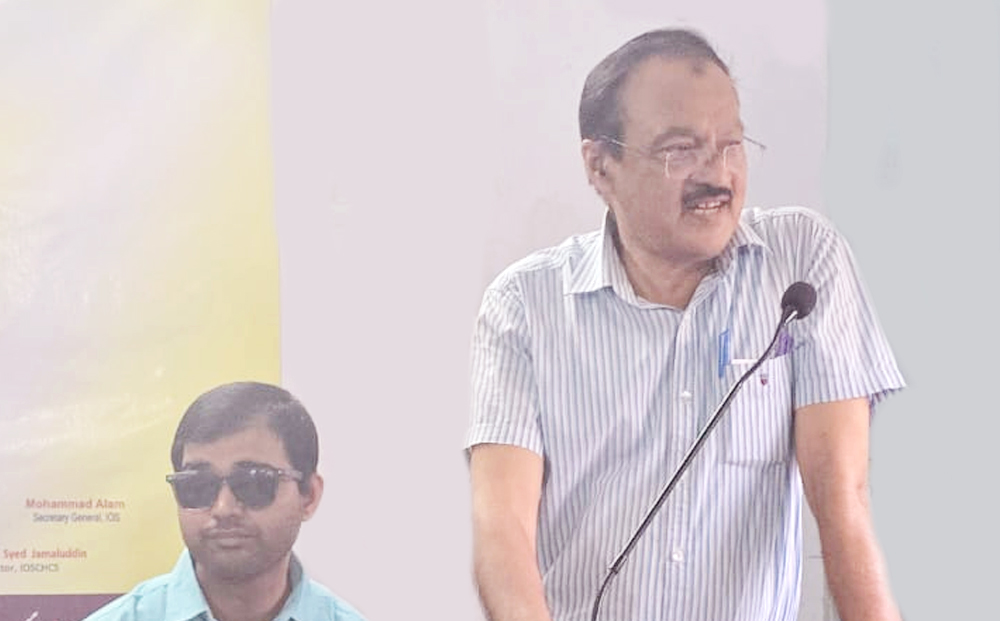
Professor Perwez Nazeer delivered the keynote address, highlighting the enduring global relevance of Gandhi’s ideals. He observed that Gandhi was being celebrated across the world for his humility, universal outlook, commitment to peace and advocacy of non-violence. Gandhi, he noted, was a leader and guide for people irrespective of their origin and background.
Professor Nazeer emphasised that Gandhi fought imperialism without resorting to weapons and firmly believed in the efficacy of dialogue. Referring to a recent statement by the Secretary-General of the United Nations concerning the prevalence of hatred across the world, he stressed the urgent need to return to dialogue as a means of resolving conflicts. He added that Gandhi consistently sought negotiations to avert confrontation.
The speaker further observed that Gandhi envisioned a pluralistic society in which education would serve as an instrument of human upliftment. He underlined that truth, peace and compassion were central to Gandhi’s philosophy, which advocated dialogue, diplomacy and disarmament as essential means of establishing a peaceful world.
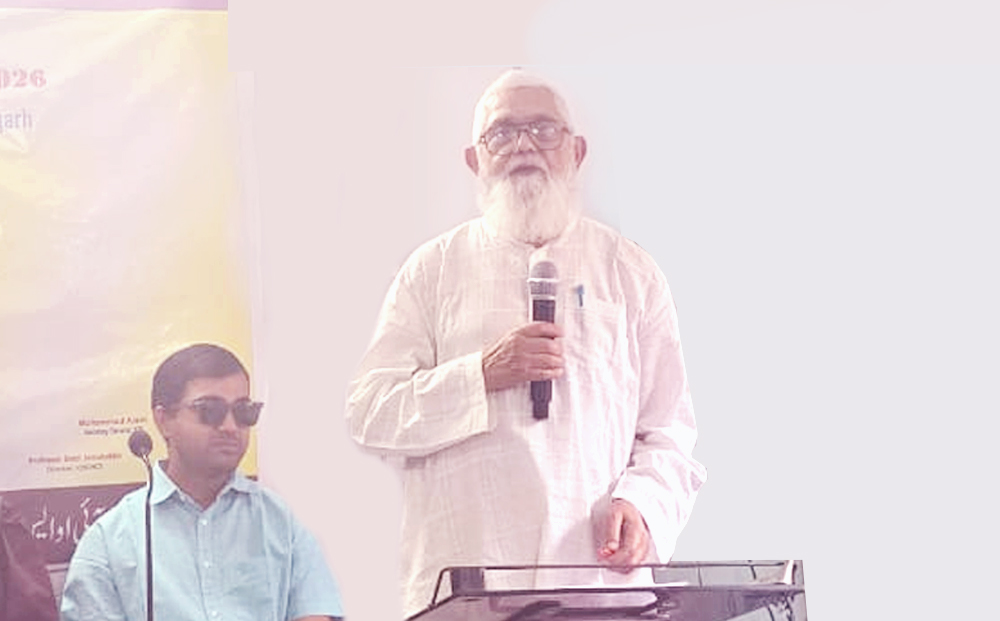
Professor Syed Jamaluddin, Director, IOSCHCS, delivered an address in two parts. The first focused on Gandhi’s ideals and vision for India, while the second examined Gandhi’s influence on contemporary Urdu progressive poets.
Discussing Gandhi’s vision of an independent India, Professor Jamaluddin explained that Gandhi envisaged a decentralised polity comprising self-reliant village republics founded on moral integrity, social equality and non-violence. He highlighted Gandhi’s emphasis on economic self-reliance and Swadeshi industries, noting that the promotion of hand-spun khadi was intended to alleviate rural poverty and advance economic equality.
He also discussed Gandhi’s concept of trusteeship, according to which individuals who accumulated wealth and substantial property should regard their possessions as being held in trust for the welfare of society rather than as absolute personal entitlements.
Professor Jamaluddin further emphasised Gandhi’s unwavering commitment to the eradication of untouchability. Gandhi maintained that the state should remain secular, accord equal respect to all religions, and preserve communal harmony and peace. He also advocated Satyagraha—the pursuit of truth through non-violent resistance—as the means of bringing about political and social transformation.
In the second part of his address, Professor Jamaluddin recited couplets by Urdu progressive poets commemorating Gandhi and expressing the profound sense of loss occasioned by his assassination.
Reciting verses by Majaz, he highlighted the poet’s lament over the loss suffered by the nation:
Dard-o-gham-e-hayat ka darmaan chala gaya
Woh Khizr-e-'asr wa Eisa-e-dauraan chala gaya
Hindu chala gaya na Musalman chala gaya
Insaan ki justuju mein insaan chala gaya
Paying tribute to Gandhi, Ali Sardar Jafri expressed sentiments that transcended religious and communal boundaries:
Gandhi Ji ne jung ka elaan kar diya
Baatil se haq ko dast-o-garebaan kar diya
Shaikh aur Brahman mein badhaya ittehad
Goya unhein do qaalib wa yak jaan kar diya
These poetic tributes underscored Gandhi’s universal appeal and his enduring place in the collective consciousness of the nation.
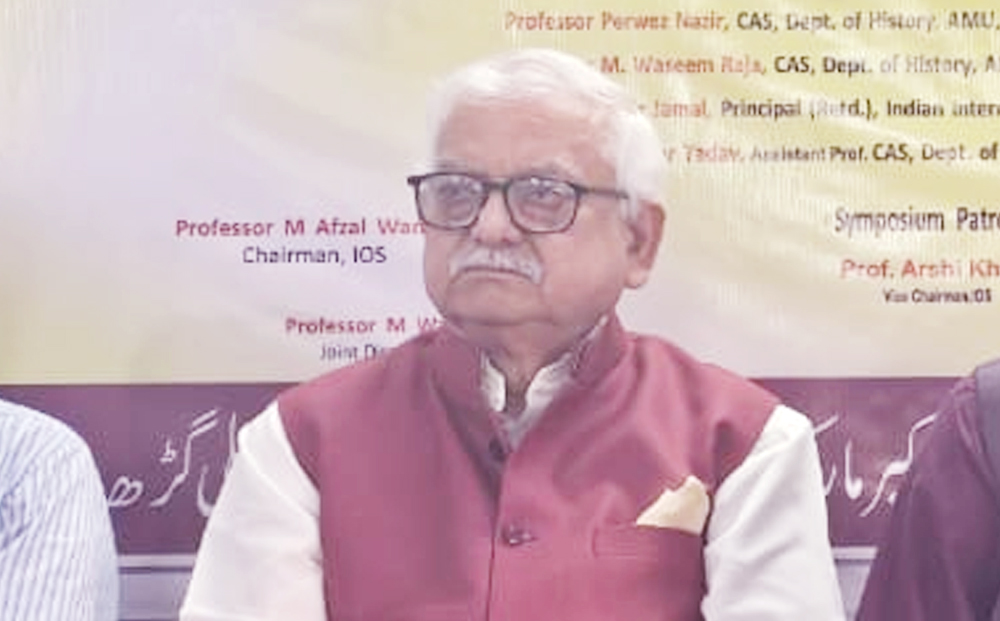
Mr. Manzar Jamal, former Principal of the Indian School, Riyadh, and STS School (Minto Circle), Aligarh Muslim University, who was the Guest of Honour, delivered a thought-provoking lecture on Gandhi’s ideals and vision for modern India. A scientist and academic administrator with a keen interest in the social sciences and literature, he examined the philosophical foundations of Gandhi’s thought and their continuing relevance.
Beginning with the centrality of Satya (truth) in Gandhi’s philosophy, Mr. Manzar Jamal observed that Gandhi believed both private and public life should be guided by honesty, integrity and an unwavering search for truth. He explained that, according to Gandhi, personal growth and social transformation required a lifelong commitment to self-discipline, self-reflection and moral courage. Truth, he emphasised, was the ultimate goal of human life.
He further explained that Gandhi’s advocacy of non-violence represented an active moral force rooted in universal love, supreme courage and an absolute commitment to truth. Satyagraha, he noted, embodied Gandhi’s principle of holding firmly to truth while resisting injustice without hatred or physical violence.
Concluding his address, Mr. Manzar Jamal highlighted Gandhi’s rejection of violence in thought, word and deed. He drew attention to Gandhi’s ideals of Gram Swaraj, economic Swaraj and social Swaraj, as well as his vision of education for Swaraj. Such education, he argued, should aim at the holistic development of the individual rather than merely preparing students for examinations. It should cultivate knowledge, practical skills, character, independent thinking, social responsibility and a commitment to community welfare.

Dr. Yogesh Kumar Yadav, Assistant Professor at the Centre of Advanced Study, Department of History, Aligarh Muslim University, was the final speaker. After thanking the organisers for inviting him to participate in the symposium, he examined the relationship between modernity and Gandhi’s personality and principles.
Dr. Yadav argued that modernity could not be understood merely in chronological or temporal terms. Rather, it should be examined as a scientific concept grounded in rationality and logical reasoning, with relevance extending across different historical periods.
Developing this argument, he observed that Satyagraha should not be understood solely as a moral method of resistance. The virtues of a Satyagrahi—chastity, truthfulness, fearlessness and simplicity—also offered enduring principles for building a just, peaceful, harmonious, cooperative and humane society.
In the concluding part of his address, Dr. Yadav discussed Gandhi’s concept of Swaraj and its significance in the contemporary world, highlighting the continuing relevance of Gandhi’s ethical and social principles.
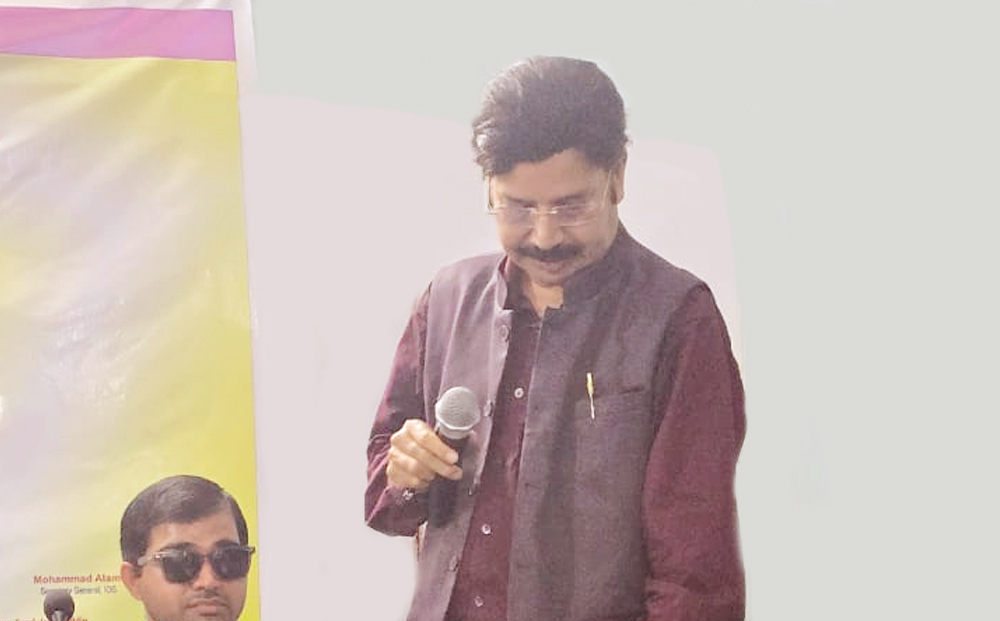
In his presidential address, Professor M. Waseem Raja, Joint Director, IOSCHCS, reflected on the philosophical foundations of Gandhian thought and their relevance to contemporary challenges. Beginning with Gandhi’s memorable observation, “In a gentle way, you can shake the world,” he identified truth, non-violence, Sarvodaya and Satyagraha as the four pillars of Gandhi’s philosophy.
Professor Raja recalled the profound influence of Shrimad Rajchandra (Raychandbhai) on Gandhi’s spiritual development, alongside Leo Tolstoy’s The Kingdom of God Is Within You and John Ruskin’s Unto This Last. He also highlighted the lasting inspiration Gandhi drew from Gopal Krishna Gokhale, the Bhagavad Gita and the Bible.
Professor Raja outlined the eleven vows that formed the foundation of Gandhi’s philosophy of life:
1. Satya — Truth.
2. Ahimsa — Non-violence.
3. Brahmacharya — Celibacy.
4. Asteya — Non-stealing.
5. Aparigraha or Asangraha — Non-possession.
6. Sharira-Shrama — Physical labour or bread labour.
7. Asvada — Control of the palate.
8. Abhaya — Fearlessness.
9. Sarva-Dharma-Samanatva — Equal respect for all religions.
10. Swadeshi — Duty towards one's neighbour.
11. Asprishyatanivarana — Removal of untouchability.
These vows, he explained, reflected Gandhi’s effort to integrate personal discipline, ethical conduct, social responsibility and public life.
Addressing the question of world peace, Professor Raja observed that humanity was passing through a particularly difficult period in which violence and terrorism had become prominent features of international politics. Gandhi believed that genuine and lasting peace could never be achieved through violence, war or repression. According to this understanding, violence arose from anger, hatred, ill will, enmity and selfishness, inevitably generating counter-violence and perpetuating cycles of conflict.
Professor Raja identified Swaraj as one of the most fundamental concepts in Gandhi’s political philosophy. He explained that Swaraj meant much more than the transfer of political authority from British rulers to Indian leaders. It also entailed individual self-discipline, moral responsibility and collective self-government. Gandhi’s vision thus placed the capacity of individuals and communities to govern themselves responsibly at the heart of genuine freedom.
Professor Raja further discussed Gandhi’s economic philosophy as an essential dimension of his vision for modern India. Political independence, he argued, would remain incomplete if the country continued to depend excessively on external economic structures while large sections of its population remained impoverished.
Referring to Gandhi’s seminal work Hind Swaraj (1909), Professor Raja highlighted Gandhi’s critique of the modern model of development and his questioning of the assumption that material progress and technological advancement necessarily led to moral and social progress.
He observed that Gandhi traced the roots of war partly to the unchecked multiplication of human wants and the failure to recognise that voluntary restraint was essential to civilisation. Unequal economic relations among nations and exploitative industrial structures, which fostered what Gandhi described as “soul-destroying competition,” were also identified as significant causes of conflict. Professor Raja further drew attention to Gandhi’s reflections on technology and the relationship between human beings and machines.
Professor Raja identified religious pluralism and communal harmony as another major dimension of Gandhi’s philosophy. Gandhi regarded religion as an important source of moral guidance but consistently insisted on mutual respect among religious communities.
His concept of Sarva Dharma Sambhava, or equal respect for all religions, reflected his conviction that social peace depended on religious tolerance and harmonious coexistence.
Professor Raja also noted Gandhi’s commitment to women's liberation and empowerment, arguing that the advancement of women was essential to building a more peaceful world. He highlighted Gandhi’s efforts to reconcile multiple identities and integrate ethical principles into both personal and public life. Gandhi’s approach to basic education, he added, sought to nurture moral character and promote the holistic development of the individual.
Concluding his address, Professor Raja emphasised that Gandhi’s ideas had inspired movements for civil rights, social justice and non-violent resistance across the world. At the same time, he acknowledged that Gandhi’s positions on caste, modernity, industrialisation and political strategy continued to invite critical scholarly examination.
He stressed that a meaningful engagement with Gandhi required moving beyond both uncritical admiration and wholesale rejection. Historians, he argued, must situate Gandhi’s ideas within their historical context, examine their intellectual foundations and assess both their achievements and limitations.
Professor Raja underscored the continuing relevance of Gandhi’s message that lasting peace could not be secured merely through symposia or the establishment of international institutions. Rather, it required a sustained commitment to non-violence, justice, mutual understanding and the welfare of all. Gandhi’s ideal of Sarvodaya—the good of all—thus remained central to the pursuit of enduring world peace.
The symposium provided a valuable platform for reflecting on the continuing significance of Gandhi’s ideals in contemporary India and the wider world. Through discussions on truth, non-violence, Swaraj, economic self-reliance, religious pluralism, education and world peace, the speakers examined the philosophical foundations of Gandhian thought and its relevance to present-day social and political challenges.
The programme concluded with a vote of thanks delivered by Professor Syed Jamaluddin, Director, IOSCHCS, who expressed gratitude to the chair, speakers and participants for their contributions to the symposium.
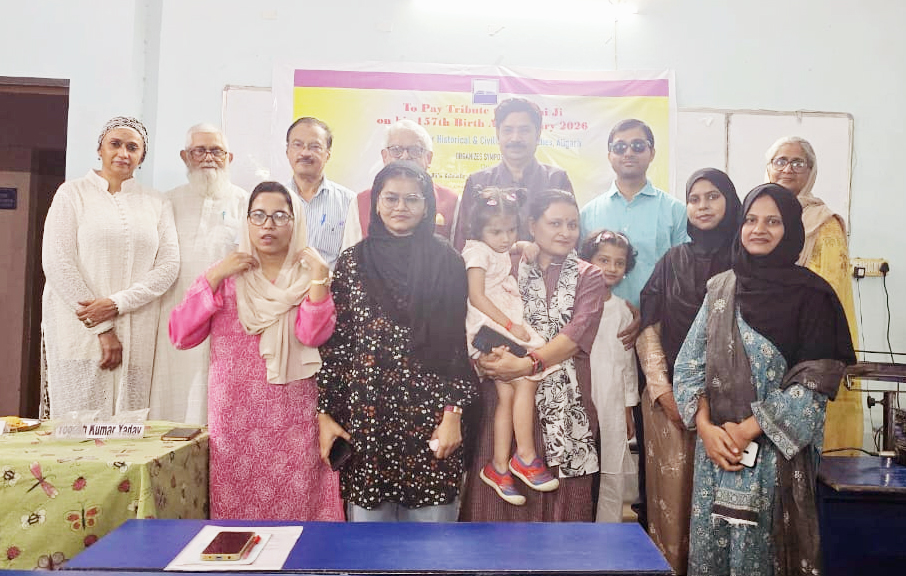
A group photograph of speakers and audience.
Go Back