IOS Holds Consultative Meeting on Current Issues in Education and Research in India
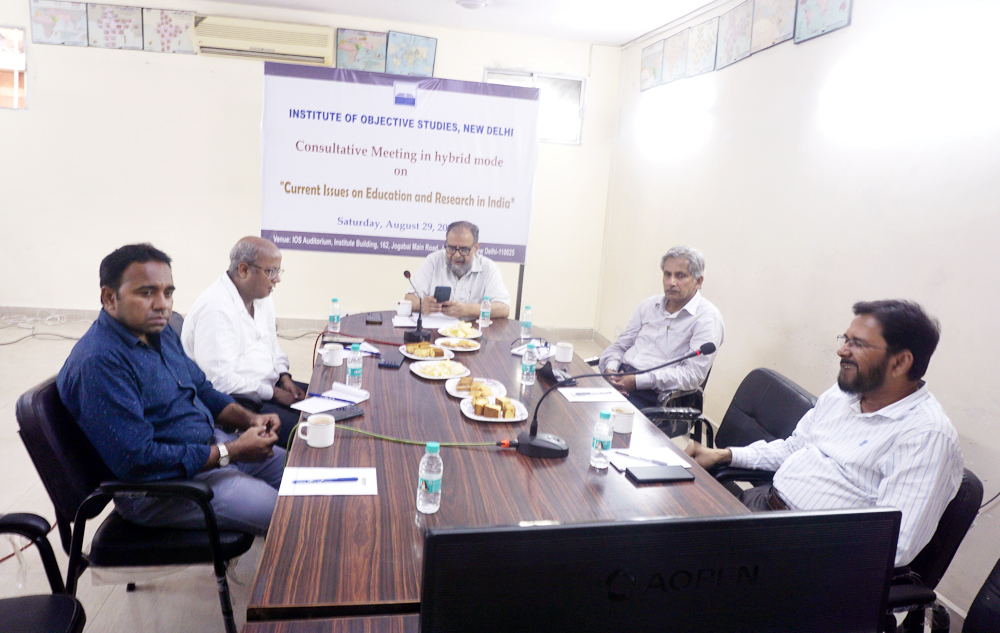
IOS Holds Consultative Meeting on Current Issues in Education and Research in India
New Delhi: A consultative meeting on “Current Issues on Education and Research in India” was held at the Institute of Objective Studies on August 29, 2026.
The meeting began with the recitation of a Qur’anic verse by the Chairman of the IOS, Prof. M. Afzal Wani.
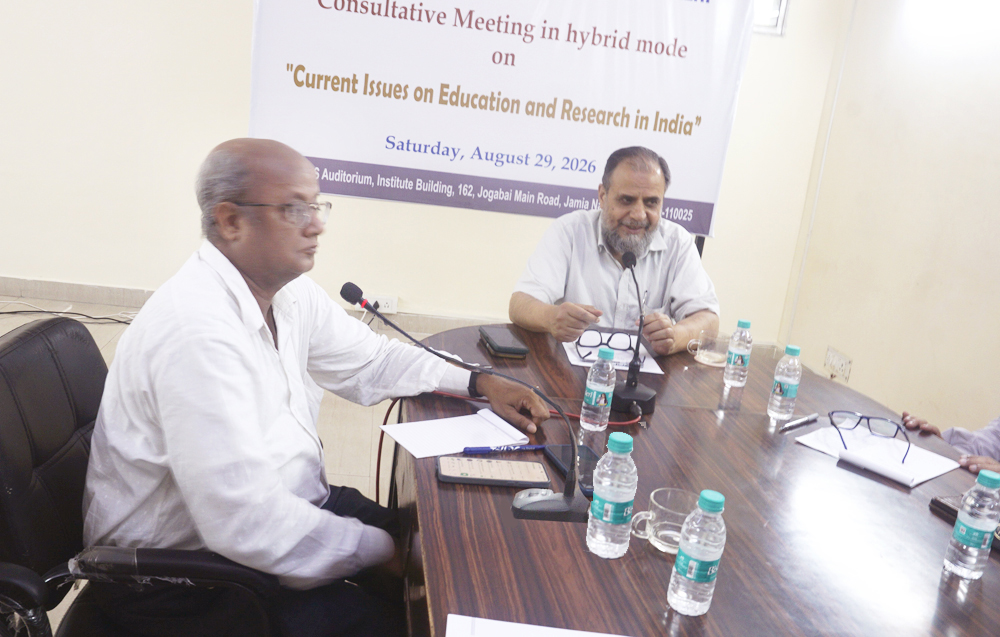
In his welcome speech, Secretary General of the Institute, Mr. Mohammad Alam, briefly highlighted the activities of the IOS and underlined the need to discuss issues relating to education and research. He expressed confidence that the meeting would deliberate on the matter in its entirety and arrive at some tangible decisions.
In his introductory remarks, Prof. M. Afzal Wani said that the IOS was working in accordance with the educational and research goals set by the Constitution of India. The founder of the Institute, Dr. M. Manzoor Alam, established it keeping in view national and international values. Many issues have come up for discussion in the contemporary context, education being one of them, that required thorough examination. In view of this, the meeting had been called, and the recommendations made here would be taken up for action and communicated to other collaborating agencies. The New Education Policy 2020, announced in 2020, had raised certain questions that also needed to be debated. He noted that, among other things, universal literacy would also be discussed.
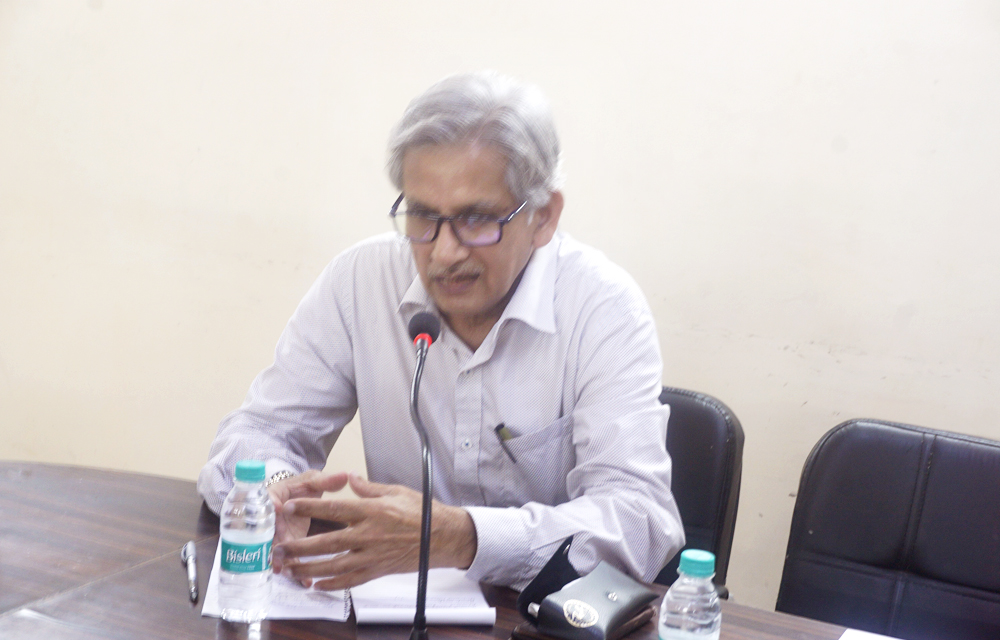
Prof. Moazzam Uddin, who retired from the National Council of Educational Research and Training (NCERT), was the first speaker at the consultative meeting. He said that education had emerged as an important issue today. He called for examining the proposal to send students to other countries and explore what more could be learned from them. It should also be examined how knowledge and information could be disseminated. This needed to be done through a well-thought-out strategy.
He said it was a happy augury that India was gaining a lot and recovering some of what had been lost in the past. He noted that India had learned a lot of things with changing times and developments. Lot has been learnt from formally developed vocabularies. A new dictionary is needed to be prepared because new idioms and technical terms have been added since then and they requireto be understood in the new context. In the field of Islamic studies also, a new glossary of words should be used according to the updated dictionary. He observed that all the Sunnah, whether Mu’akkadah or non-Mu’akkadah, should be defined.
Prof. Moazzam Uddin held that these issues should be taken seriously. There was a network of madrasas, but they were not functioning properly. Madrasas attached to mosques were somewhat financially sound. He urged madrasa teachers to improve themselves so that their students could learn from them. He regretted that teachers did not do proper homework and depended more on AI and Google. Similarly, research was not given sufficient attention. He laid stress on working with original sources.
He said that every child was born with skills and that perfection in those skills came with the passage of time. This was where educational institutions came in: they groomed students and helped them attain perfection. Thus, schools should be equipped with the necessary infrastructure, he added. Additionally, it was mentioned that Paper Leaks should not happen and corruption be controlled effectively.
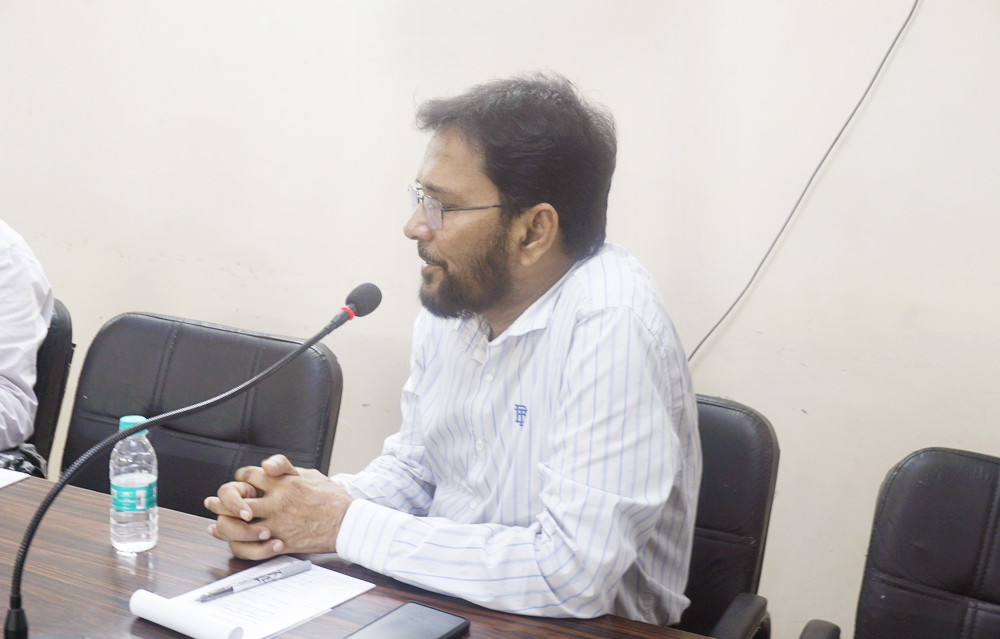
Mr. Ahmad Javed, senior Urdu journalist who had worked on madrasa education, focused on the role of madrasas in the field of universal education. He said that mosques and madrasas played a significant role in spreading literacy. He informed the gathering that 60,000 madrasas were imparting formal education in the country. These madrasas were providing primary education to nearly one crore children. He cited the example of Kerala, where, he said, almost all madrasas were imparting education. Dars (lectures) were also given in mosques in the state.
According to official reports, the quality of education being provided in Madrasas was better in some institutions as compared with that in schools. Schools were facing a shortage of teachers, partly due to the indifference of the Muslim community. He said that in West Bengal, there were 600–700 madrasas, while in Bihar the number stood at 4,000. The number of government-aided madrasas was around 2,000–2,500. Madrasas in Kerala had a good standard of education and were functioning with regularity. In India, there were 4,000–5,000 fully accredited madrasas. In the lanes and by-lanes, informal madrasas called ‘Maktabas’ were also functioning.
Prof. Mohammad Ishtiyaque, former Vice-Chancellor of Magadh University, Bodh Gaya, and professor of geography at Jamia Millia Islamia, remarked that the financial condition of Muslims was so pitiable that their children dropped out after spending a few years in school and engaged themselves in menial work to earn some money for their families. Madrasas did not have trained teachers, and only children belonging to poor families were attending their classes. Teachers at these madrasas collected donations from parents and ran the institutions with that money. The amount thus collected was very meagre.
He urged financially well-off Muslims to invest in higher education to empower the community. He opined that Muslims were not necessarily impoverished, but they were not sufficiently interested in the educational development of the community. He said that a large number of Muslim children were desirous of studying but did not have the means to pursue education.
He disapproved of extravagance in marriages and other similar ceremonies. He called for launching a movement against such prodigality so that the money saved could be spent on the education of Muslim children. He bemoaned the fact that Muslim students dropped out of college before reaching Classes 11–12.
Prof. Shafique Ahmad, Professor of Sociology at Jamia Millia Islamia, made a terse comment on the plight of teachers in private institutions of higher education. He said they did not receive the respect they deserved. Referring to the education policy of the country, he said that, in fact, it was a politically oriented policy. Language was a means of communication, and more and more students were using AI as a means of communication and understanding.
He also spoke on multiple-choice questions. He said that the accumulation of wealth was prohibited in Islam and that wealth should be used for the spread of education among Muslims who were unable to finance the education of their wards. He noted that madrasas played a significant role in extending literacy because they provided free education. He also held that madrasas were free from caste and sectarian biases.
Mr. Shaikh Nizamuddin, Assistant Secretary of the All India Milli Council and a member of the IOS General Assembly, supported the view of Prof. Shafique Ahmad that the education policy of a country was its politically oriented policy. He confidently said that minority educational institutions were playing their role very well in southern states such as Kerala, Telangana and Tamil Nadu. He alleged that a conspiracy had been hatched to lessen Muslims’ access to education. Thus, there was an urgent need to strengthen minority educational institutions, he emphasised.
Prof. Abdul Rashid Bhat, former Professor and Head of the Islamic Studies at the University of Kashmir, pointed out that education was essential for the literary, intellectual, economic and social development of an individual. It was important for the development and advancement of society.
He said that several committees set up for the improvement of higher education had made certain recommendations. A multidisciplinary approach in higher education was needed for intellectual development. Education should be purposeful. Students were not encouraged to take an interest in research in the B.A. programme. He complained that research had become artificial, whereas it should be socially beneficial and productive.
He called for producing good research that could benefit society as a whole. Innovative research would be more beneficial to society. He was of the opinion that there were many problems with madrasa education. He suggested that small workshops should be organised for teachers. Lectures on teaching methods should be held to acquaint them with the latest trends in education.
There was a need to inculcate dedication and interest in school education. Capacity building of school teachers was equally important. He also stressed the need to organise workshops for research scholars. He suggested that fundamental knowledge should be promoted, as it was declining. Resource persons should be assigned the task of preparing literature on pedagogy, he maintained.
Dr. Aftab Alam, Associate Professor of Political Science at Zakir Husain Delhi College, University of Delhi, felt the need to organise more such meetings in order to reach a conclusive understanding. He said that literature on education should conform to today’s needs.
Referring to the Khuda Bakhs Oriental Public Library, Patna, he said that it was a reservoir of books in Urdu and on medieval Indian history. Keeping this in view, IOS should explore the possibility of collaborating with the library. He said that the community was facing challenges in the field of research. The New Education Policy was a political oriented doctrine. He held that the quality of research itself had been compromised. India had become a Hindu state.
Prof. Syed Jamaluddin, Director of the IOS Centre for Historical and Civilisational Studies, Aligarh, referred to the noted Persian poet and mystic, Maulana Abdur Rahman Jama’i, who had held that three institutions were necessary for promoting universal values: the masjid, madrasa and khanqah (hospice).
Believers usually meet at the mosque once a week, on Friday, and are addressed by the Imam of the mosque concerned. He suggested that madrasas should be made centers of activities. The management of madrasas could send messages through the parents of students.
He said that khanqahs used to be centers of training. This had a positive effect on visitors to the khanqahs. It also resulted in the strengthening of pluralism because visitors belonged to different religions. These were cultural encounters involving Hindus, Sikhs, Jains, etc. Such interactions enriched India’s cultural history.
He argued that knowledge of Urdu was necessary to promote Ganga-Jamuni Tahzib (composite culture). This composite culture was enriched by Munshi Prem Chand, Mirza Ghalib and others. Both Prof. Mujeeb and Prof. Mushirul Hasan had focused on this aspect of history, he noted.
Ms. Naaz Khair, Freelance Consultant and Education (Social Sector) Consultant, commented that there were a lot of vested interests within the community. The majority were underprivileged. She emphasised the need for the universalisation of madrasa education.
She pointed out that there were 20,000 recognised madrasas and, with the installation of the Hindutva regime, Muslims were being excluded from education. Inclusivity in education among Muslims was being undermined. She said that private education was a serious issue because private colleges and institutes were supportive of students. However, they charged hefty fees, and the attitude of private colleges was very poor.
Under the circumstances, an inclusive atmosphere in education was required. It was not a matter of charity, but of inclusiveness. She held that private colleges posed a challenge to students. Career counselling of students was not being done. Private colleges offered many courses, but government colleges did not have such courses. Thus, there was a need for career counselling, she added.
Presiding over the meeting, Prof. Afzal Wani pointed out that the first Education Commission in independent India was set up in 1952. It was headed by Dr. A. Lakshman Swamy Mudaliar. In 1964, the Kothari Commission was appointed to suggest means and ways for improving the education system. In 1968, the first National Education Policy was announced during the regime of Prime Minister Indira Gandhi, followed by the second policy in 1986, introduced by Prime Minister Rajiv Gandhi.
Many things emerged from the recommendations of these commissions, including technological advancement. Later, issues such as intellectual property rights came up and were discussed in detail. Technology and science were assets, as the system had been digitised.
He called upon scholars to develop research projects. He said that instead of treating money spent on education and research as an expenditure, it should be deemed an investment for progress and prosperity. He specially referred to the necessity for promoting Arabic as a language among the people of India, which has got a mention in the New Education Policy of 2020 and shall have great literary and employment impact.
Prof. Wani emphasized that the first priority of the Muslims should be education. Schools run by community funding should not be treated as somebody’s personal property. They should be run by the community representatives with regular consultation with the beneficiaries. Research should be a continuous activity to be aware of the achievements and the deficit. The ‘Iqra’ should be understood as the constant Divine the Dictum. It should be ensured that there was no beggar or illiterate person in any Muslim area by the efforts of those who possess the means to manage the community affairs. He urged upon Muslims to study, create and spread knowledge, which is their Fariza, religious compulsory obligation.
The meeting ended with a vote of thanks proposed by the Secretary General of the Institute.
Go Back