IOS Panel Discussion on “India and the Changing Multipolar World: Challenges and Prospects – Discussing the Roadmap for Sustainable Growth of the Indian Economy”
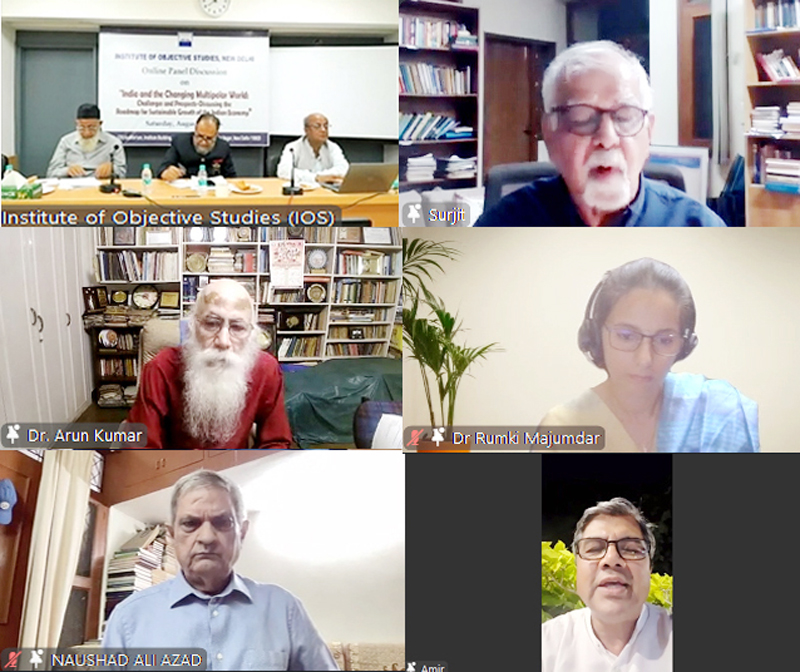
IOS Panel Discussion on “India and the Changing Multipolar World: Challenges and Prospects – Discussing the Roadmap for Sustainable Growth of the Indian Economy”
New Delhi: An online panel discussion on ‘India and the Changing Multipolar World: Challenges and Prospects – Discussing the Roadmap for Sustainable Growth of the Indian Economy’ was organised by the Institute of Objective Studies (IOS) on August 22, 2026.
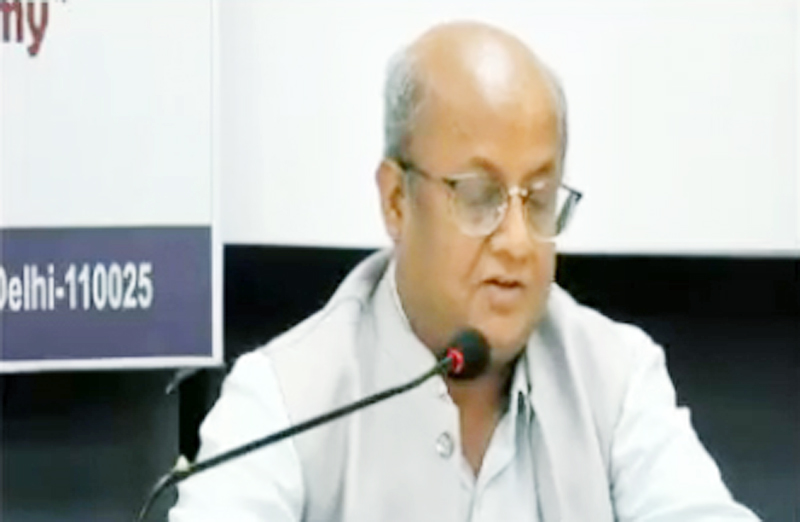
The panel discussion began with the Secretary General of the Institute of Objective Studies, Mr. Mohammad Alam, welcoming the panelists and the audience. In his speech, Mr. Alam highlighted the activities of the IOS. He said, “The Institute of Objective Studies has always sought to promote objective, independent and interdisciplinary research and dialogue on issues of national and international importance. We believe that informed discussion, grounded in research and diverse perspectives, is essential for understanding complex challenges and developing constructive policy responses.”
“We are living through a major transformation in the global order. The emergence of multiple centres of economic, political and strategic power is reshaping international trade, investment, technology, energy security and development. For India, this changing environment offers significant opportunities, but it also presents serious challenges.”
He said that India’s growing economic strength, demographic potential, digital transformation, technological capabilities and expanding engagement with the Global South provided a strong foundation for its future role. At the same time, issues of employment, inequality, climate change, energy security, technological disruption and economic resilience required sustained attention. “The question before us, therefore, is not simply how India can achieve faster economic growth, but how that growth can be sustainable, inclusive, employment-oriented and beneficial to all sections of society.”
Mr. Alam emphasised that sustainable development required a balanced approach—combining economic dynamism with social inclusion, technological progress with human development, and growth with environmental responsibility. It also required India to make effective use of its human resources, strengthen skills and innovation, deepen its participation in global value chains, and build resilience against global uncertainties, he added.
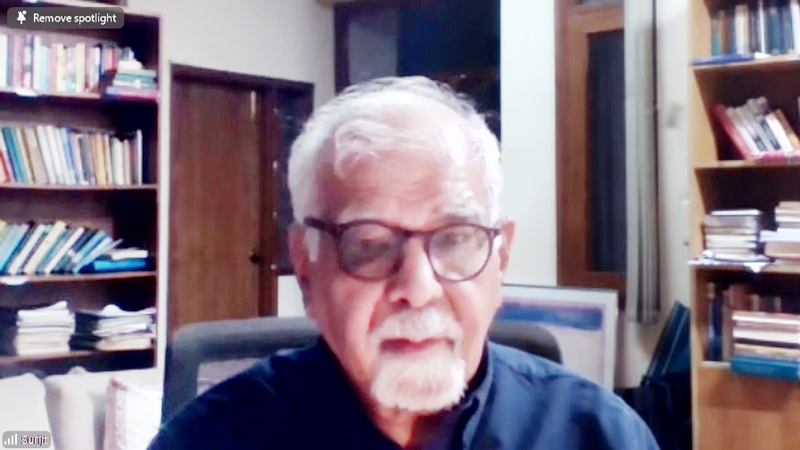
The first panelist, Prof. Surjit Bhalla, eminent economist, author and columnist, former Executive Director of the International Monetary Fund and member of the Prime Minister’s Economic Advisory Council, drew attention to the need for India to assess its economic performance not only in comparison with other major economies of the world but also in relation to its own enormous potential and long-term national aspirations.
He stressed that India had demonstrated considerable resilience and was among the world’s major growth centres. He held that if India was to fulfil its ambition of becoming a developed economy, the pace of growth had to be accelerated substantially. Prof. Bhalla underlined the importance of sustaining high growth, increasing investment, creating employment and raising productivity. He suggested that India must translate improvements in infrastructure, human capital and macroeconomic stability into a significantly higher and more sustainable rate of growth. Policy reforms and more effective utilisation of the country’s economic and demographic potential were essential to achieving this objective.
He said that the issue of employment was still defying a solution. In 2011-12, India had experienced rapid growth and employment. That was the time when only a few places in the world could boast of good economic growth. The trend was, however, reversed in 2021 due to Covid-19. Last year, growth was sustainable and the economy became more formal. It grew much faster from 2024 onwards. This trend was expected to continue for the next two years due to Viksit Bharat. If one looked at India’s growth compared to other countries, it had been declining since 2011. The GDP growth rate declined across the world from 2011 and continued to do so until 2024-25. There was zero growth for salaried persons, and this was a global issue, he maintained.
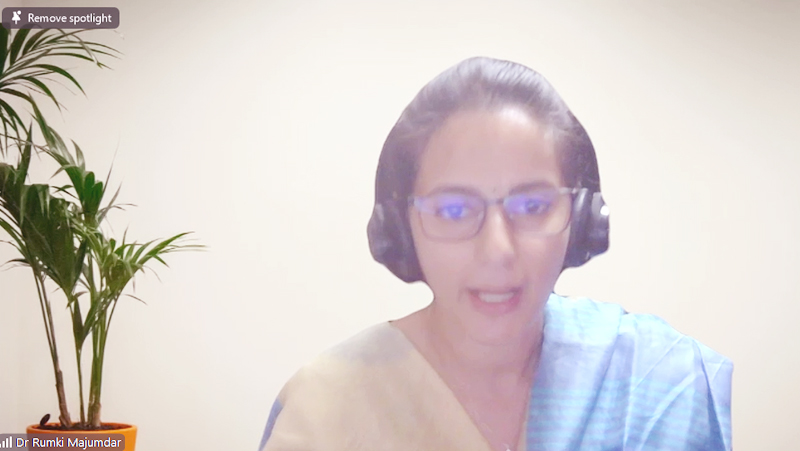
The next speaker, Dr. Rumki Majumdar, renowned business economist and strategist from Bengaluru, spoke about the challenges and opportunities facing Indian business and industry amid increasing global uncertainty. She pointed to the growing importance of resilience, diversification and adaptability in a world affected by geopolitical tensions, supply-chain disruptions, technological changes and fluctuations in international markets.
She emphasised the need to strengthen India’s competitiveness through improvements in infrastructure, the investment climate, technological capabilities and ease of doing business. She said that over the last one and a half years, rural demand had been encouraging. The government had done well to boost rural consumption. A large population depended on the rural economy.
In the realm of agriculture, India had a lot of opportunities to export to other countries. Irrigation, supply chains and storage conditions needed to be improved. Failure of rains created a negative impact on the farm sector. She noted that the problem of unemployment had been growing due to AI, which was affecting employment. AI was disrupting jobs in every field, but it would also create more employment. She emphasised the need for eco-friendly structures.
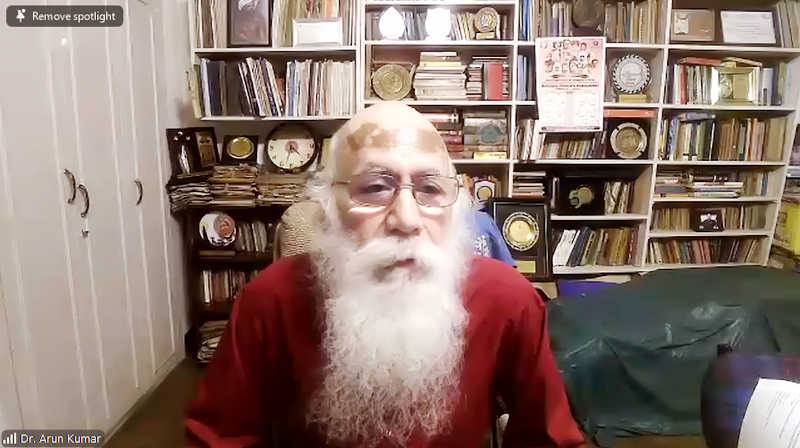
The third speaker, Prof. Arun Kumar, former professor of economics at Jawaharlal Nehru University, New Delhi, pleaded that India’s data needed correction. He said that in 2021-22, the labour force stood at 27 million. There was a huge amount of underemployment, with people having less work, leading to loss of income. There was a backlog in the workforce due to demonetisation and the pandemic, which affected markets and the manufacturing sector.
He focused on the structural dimensions of the Indian economy and the need to look beyond overall macroeconomic indicators. He underscored the importance of employment, purchasing power, inequality, the informal sector, and the condition of small and medium-sized enterprises in assessing the real health and sustainability of economic growth. He stressed that a sustainable growth strategy must ensure that the benefits of development reached broader sections of society.
Sustainable economic expansion, he noted, could not depend solely on the performance of a few sectors or large corporations. It required broad-based employment generation, strengthening domestic demand, and greater support for productive sectors of the economy.
Prof. Kumar’s observations highlighted the close relationship between growth, employment and equality. He suggested that India’s roadmap should address structural weaknesses while promoting production. Greater investment, technological advancement and maximum participation of the population in the development process were required.
He said that India had not done well compared to several other countries. Referring to the growing use of AI, he held that it was coming in a big way. In the US alone, 700 billion dollars had been invested in AI. Physical and mental labour was being displaced due to AI. Countries using AI were dominating the world. The United States was preventing China from taking an upper hand in trade, technology and finance. Both the US and China were much ahead of India.
He also focused on climate change in Europe, where large parts of the continent were experiencing heatwaves. This was affecting work. India had a weak education system. He concluded that inequality in India had increased.
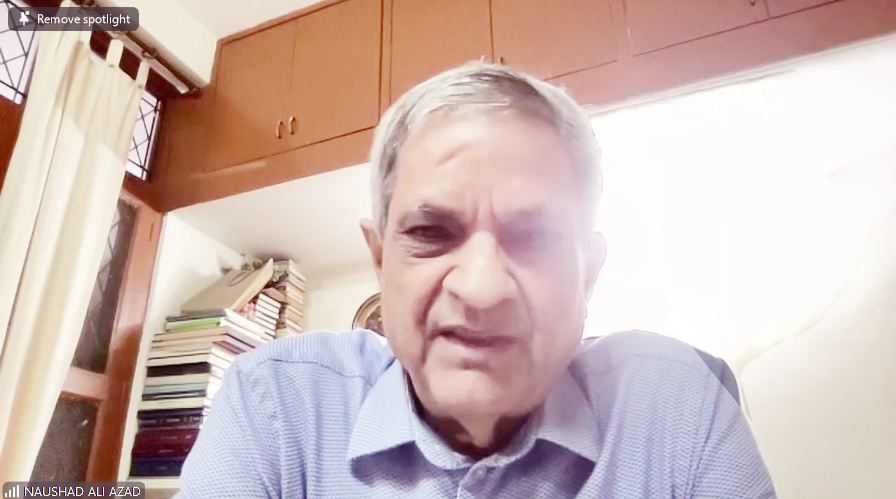
Prof. Naushad Ali Azad, former Dean, Faculty of Social Sciences, Jamia Millia Islamia, New Delhi, examined the issue in the broader context of the relationship between social development, economic development and social transformation. He stressed that economic policy could not be separated from questions relating to education, human development, social justice and the empowerment of different sections of society.
He said that the economic environment in the world order had changed. “Markets were neither free nor fair. They were not even multilateral; they were bilateral today. The world economic situation was highly unstable and highly unpredictable.” He said that we were in a multipolar world and it was multi-aligned.
Since 2011, the growth rate of the economy had been declining all over the world. He noted that India’s growth rate was much better than that of several other countries. India was centrally placed to have good relations with other countries of the world. However, there was some disenchantment among people over unemployment. He suggested that India should maintain good relations with the Global South.
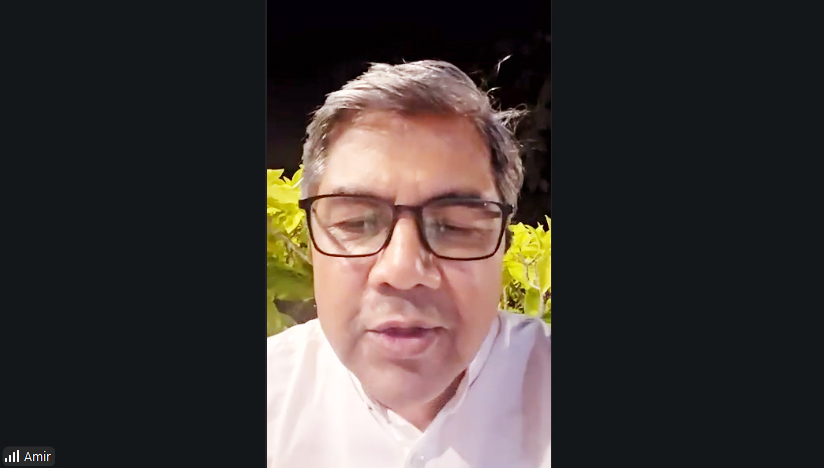
Prof. Amir Ullah Khan, Research Director, Centre for Development Policy and Practice, Hyderabad, highlighted the centrality of human development to India’s future economic prospects. He laid stress on the need to pay attention to quality education, skill development and financial inclusion in building an economy capable of sustaining long-term growth.
He pointed to internal and external problems in terms of employment, growth rate and rising inequality. He described India as the most unequal country. There was a serious ‘middle employment trap’. Till demonetisation, India had a good economy, but currently it was at its worst. Joblessness was going to get worse.
He said that there was very hesitant foreign capital investment. The market was unstable, with a six per cent growth rate, and the country could not attain the goal of a three-million-dollar economy. AI was not helping much. Poor policies in the manufacturing sector also added to the woes, he remarked.
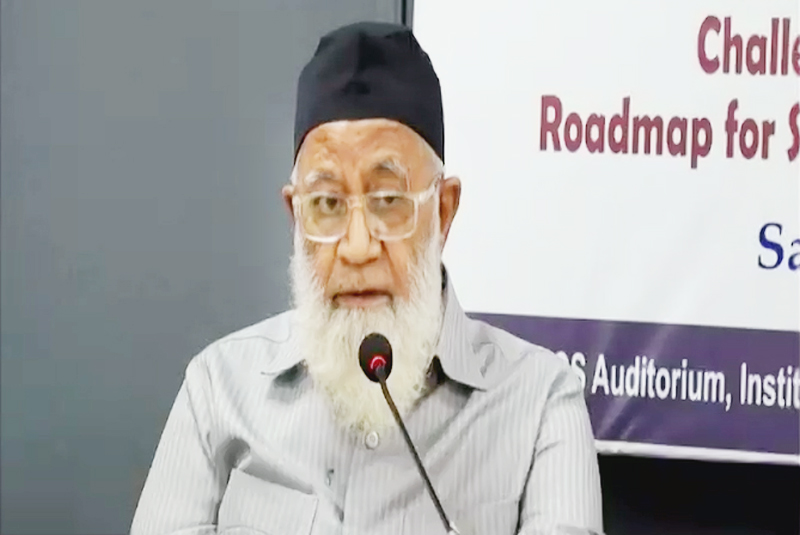
Dr. Waquar Anwar, renowned Islamic economist and fellow member of the Institute of Cost Accountants of India, New Delhi, emphasised the need to adopt an important ethical and alternative economic perspective. He underlined the importance of values such as equity, social responsibility, fiscal prudence and the broader welfare of society in shaping a sustainable economic order.
He emphasised that discussions on growth should not be limited merely to the expansion of GDP. Questions concerning the equitable distribution of wealth, productive investment, financial inclusion and the protection of vulnerable sections of society were equally important, he added.
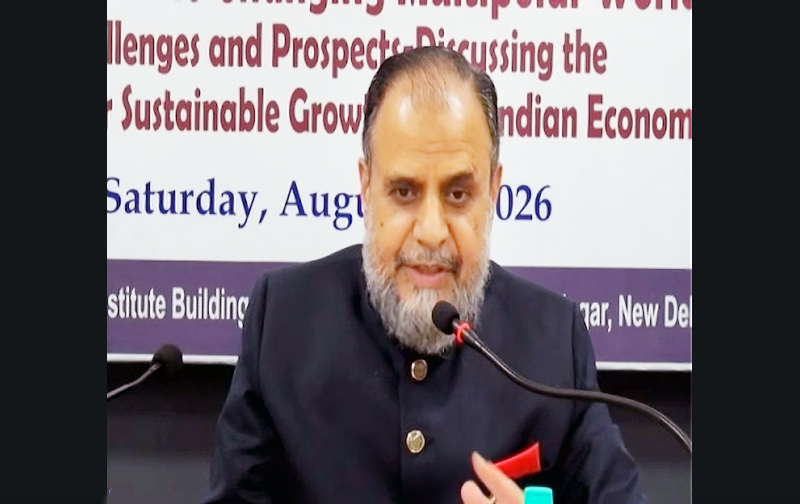
Prof. M. Afzal Wani, Chairman of the IOS, in his presidential remarks, laid stress on the need for serious and sustained intellectual engagement with the economic and strategic challenges facing India. He observed that the transformation of the global system required India to formulate policies that were economically robust, socially responsible and responsive to rapidly changing international realities.
He emphasised that India’s development strategy should be comprehensive and long-term. Economic growth, technological advancement, human development, institutional strength, social cohesion and sustainability must move forward together. He suggested that India should tap the resources available at home and utilise them for the benefit of its people.
He said that India should be an abode of peace. He observed that the two billion Muslims across the world had an opportunity to empower the community. Globally, India was a leader, but it was not moving at the pace required. Calling for greater use of AI, he said that it should be viewed as an added support to human intelligence.
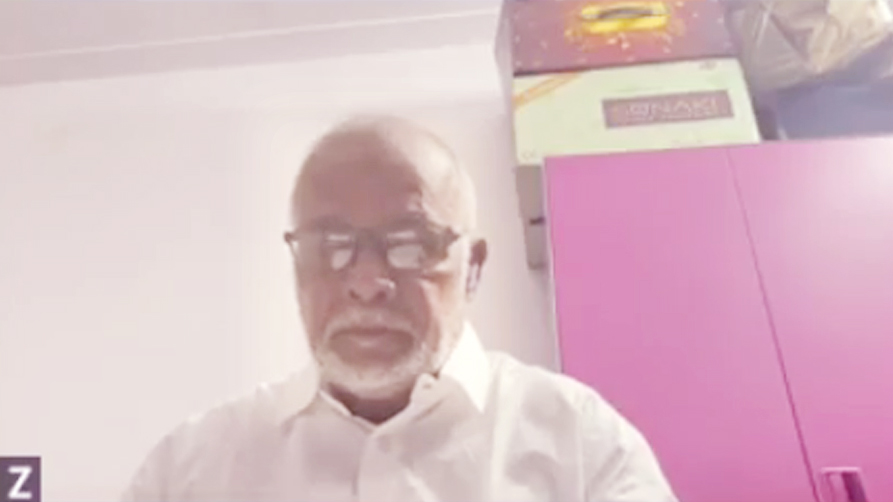
At the end of the programme, Shaikh Nizamuddin, a member of the IOS General Assembly, who also conducted the proceedings, proposed the vote of thanks.
Go Back