IOS Chennai Chapter Interactive Session on “Tamil Nadu Politics: What has changed?”
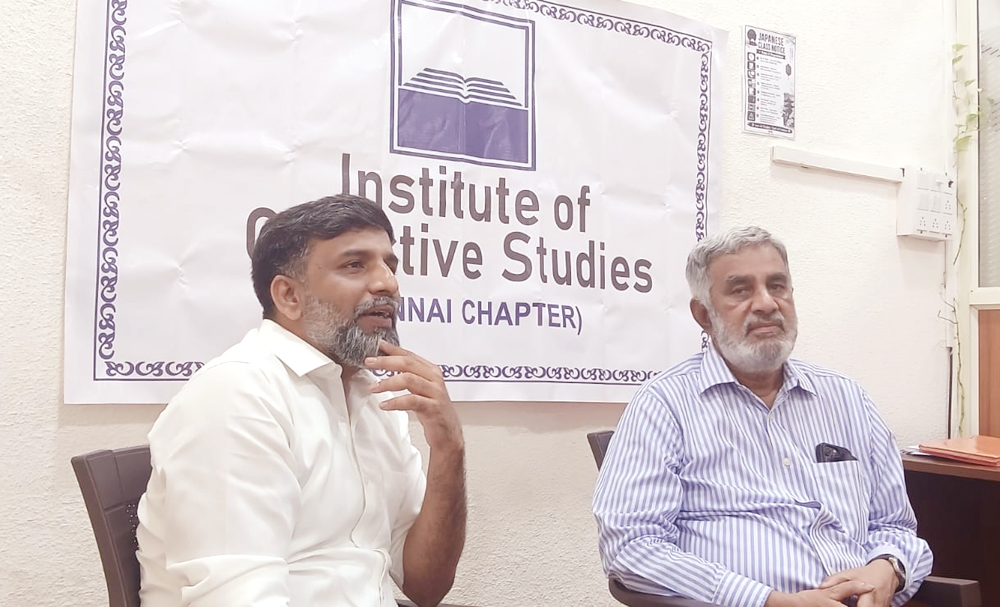
IOS Chennai Chapter Interactive Session on “Tamil Nadu Politics: What has changed?”
The Chennai Chapter of the Institute of Objective Studies (IOS) organised an interactive session on “Tamil Nadu Politics: What Has Changed?” on Saturday, August 22, 2026, at the IOS office in Chennai.
The programme commenced with the recitation of verses from the Qur’an by Maulana Zafarullah Rahmani. Mr. Mohamed Haneef Katib, Coordinator of the IOS Chennai Chapter, welcomed the guest speaker and the select audience. He introduced the speaker and highlighted the objectives and activities of the Institute of Objective Studies.
The guest speaker, Mr. Z. Shabbir Ahmed, is a Senior News Editor with The News Minute, a leading English-language news portal covering South India. Previously, he served as Head of the Tamil Nadu Bureau of Times Now. A commerce graduate with a Diploma in Journalism from the University of Madras, he has 16 years of experience in print, digital and television journalism. He was also selected for the Next Generation Leaders Programme of the Korean Foundation.
Speaking on the subject, Mr. Shabbir Ahmed observed that a significant political vacuum had emerged in Tamil Nadu following the demise of the stalwart leaders of both the DMK and the AIADMK. Although Mr. M. K. Stalin assumed charge of the government, his administration, according to the speaker, remained heavily dependent on the bureaucracy and government officials.
Against this backdrop, the growing political influence of actor Mr. Joseph Vijay Chandrasekhar (Vijay) represented a dramatic shift in the State’s political landscape. Even before the formal formation of his political party, public surveys reportedly indicated an approval rating of around 16 per cent for Mr. Vijay, driven largely by his popularity as a film actor and his influence, particularly among women and younger sections of society.
According to the speaker, following the establishment of Mr. Vijay’s party, a section of the traditional DMK vote base—particularly women and elderly voters—appeared increasingly receptive to the possibility of shifting their political allegiance towards Mr. Vijay. In the initial stages, both the DMK and the AIADMK were unable to fully assess the extent of Mr. Vijay’s emerging political strength. At the same time, the BJP’s influence in Tamil Nadu weakened despite its substantial political investment in Mr. K. Annamalai.
Mr. Shabbir Ahmed further noted that Mr. Vijay had adopted what he described as a strategic approach by bringing together Tamil nationalist leaders and prominent figures associated with the Dravidian tradition within his party’s ideological framework. Although many of the party’s members and candidates came from ordinary and modest backgrounds, they were, he observed, accepted by the public.
The speaker also discussed the response of Muslim political leadership in Tamil Nadu. He observed that Muslim leaders and parties had largely failed to anticipate the emerging political wave associated with Mr. Vijay and, in many instances, had initially overlooked the significance of his growing appeal. He further pointed out that, while Mr. Vijay received comparatively fewer Muslim votes in several constituencies, Muslim candidates in certain constituencies were able to secure support from Hindu voters.
The support extended to Mr. Vijay during the government-formation process by the Communist parties, the VCK and the Indian Union Muslim League was described as a positive and welcome development. The speaker observed that Muslims were still deliberating on their approach towards the new government. Nevertheless, he suggested that the political indicators pointed towards the government completing its five-year tenure and that the Tamilaga Vettri Kazhagam (TVK) had strong prospects in the forthcoming Parliamentary elections.
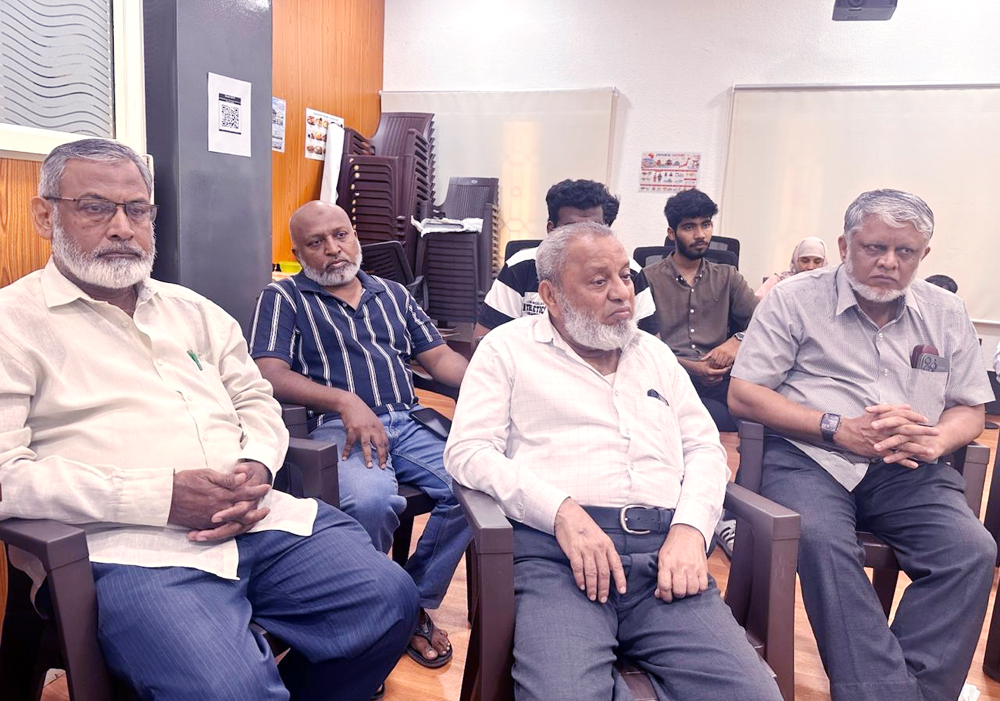
An engaging interaction followed the lecture, during which participants discussed various challenges and opportunities confronting Muslims and other minorities in Tamil Nadu. The discussion focused particularly on the need for minorities to understand the changing political environment and engage constructively with emerging political formations.
The key takeaway from the session was that Muslims and other minority communities should establish meaningful engagement with the nascent State Government led by Mr. Joseph Vijay and approach the political changes in Tamil Nadu with openness and a constructive outlook.
The session concluded with a formal vote of thanks.
Go Back