Mujaddid IOS Centre for Arts and Literature Organises Discussion on ‘Taravish-e-Qalam’
Mujaddid IOS Centre for Arts and Literature Organises Discussion on ‘Taravish-e-Qalam’
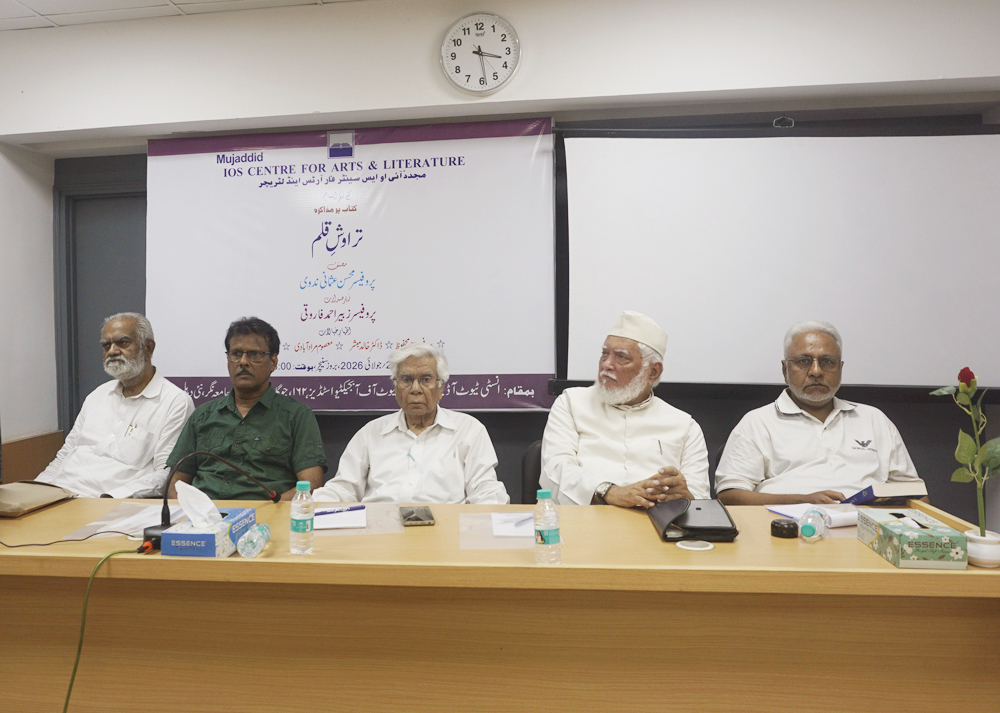
New Delhi: A discussion on the book Taravish-e-Qalam (Draining of the Pen), written by Prof. Mohsin Usmani Nadwi, former professor of Arabic at the English and Foreign Languages University, Hyderabad, was organised by the Mujaddid IOS Centre for Arts and Literature at the Institute’s auditorium on July 25, 2026.
The function began with the recitation of a verse from the Qur’an by Mansoor Ahmad, in-charge of the Computer Section, followed by its translation in Urdu.
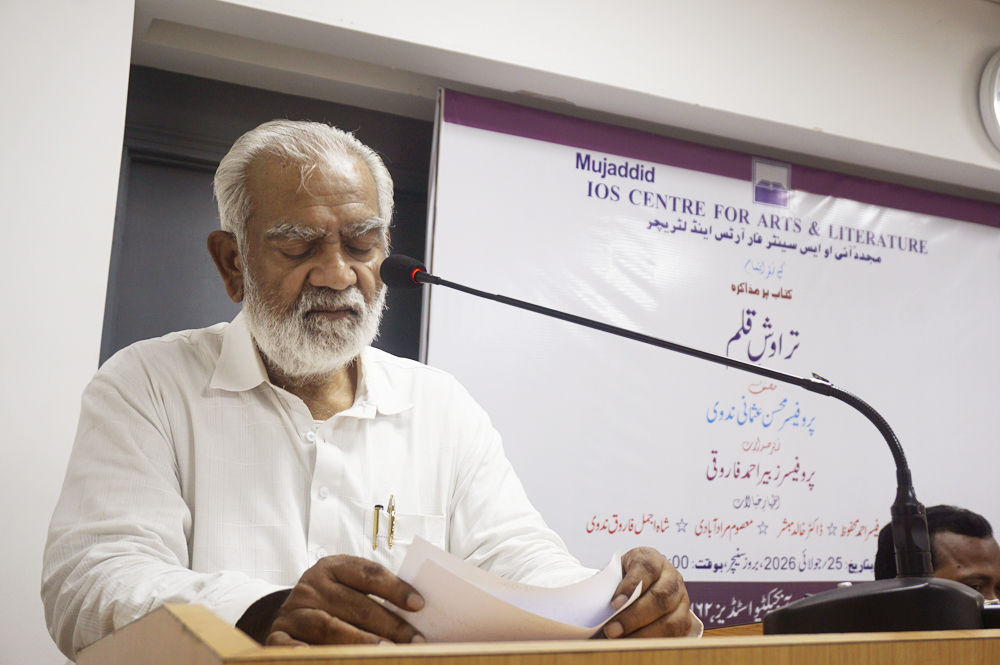
In his introductory remarks, the convenor of the Centre, Mr. Anjum Naim, shed light on its objectives and activities, which focus on literature. He said that the Centre was engaged in organising discussions, seminars and symposia on different aspects of literature. A number of seminars had so far been organised by the Centre. He stated that the Centre would continue to hold such discussions while ensuring the participation of Urdu writers, critics and journalists.
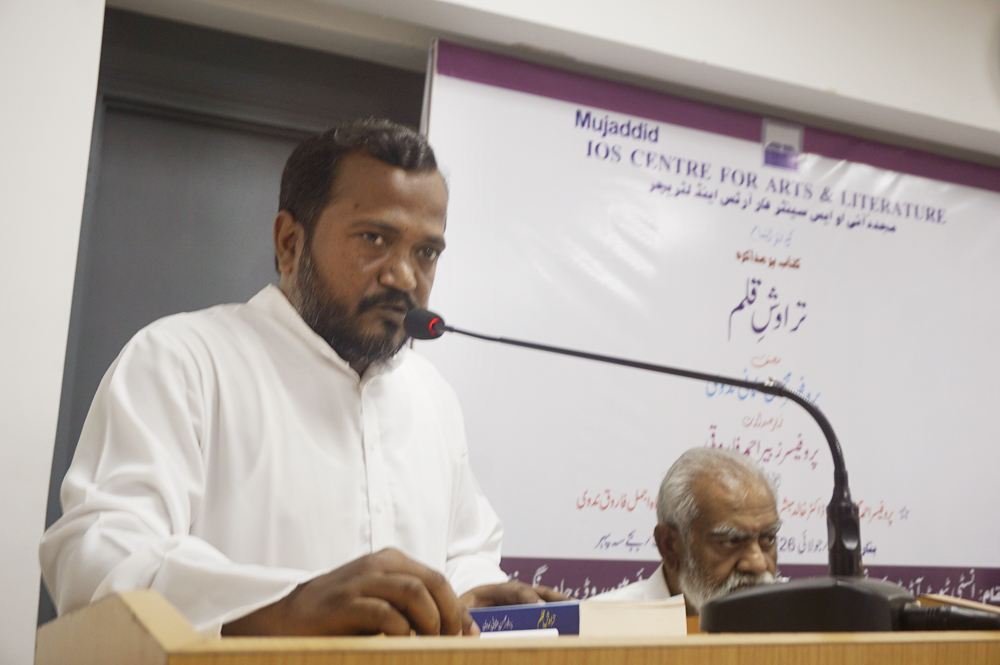
Dr. Khalid Mubashshir observed that Prof. Usmani’s book contained literary, religious and political articles. “It contains muqaddamas, which refer to the introduction or preface of a book. The word comes from the Arabic language. It came into Urdu through the celebrated Urdu writer Hali, who wrote the Muqaddama to his work Muqaddama-e-Sher-o-Shayari. Ibn Khaldun was the first writer to write a Muqaddama in Arabic. In English, Shakespeare wrote muqaddamas in the form of dramas. In this connection, several books have been quoted. Qur’anic references have also been given.
He noted that the Qur’an was referred to as a magical book. In the early years of Islam, the Prophet (PBUH) was called a magician. Prof. Usmani’s book contained a comprehensive commentary on Surah Al-Fatiha. The book was not aimed at providing information alone; it had a unique style of expression. He also referred to the Muqaddama written by senior Urdu journalist Suhail Anjum for his book on Maulana Azad, which demonstrated the latter’s commitment to secularism. He observed that whatever topic Prof. Usmani chose, he went deep into it and expressed its nuances through his craft of writing, based on facts and without personal bias.
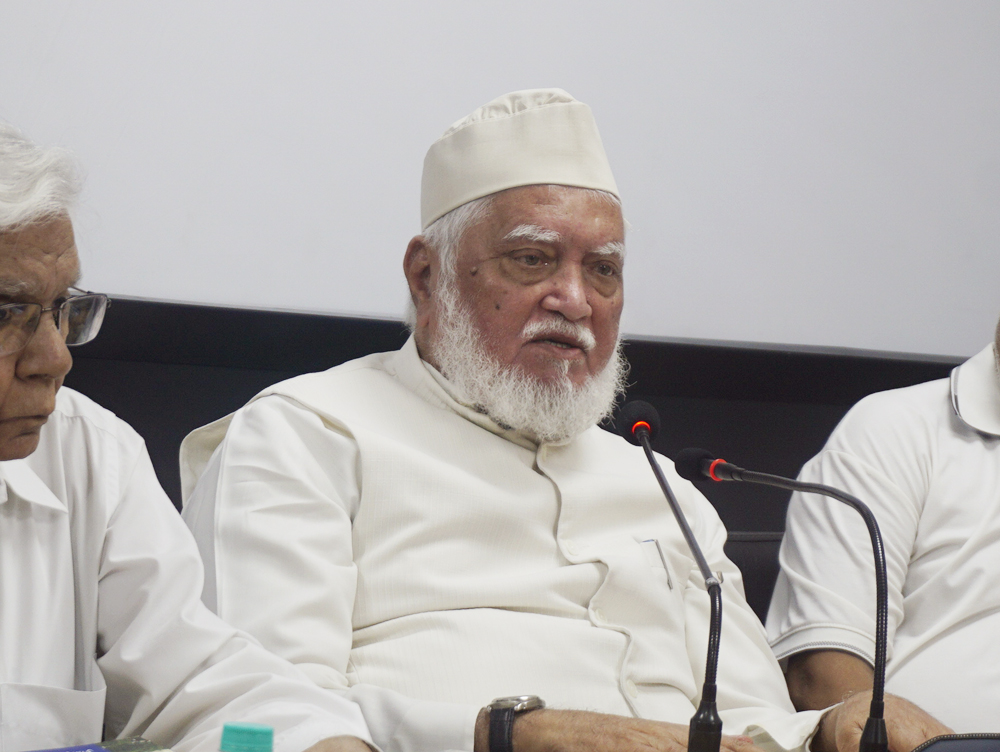
Speaking about his book, Prof. Mohsin Usmani expressed the hope that the dawn of goodness would emerge despite the current situation being very fluid. He firmly believed in diversity, which had always been a part of Indian culture. He prescribed a three-point solution to the problems faced by Muslims today. First, Muslims should adhere to Maulana Azad’s concept of communal harmony. Second, Payam-e-Insaniyat (Message of Humanity), propounded by Maulana Syed Abul Hasan Ali Nadwi, popularly known as Ali Miyan, should be a guiding principle for Indian Muslims. Third, Muslims should pay proper attention to education.
He also spoke about the concept of Khilafat. The Nizam-e-Khilafat had been enforced by several Muslim rulers in the past. Referring to the book Khilafat-o-Malookiyat, he said that it was “fodder for knowledge”. He held that deriving happiness from one’s own praise amounted to diminishing oneself in the eyes of Allah.
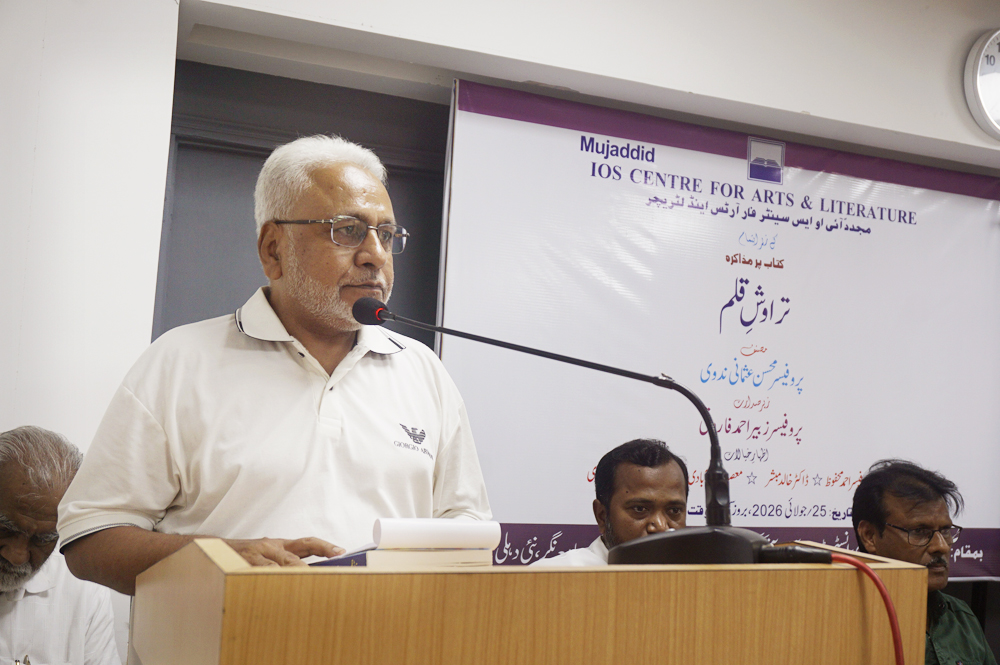
Senior Urdu journalist, author of several books and editor of the weekly newspaper Khabardar, Mr. Masoom Moradabadi, opined that reading the book generated more interest than discussing it. He said that the book was the gist of Prof. Usmani’s writings. He was an Arabic scholar, and his style of writing was influenced by that language. There were only a few writers who could be compared with him in terms of the finery of the language they used. He held that Prof. Usmani was also a prose writer par excellence.
Prof. Usmani had so far written more than 50 books. According to Mr. Masoom Moradabadi, the best prose writer is one who writes in simple language. Words are like pearls that can be properly arranged. He said that the finesse of writing was determined by the influence it left on the reader. Despite being an Arabic scholar, Prof. Usmani was a prolific writer in Urdu. He described Taravish-e-Qalam as a testament to an important era of the literary and intellectual life of Urdu.
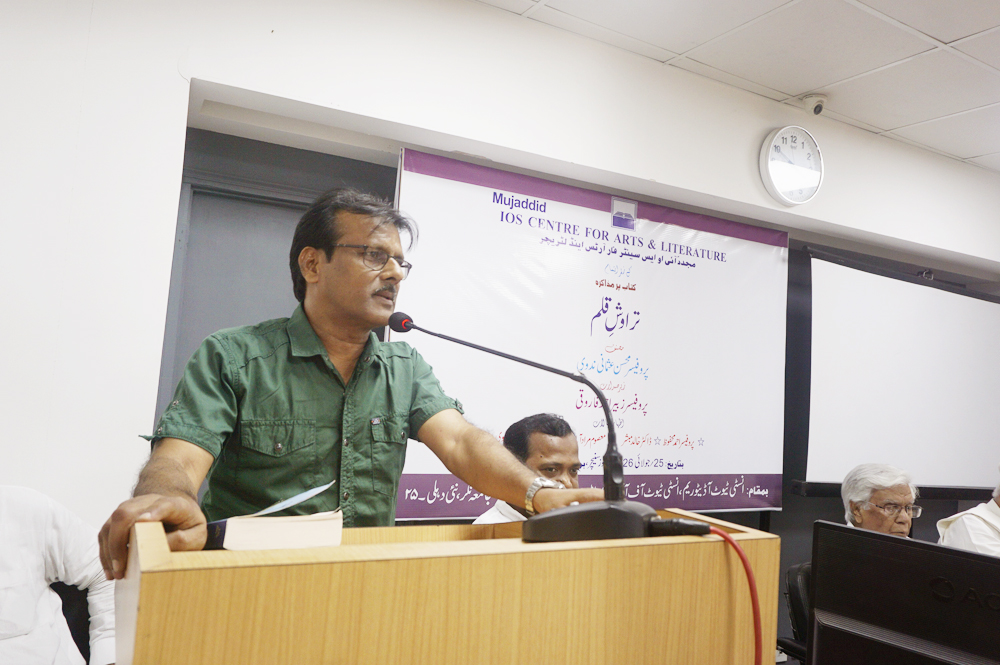
Prof. Ahmed Mahfooz remarked that, despite his advanced age, Prof. Usmani was still going strong. Both his personality and writings were par excellence. Though his field was Islamic Studies, he wrote in the finest Urdu. He said that the main characteristic of the book was that, while reading it, one felt as though one was reading many books at once. The book was a repository of Islamiyat, Adabiyat, Qur’anic interpretation and Seerah.
In the chapter on Seerah, he mentioned many books on the subject in Arabic, Urdu and English. “His style of writing is superb, and his Urdu prose is very smooth and flows like water,” he said.
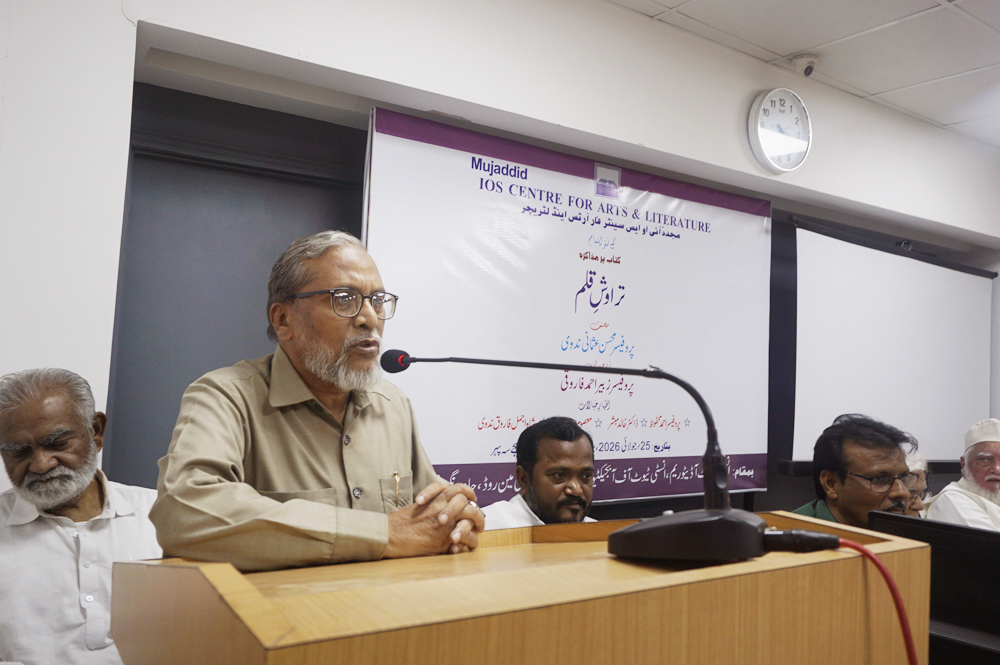
Mr. Suhail Anjum held that Prof. Usmani was influenced by Maulana Azad, Allama Iqbal and Ali Miyan. His language was simple but effective. He touched upon almost every aspect of life.
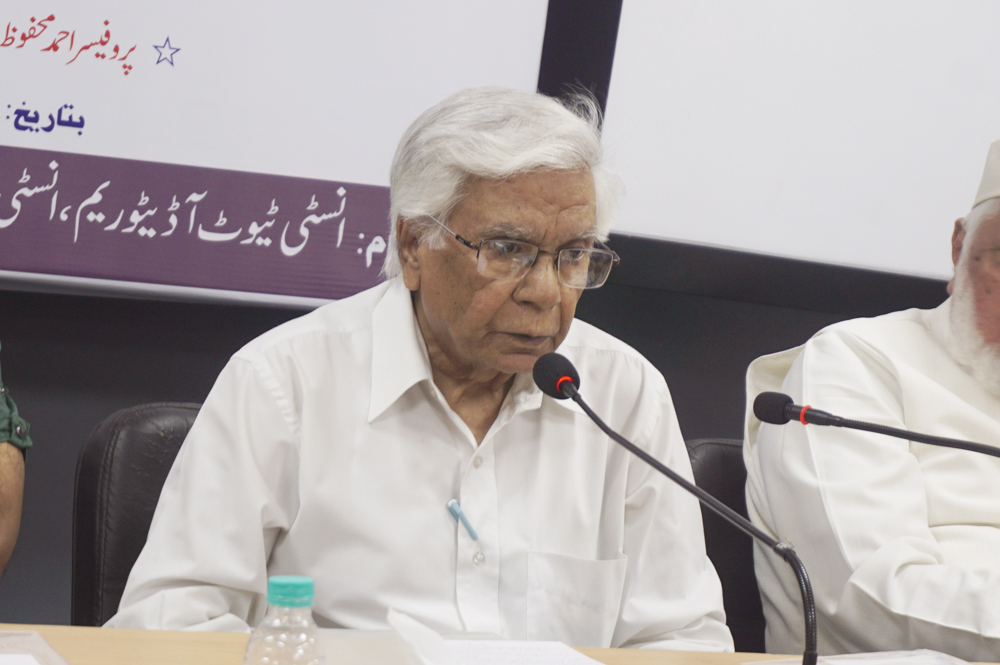
In his presidential remarks, Prof. Zubair Ahmed Faruqi remarked that Prof. Usmani’s personality was distinctive. Referring to his association with Prof. Usmani, he said that he had learnt a lot from him. According to him, the style adopted by Prof. Usmani was distinct, and his Muqaddama was highly informative. The diversification of themes justified the content of the subject. In matters of religion, he is uncompromising in his faith. He criticises the noted Urdu critic, the late Shamsur Rahman Faruqi, for Urduising Arabic terms. He made use of many books available at the Khuda Bakhsh Oriental Public Library, Patna. He is against Naguib Mahfouz, the Egyptian writer who won the 1988 Nobel Prize in Literature,” he concluded.
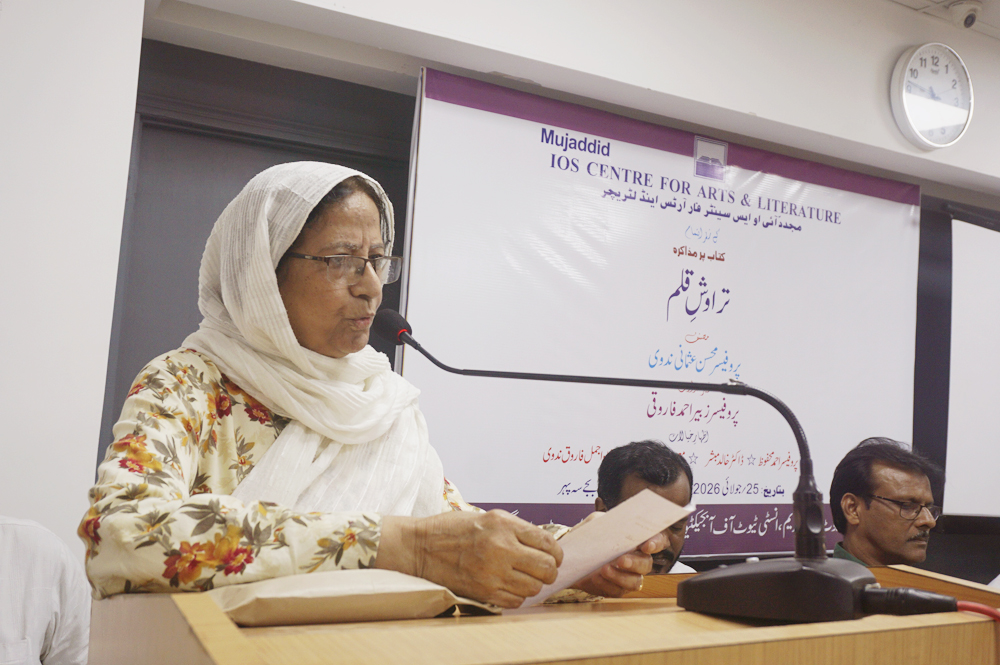
At the end of the programme, the Vice-Chairperson of the IOS, Prof. Haseena Hashia, proposed a vote of thanks to the speakers and the gathering, which consisted of writers, scholars and journalists.
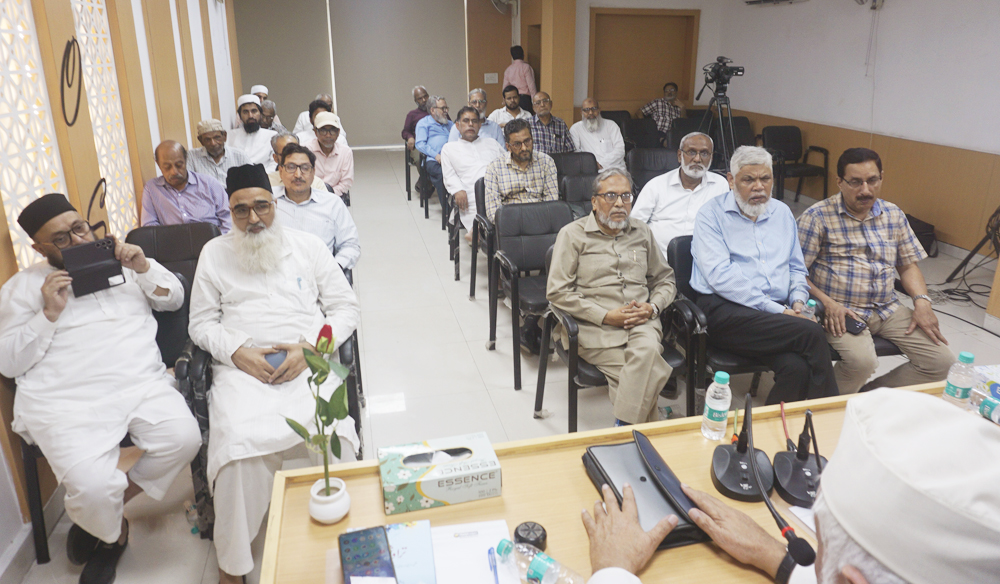
A view of audience.
Go Back