Mujaddid IOS Centre organises a Discussion on Shahr Aashob Aur Aashob-e-Asr
Mujaddid IOS Centre organises a Discussion on Shahr Aashob Aur Aashob-e-Asr
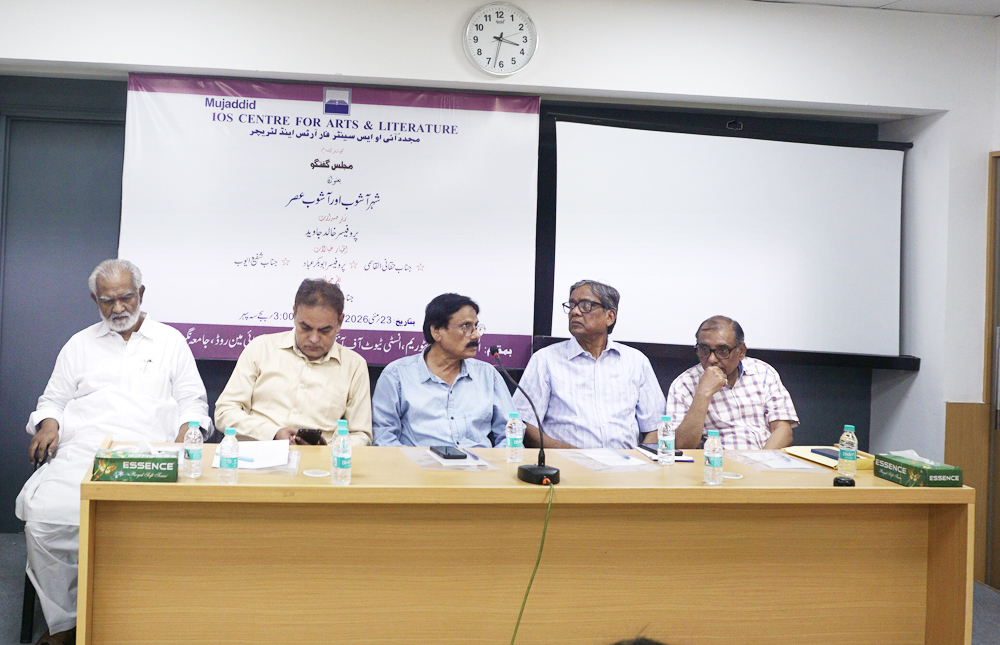
New Delhi: A discussion on ‘Shahr Aashob Aur Aashob-e-Asr’ (City of turmoil and the turmoil of the Era), was organised by the Mujaddid IOS Centre for Arts and Literature on May 23, 2026.
The discussion began with the recitation of a Qur’anic Verse by Mr. Mansoor Ahmad, In-charge of the computer section, IOS. In his opening remarks, convener of the Centre, Mr. Anjum Naim, said that the poetry influenced the life of a man. If poetry was stopped for 10 years then the life would become tasteless. Poetry of Shahr Aashob came to Urdu literature from Persian. It was manifested in the nineteenth century after 1857. Turmoil in the wake of the first war of independence persisted in every walk of life. Today’s society was also in turbulence politically and economically. “So, we are also living in an age of turmoil (Aashob)”. He described the event as memorable because of the presence of a number Urdu writers, admirers and critics.
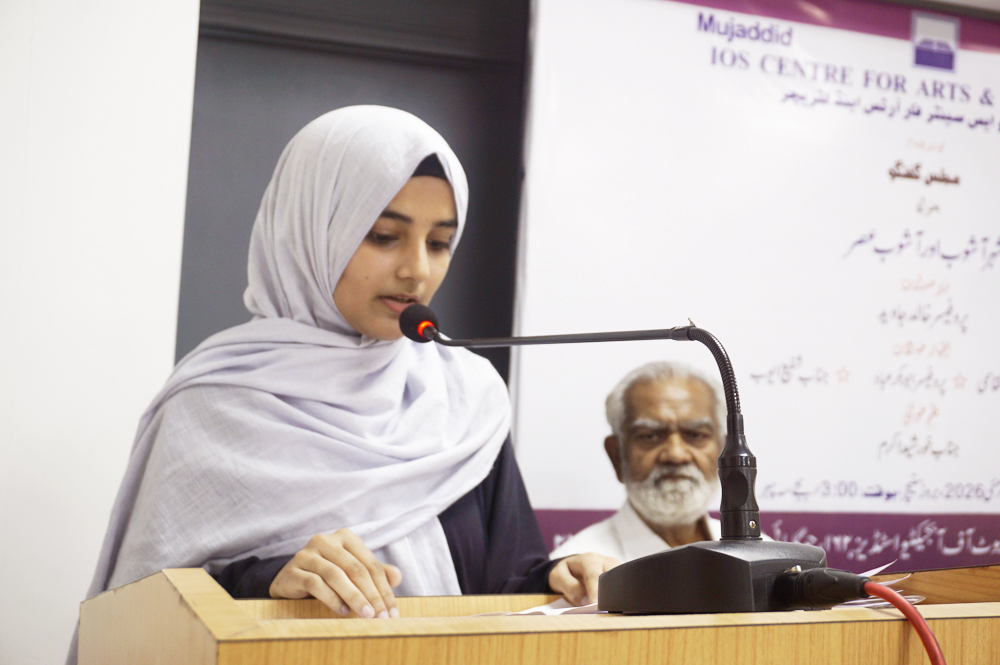
Scholar of medical lab science, Miss Nida Ahmad, recited a few couplets of the famous earlier poet, Mirza Mohammad Rafi ‘Sauda’. She said that ‘Sauda’ was the greatest Shayar (poet) of Shahr Aashob. The current age also was the era of the city of Aashob.
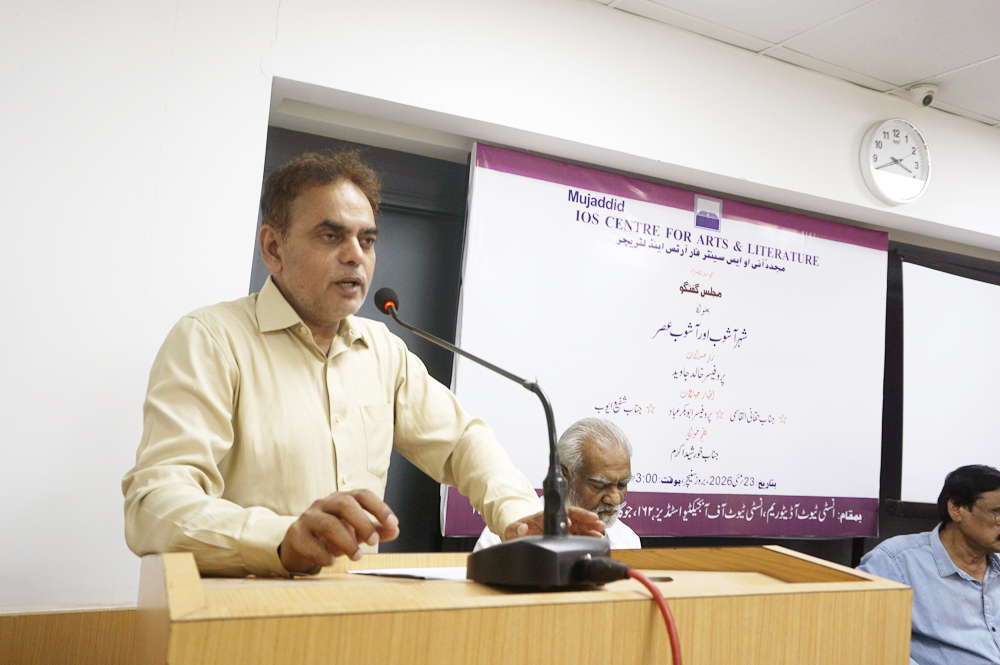
Introducing the topic, Dr. Shafi Ayyub, observed that Shahr Aashob was the state of turmoil. He noted that Shahr Aashob was written first in Persian and Turkish languages. Whenever the change in the monarchy took place, the life of the people was drowned in confusion and chaos all around. That was the time when the Shahr Aashob was written by the poets and litterateurs depicting injustices and inequalities. There was also a state of helplessness among people due to the inability to articulate to their feelings. One could not express his words and opinion on the pressing issues. He said that it was a reality of society that the life of a man carried both sorrow and joy. “The age in which we live is also Shahr Aashob”, he added.
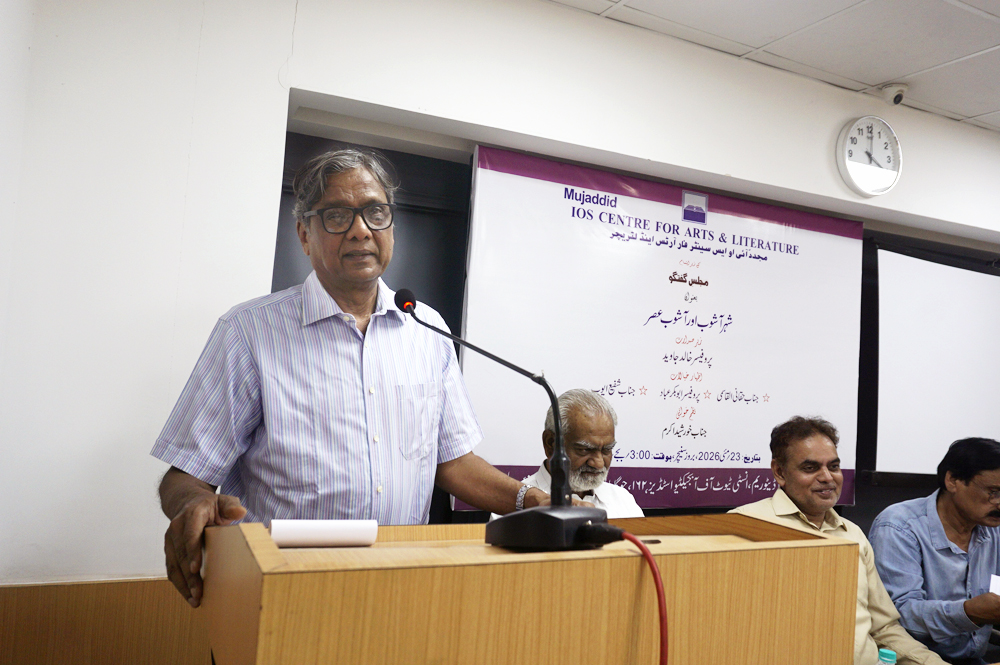
Khalil-ur-Rahman, advocate, held that whatever a poet wrote on the ruination of society, was called Shahr Aashob. Literature had always been a mirror of society. Ghalib too wrote Shahr Aashob and displayed social upheaval of his time. There was plunder and loot everywhere. He said that Shah Hatim wrote the first Shahr Aashob in 1722. The period was marked by non-payment of salaries of those in royal services. Similarly, Nazir Akbarabadi wrote on the pitiable condition of Agra. A poet wrote for the society and on the condition of social life. Much was written on the decay of Zamindari System. Mir Taqi ‘Mir’ too wrote Shahr Aashob on the Delhi floods. The poet glanced at the things from his own vision and understanding. Sheikh Qalander Bakhsh Jurat wrote Shahr Aashob. According to him, Shahr Aashob was a form of writing in Urdu. He remarked that the noted Urdu scholar and critic, Shamsur Rahman Farooqi also wrote Shahr Aashob.
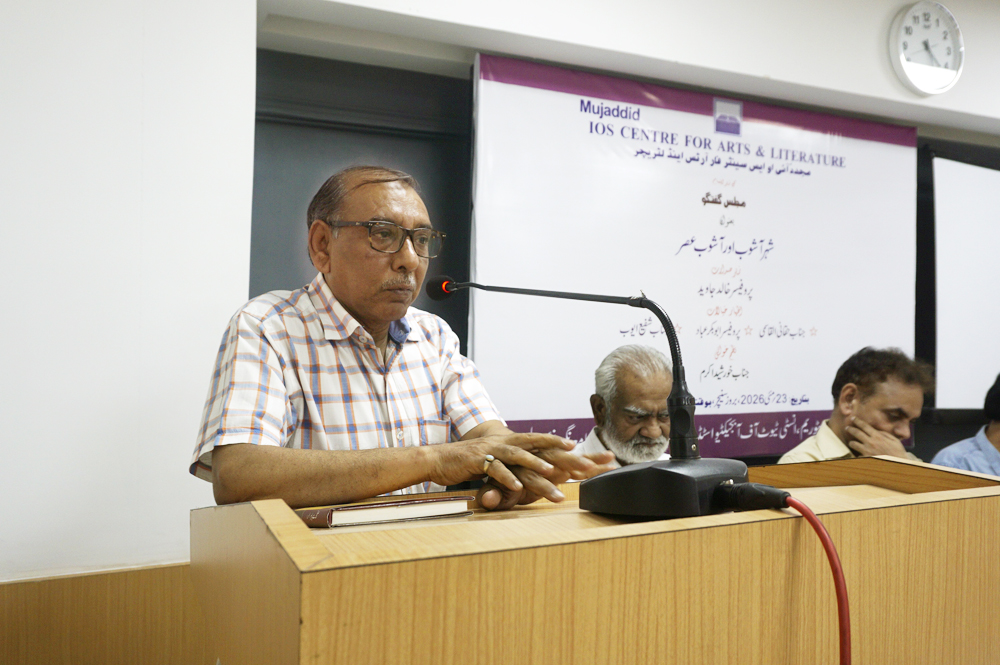
Well-known Urdu poet and writer, Khurshid Akram briefly spoke on Aashob-e-Asr. He presented his Nazms on ‘Coma’, ‘Motherland’, ‘Bewatan’ (homeless) and ‘Dar Lagta Hai’ (I am afraid).
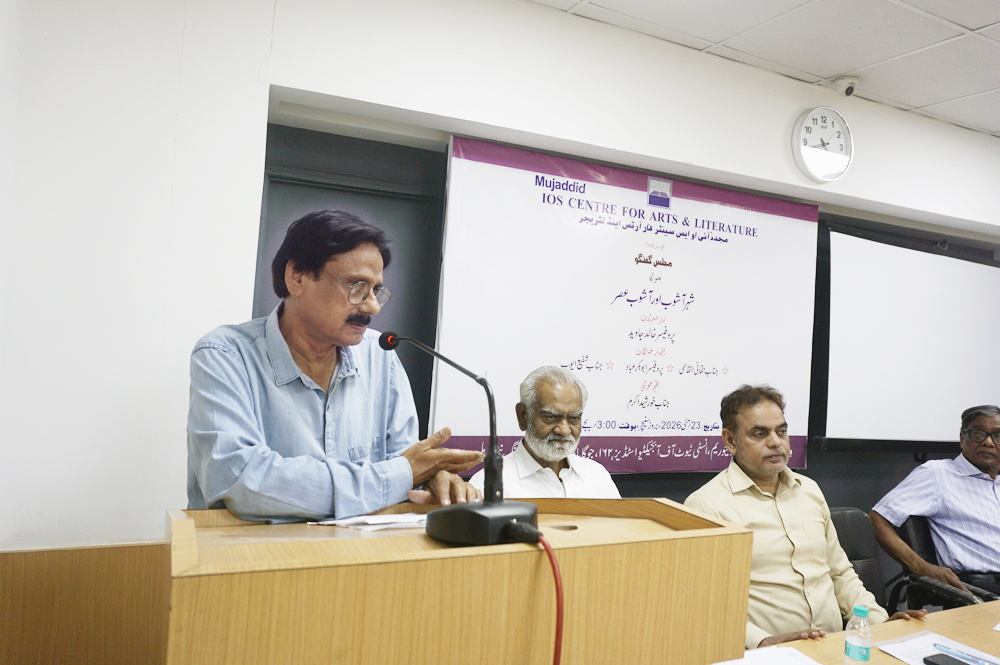
In his presidential remarks, Prof. Khalid Javed, eminent novelist, whose novel became very popular, and was translated into Hindi and English, said that the Shahr Aashob was mostly written in the period of classical Urdu. Despair following ruination, corruption and disturbance was portrayed by the poets during the period when the decadence of the Mughal Empire was at its heights.
Referring to Khurshid Akram’s poems, he stated that his poetry was integrated with conscience. He held that the poetry should serve as a case of the misdoings. But Akram’s poetry itself was a case itself. He made himself a convict in his poem, ‘Coma’. Earlier, the relation between the ruler and the poet used to be different. Poetry then was taken notice of by the rulers. Before the Shahr Aashob, there used to be a different power system. Between the first and second world wars, there was a massive destruction of men and maternal. Picturisation of sorrow and pain was Shahr Aashob. It was a symbol which described the worries of society. This description also referred to the presence of mosquitoes and garbage, he concluded.
At the end, Mr. Anjum Naim, who conducted the proceedings, extended a vote of thanks and felt elated that the discussion was very successful.
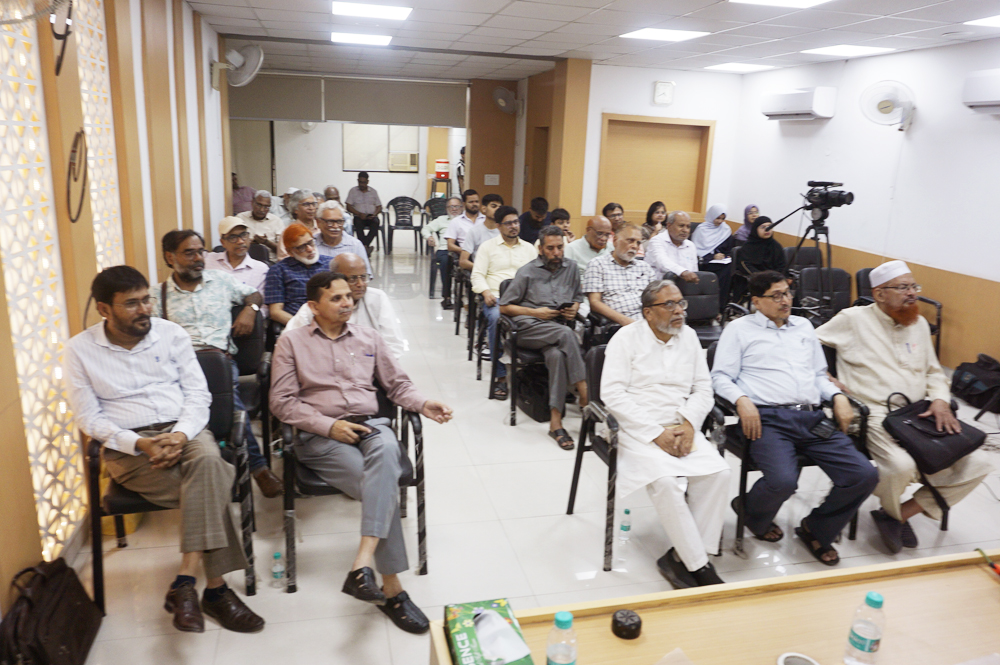
A view of audience
Go Back