Memorial Programme on the Life and Legacy of Dr. Mohammad Manzoor Alam
Memorial Programme on the Life and Legacy of Dr. Mohammad Manzoor Alam
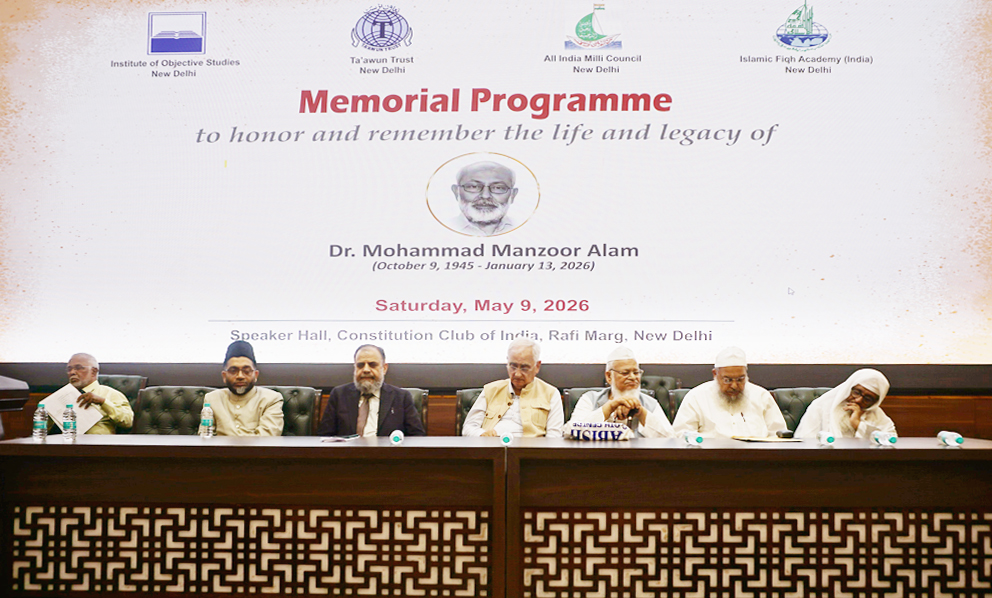
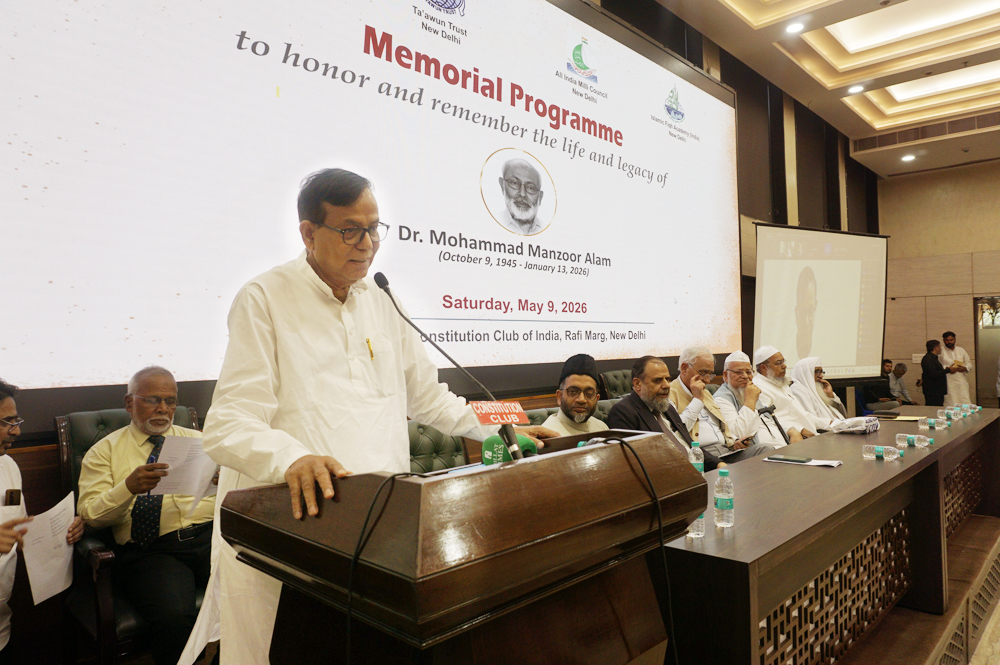
New Delhi: A memorial programme to honour and remember the Life and Legacy of the Founding Chairman and Chief Patron of the Institute of Objective Studies (IOS), Dr. Mohammad Manzoor Alam was jointly organised by the IOS, Ta’awun Trust, All India Milli Council and Islamic Fiqh Academy (India), at the Speaker Hall, Constitution Club of India, on May 9, 2026.
It may be recalled that Dr. Mohammad Manzoor Alam, a thinker, a social scientist, an institution-builder and the founding-chairman of the IOS, left for heavenly abode on January 13, 2026.
The memorial programme began with the recitation of a verse from the Holy Qur’an by Hafiz Hammad Kaleem Alam, the grandson of the late Dr. Mohammad Manzoor Alam.
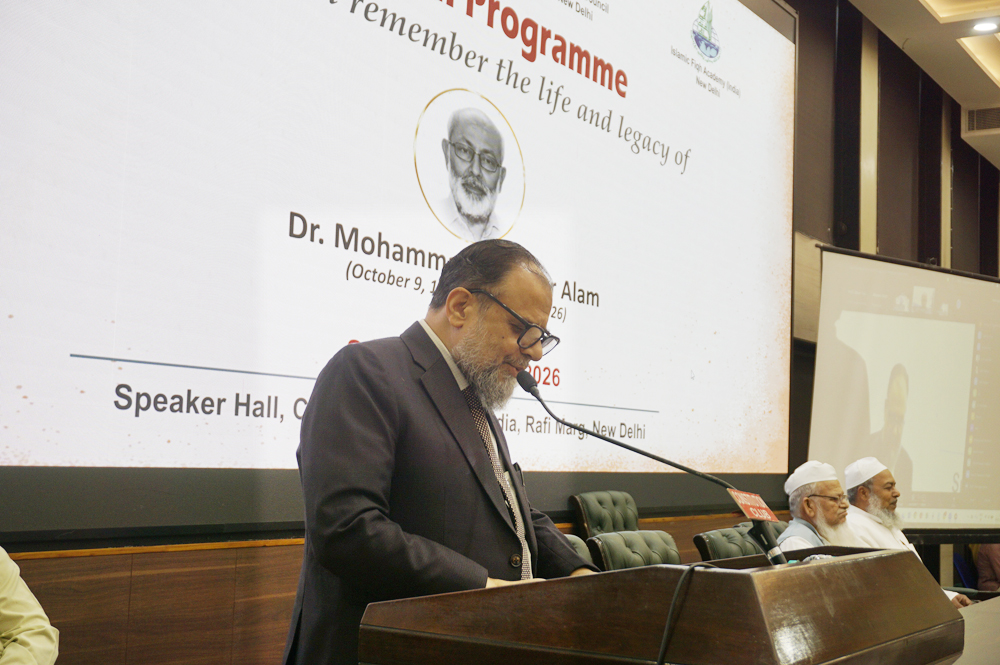
Welcoming his admirers and friends who gathered in large numbers, both off-line and online, Chairman of the IOS, Prof. M. Afzal Wani said, “We have assembled here to pay tribute to Dr. Mohammad Manzoor Alam after his heavenly departure on January 13, 2026 as the founder of the Institute of Objective Studies, a promoter of Ta’awun Trust, an architect of All India Milli Council and the vision-designer of India’s Fiqh Academy, to name only a few prominent initiatives”. Referring to Dr. Alam’s contribution to different fields, he observed that he possessed a unique blend of qualities and skills that inspired, motivated and guided towards success. He was a man of integrity which built trust and respect among team members. He described Dr. Alam as an embodiment of compassion. He was also a true manifestation of firmness and courage. He was endowed with the ability to make tough decisions and take calculated risks for navigating challenges and driving progress. Dr. Alam was true motivator which reflected his excellent skill of breeding trust with transparency and fair sense of accountability. He will be remembered for his effective communication, motivation, collaboration, proactivity and team development.”
Prof. Wani said that he shared thoughts and action premises with Dr. Alam. One of them was understanding and deep love for and among all the people of India, and feeling of the pain of people. He had respect for the Constitution of India and always took it religiously. Leadership was his most important asset. He had regard for the ulema and national leaders across communities. He believed in “sitting together, thinking together and working together”, and this belief was well translated into action. He promised to keep striving for global reach of India to Arab, SAARC, and ASEAN countries. On behalf of the IOS team, he extended gratitude to all friends and well-wishers of Dr. Alam.
The occasion was marked by the screening of a short film on him titled ‘Dr. Mohammad Manzoor Alam: A Tribute’.
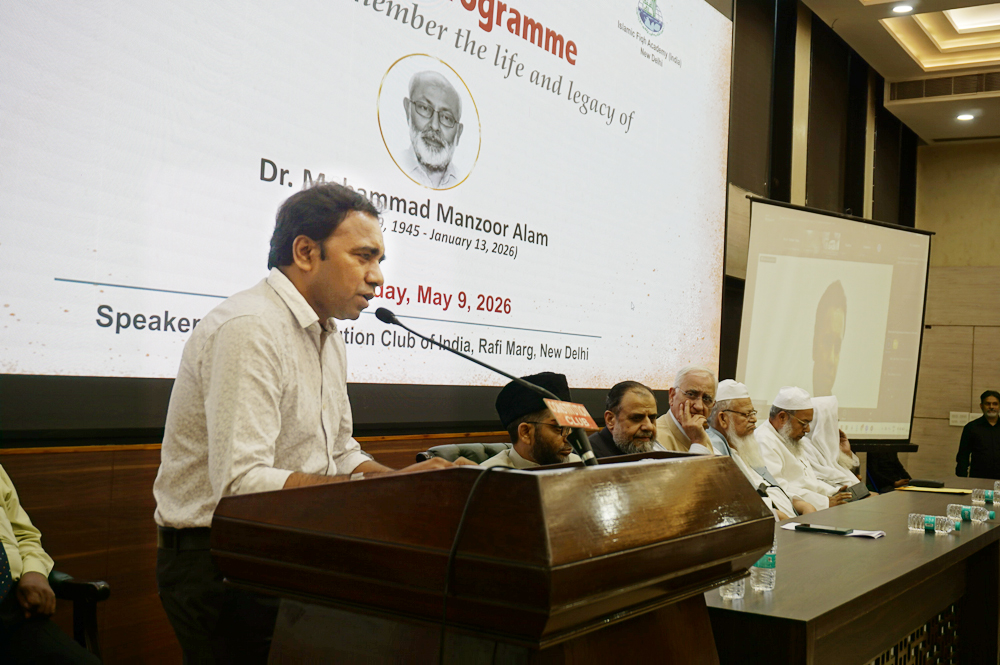
A brief life profile of Dr. Mohammad Manzoor Alam was read out by Dr. Aftab Alam, associate professor of Political Science, Zakir Husain Delhi College, University of Delhi, and a member of the general assembly of the IOS. In his portrait, Dr. Alam has been described as a visionary, ideologue, institution-builder and advocate of equity, pluralism, inclusion, justice and empowerment of the marginalized. He said that the various projects he initiated and the new trends he sat, existed very much today in society. That is why his contemporaries continued to recall his services to the community, nation and humanity as a whole. He was born on October 9, 1945 in a reputed wrestler’s family in Ranipur, a small village in Mithlanchal of Bihar. After graduating from R. K. College, Madhubani, he joined Aligarh Muslim University and obtained post-graduate and Ph.D. degrees.
Dr. Alam went to Saudi Arabia in 1978 and served as an Economic Advisor in the Ministry of Finance and National Economy. While living in K.S.A., he kept his country on the top of his priority. It was due to this concern that he established the Institute of Objective Studies in 1986 after his return to India. The IOS was the first research and advocacy institution in the Muslim community. The IOS was not just a formal entity, but a manifestation of his commitment to ending societal inequalities and promoting a new discourse based on justice. Dr. Alam used to say that it had been his dream since childhood. This passion led him to not only immerse himself into it, but also inspire others to join the cause. Concern for the marginalized sections of society had always been at the core of Dr. Alam’s policies. He always believed in equality, truth, pluralism and justice. The impact of the IOS has been tremendous. Besides successfully taking up 485+ research projects, and organizing 1370+ conferences, seminars, symposia and lectures, the institute facilitated the coming up of a host of organizations and institutions like Ta’awun Trust, All India Milli Council (AIMC), Islamic Fiqh Academy {India} (IFA), Indian Association of Muslim Social Scientists (IAMSS), Universal Peace Foundation, Foundation for Educational Development, United Mass Media Association (UMMA), Feature and News Alliance (FANA), International Bureau of Translation and Publications, Genuine Publications and Media Private Limited, Qazi Publishers and Distributors, Manzoor Academic and Research Consultant Pvt. Ltd. (MARC), Al-Ittehad Publications, etc.
Dr. Alam’s life was deeply intertwined with the profound influence of books. He believed that the Holy Qur’an had the most significant impact on his life. The books he liked, ranged from detective novels of the Urdu writer, Ibne Safi and the American author, Stanley Gardner to the works of several Islamic scholars. Through efficient time management, Dr. Alam achieved a harmonious balance between his professional endeavours and family life. According to the veteran Hindi journalist, Santosh Bhartiya, “Dr. Manzoor Alam occupies a priceless share in the political history of India. Dr. Manzoor Alam’s special place in history can be gauged from the fact that one hundred of his contemporaries from India and abroad holding high positions in judiciary, politics and institutions of higher learning, recognised him as a trend-setter, opinion maker and planner. Dr. Alam’s life was a rare combination of intellect, vision and action. His legacy lives on through the institutions he built and the ideas he championed.
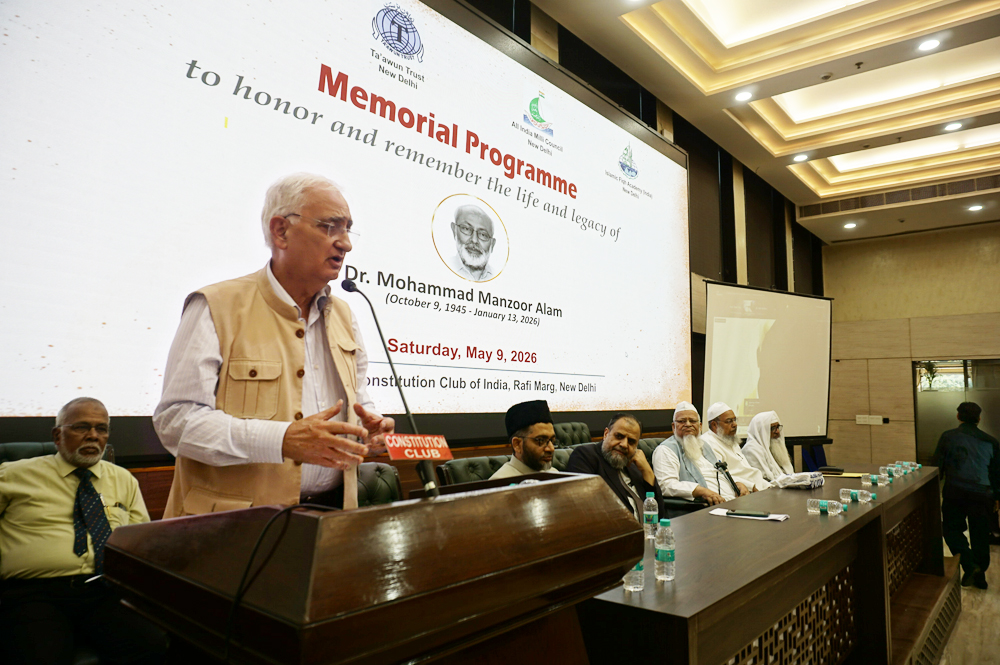
Former Union Minister of External Affairs, and President, India Islamic Cultural Centre, New Delhi, Mr. Salman Khurshid said, “We are remembering Dr. M. Manzoor Alam for his foresight about Indian Muslims and the ways to empower them educationally. His most remarkable contribution was to bring scholars and thought-leaders on a common platform. And the platform he provided to the scholars of every hue was the Institute of Objective Studies which he established to promote objectivity. Describing his demise as a big loss to the community and scholarship, he said that Dr. Alam left this world when he was needed the most. He left behind an institution for the scholars and researchers to objectively study the issues of the minorities and marginalised sections. He noted that Dr. Alam visualized a project to set up a private university to impart higher education to the students of the minority community, and other sections of society. Unfortunately, this project did not take off due to his untimely death. He was an institution-builder who created several institutions which were never visualized by anyone before him. He established connection with the people who mattered. He stressed that Dr. Alam should not only be remembered today, but also his unfinished work should be completed and his guidance become a legacy to be taken forward. He said that Dr. Alam had close relationship with society and the intellectuals. His need was strongly felt today. He played an important role in the appointment of the Sachar Committee. His guidance was necessary to move forward, he added.
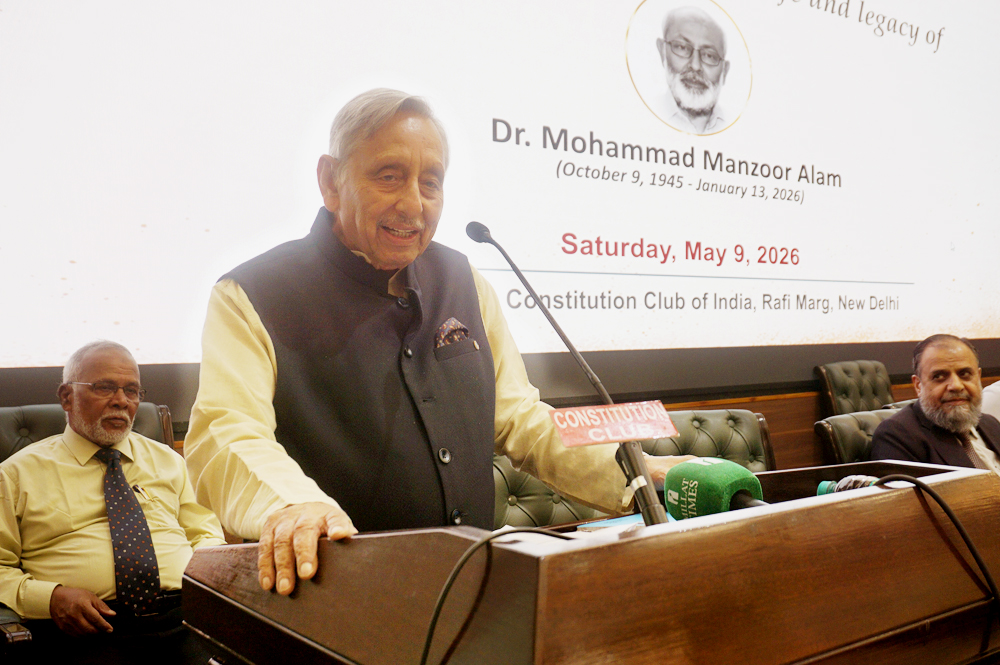
Senior Congress leader, former diplomat and Union Minister, Mr. Mani Shankar Aiyar, fondly recalled his long and close association with Dr. Mohammad Manzoor Alam and spoke warmly about his intellectual contributions, social commitment, and enduring efforts towards communal harmony, education and public welfare. Referring to his interactions with Dr. Alam over the years, he said he was a thoughtful personality whose dedication to inclusive values and nation-building earned him widespread respect and recognition across different sections of society. He described Dr. Alam as a noble soul. Illustrating the IOS as a non-partisan institution, he emphasised the need for setting up more such institutions to give a thrust to objective research on social and economic issues of the cross-section of society.

Prof. Dadwood Abdulmalek Yahya Al-Hidabi, professor of Education, International Islamic University, Malaysia, said, “Dr. Alam emerged as a prominent scholar, institution-builder and public intellectual, who recognized the imperative of harmonizing Islamic thought with contemporary intellectual currents. Through his leadership at the Institute of Objective Studies, he established a platform dedicated to advancing research on Islam and Muslim societies within modern contexts. His scholarly vision emphasised the importance of engaging critically with issues such as governance, minority rights, socio-economic development and the intellectual reconstruction of Muslim societies. He noted that a defining feature of his professional work was his sustained focus on the condition of Muslims as minority communities, particularly within India. He contributed significantly to discourse on constitutional rights, social justice and equitable development, advocating for policies and frameworks that ensured dignity, inclusion and equal opportunity. His writings and institutional initiatives often addressed themes of marginalization, educational backwardness and economic disparity, proposing knowledge-based and ethically grounded solutions. He held that Dr. Alam deeply invested in the revival of Islamic intellectual traditions in a manner that responded to contemporary challenges. His work frequently explored themes such as Islamic economics, ethical governance, civilisational dialogue, and the role of education in societal transformation, he insisted.
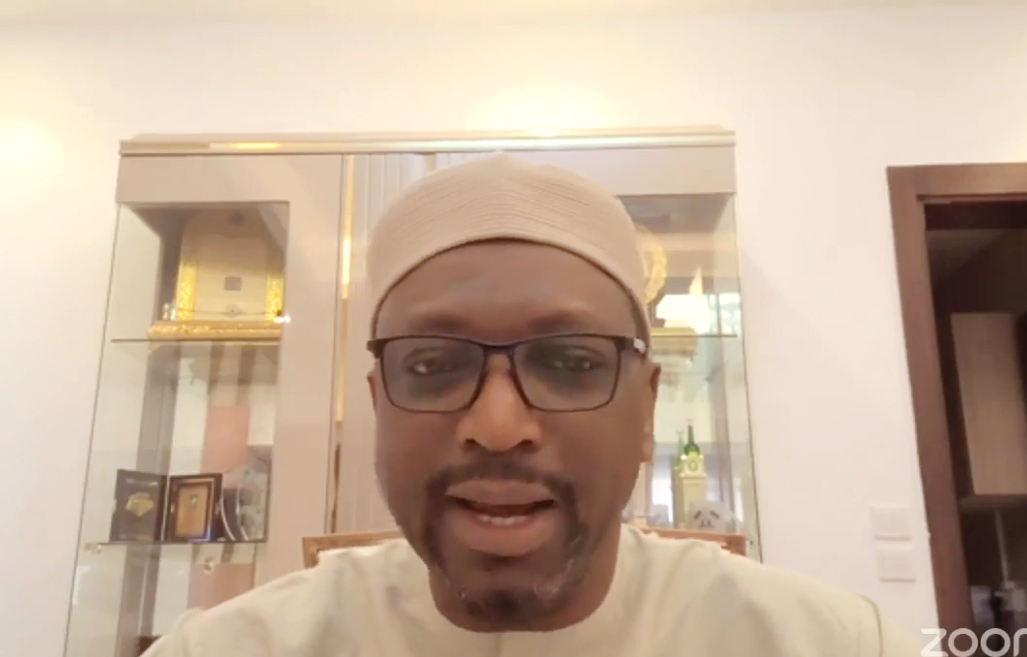
His Excellency Professor Koutoub Mustapha Sano, secretary general, International Islamic Fiqh Academy, KSA said, “Dr. Alam was an institution we lost. He represented India at the International Islamic Fiqh Academy”. He held that Dr. Alam was concerned about the Ummah. It was satisfying that the IOS continued to carry on the work left by him. He noted that the scholars who were associated with him would continue to focus on his contributions. He held that the challenges before Muslims in India were different from the Muslim countries. Thus they had to be understood in a different perspective. He resolutely said that Dr. Alam’s friends and well-wishers would keep his memory alive.
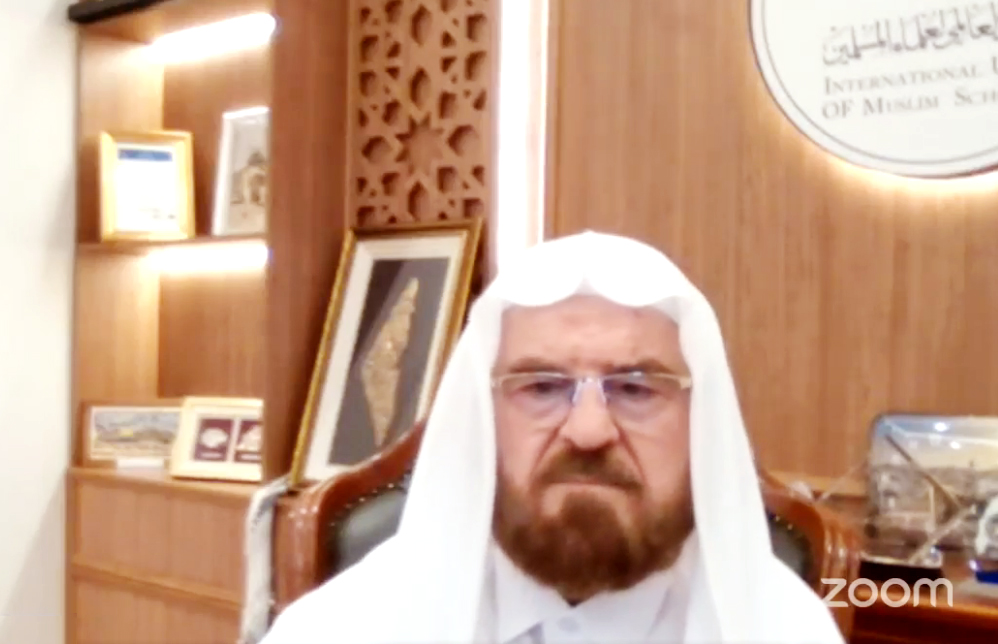
Dr. Ali Mohiuddin Al-Qaradaghi, Chairman, International Union of Muslim Scholars, Qatar, delivered a fitting tribute to Dr. Alam whose life-long dedication to economic, educational and social justice continued to inspire generations. In his heart-felt homage, he beautifully illustrated Dr. Alam’s profound contributions from his insightful writings on social and contemporary issues to his tireless advocacy for Muslim unity and ethical leadership. He was a true beacon of knowledge and compassion, and his legacy endured. He called for reflecting on such luminaries and strive to emulate their path.
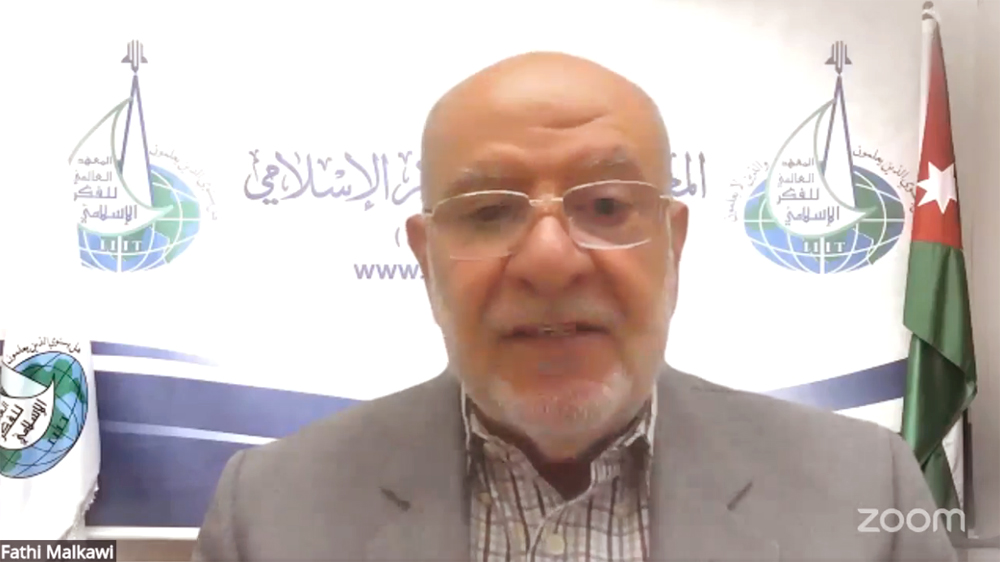
Dr. Fathi Hasan Malkawi, academic advisor, International Institute of Islamic Thought, Jordan, observed that Dr. Alam firmly believed that meaningful social transformation did not come through emotional reactions or temporary political slogans. He believed in patient, sustained and constructive efforts rooted in knowledge, moral integrity and institution-building. He often emphasised that no country could progress without scholars, researchers, teachers and socially conscious professionals. He noted that one of the greatest concerns of Dr. Alam was the intellectual and educational condition of Muslims in India and across the world. He encouraged Muslims youth to pursue modern education while remaining firmly gounded in moral and spiritual values. For him knowledge was not merely a means for employment or status; it was a tool for human dignity, justice and national harmony. He consistently advocated inter-disciplinary research, translation projects, civil society engagement and dialogue among communities. He believed that classrooms, research centres and compassionate public service were far more enduring foundations for collective progress than reactive politics or sectarian mobilization.
Dr. Malkawi maintained that through the Institute of Objective Studies, with its chapters throughout India, Dr. Alam sought to create intellectual institutions capable of addressing the contemporary social, political and economic challenges facing Muslims and other marginalized communities. He envisioned scholarship not as an isolated academic exercise confined to libraries, but as a force capable of influencing governance, public policy and national development.
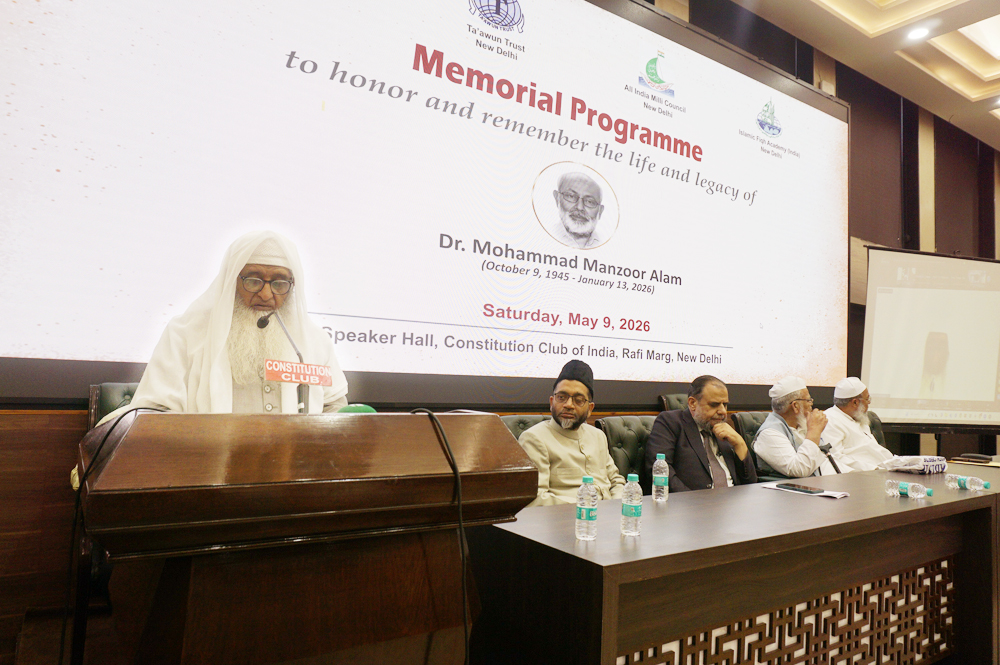
General Secretary, All India Muslim Personal Law Board (AIMPLB), Maulana Fazlur Rahim Mujaddidi, delivered a profoundly impactful and succinct eulogy encapsulating the monumental contributions of Dr. Alam. This tribute not only honoured a life of exemplary service, but also served as a clarion call for the ummah to perpetuate his noble ideas amid pressing global trials. He spent his entire life in understanding the pangs of the Muslim community. He created an intellectual awakening among the Muslims. He enabled the community to understand the importance of educational and think of the well-being of Muslims. He received global intellectual recognition. Besides, IOS, he laid the foundation of Islamic Fiqh Academy (India) and All India Milli Council. He believed in working more than speaking. A number of seminars, symposia and conferences were organized by the IOS under his stewardship. He engaged himself with many scholars all over the world. He wrote columns focused on social issues, the Maulana added.
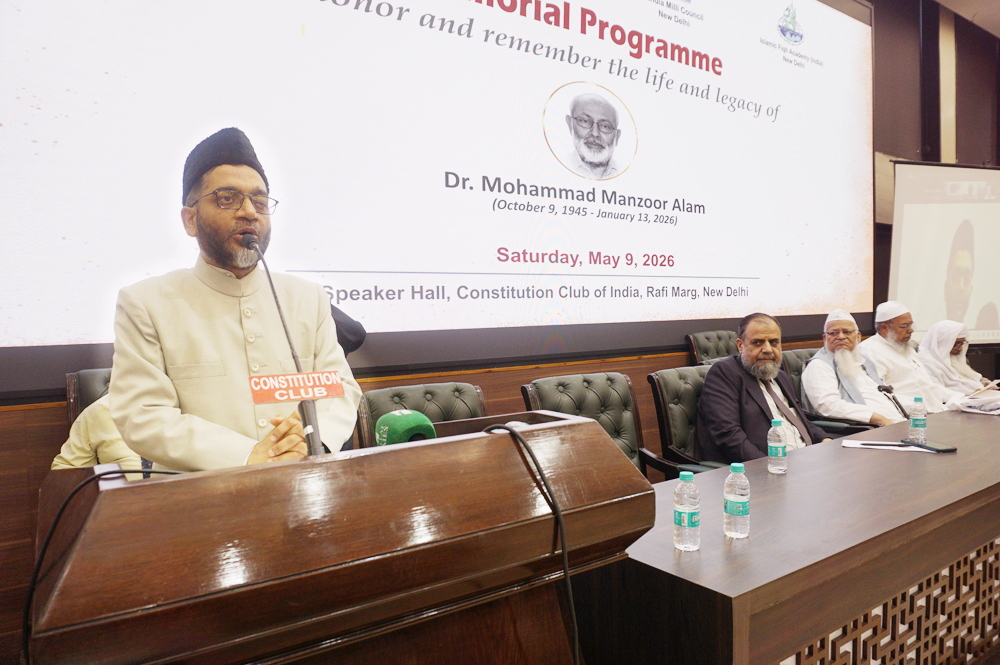
President of Jamat-e-Islami Hind, Mr. Syed Sadatullah Husaini, held that Dr. Alam was gifted with several qualities which made him a man of action. By his intellectual pursuit and research methodology, he proved how the Indian Muslim could excel in cognitive abilities and research. He was innovative. In this respect, he took up several projects and played a key role in the establishment of the organizations, like AIMC and IFA. He facilitated the convergence of scholars and the ulema of different scholars of thought on one platform. This helped narrow down the differences among them. He established Muslims’ connect with global institutions.
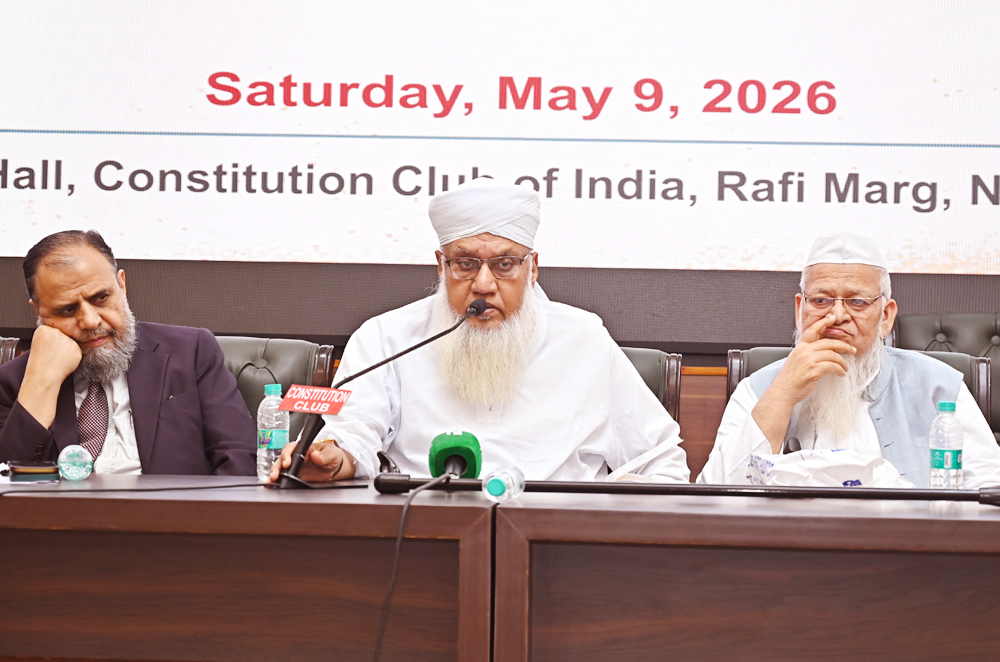
Eminent Islamic scholar and founding member of the AIMC, Maulana Khalilur Rahman Sajjad Nomani, affirmed that Dr. Mohammad Manzoor Alam enjoyed remarkable respect, rapport and support among senior highly regarded ulema, particularly Qazi Mujahidul Islamic Qasmi. He further said that throughout his life, Dr. Alam maintained a rare and principled relationship with the scholarly community. Despite his deep involvement in the community affairs and institutions, he never interfered with jurisprudential positions, religious verdicts or scholarly independence of the ulema. He said that this quality earned him enduring trust and affection among leading scholars across India. He always honoured difference of opinion. He kept a close eye on those who would be valuable for the Millat. He recognized the leadership of the ulema in religious matters. He believed in giving respect to others and benefiting from them. He connected ulema to modern thinking so as to benefit the Ummah. When it came to the difference of opinion, he used to retract his stand in order to maintain equilibrium.
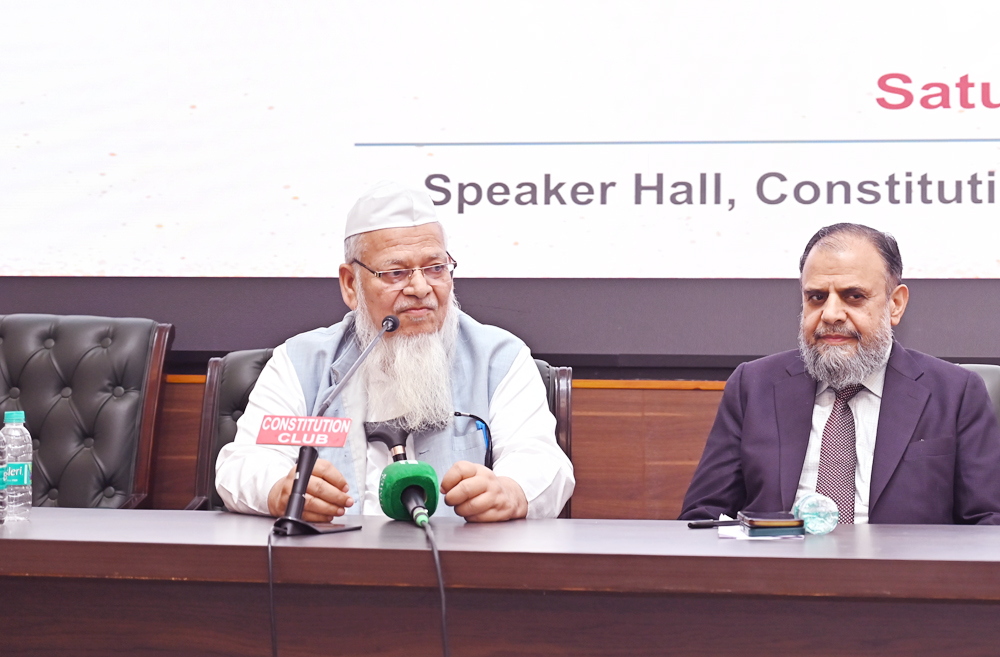
Secretary for academic affairs, Islamic Fiqh Academy (India), Maulana Ateeq Ahmad Bastavi opined that Dr. Alam dedicated his entire life to the noble mission as described in the Holy Qur’an. He quoted Surah Al-Imran, verse 110, which says, “You are the best community ever raised for humanity–you enjoin what is good, forbid what is evil and believe in Allah”. He said that Dr. Alam’s life was a shining example of service to humanity, promotion of education, social reform and commitment to moral and Islamic values. He noted that Dr. Alam consistently worked for the uplift of society and inspired people towards righteousness, unity and compassion. He remarked that the responsibility of carrying forward this Qur’anic mission now lay upon all of those connected to the IOS. He said, “We too must strive to follow the same path by encouraging goodness, standing against injustice and social evils, and strengthening faith and moral responsibility”. He added that the teachings of the Qur’an were not merely to be recited, but also to be practiced in daily life through service, honesty and dedication to the welfare of the people.
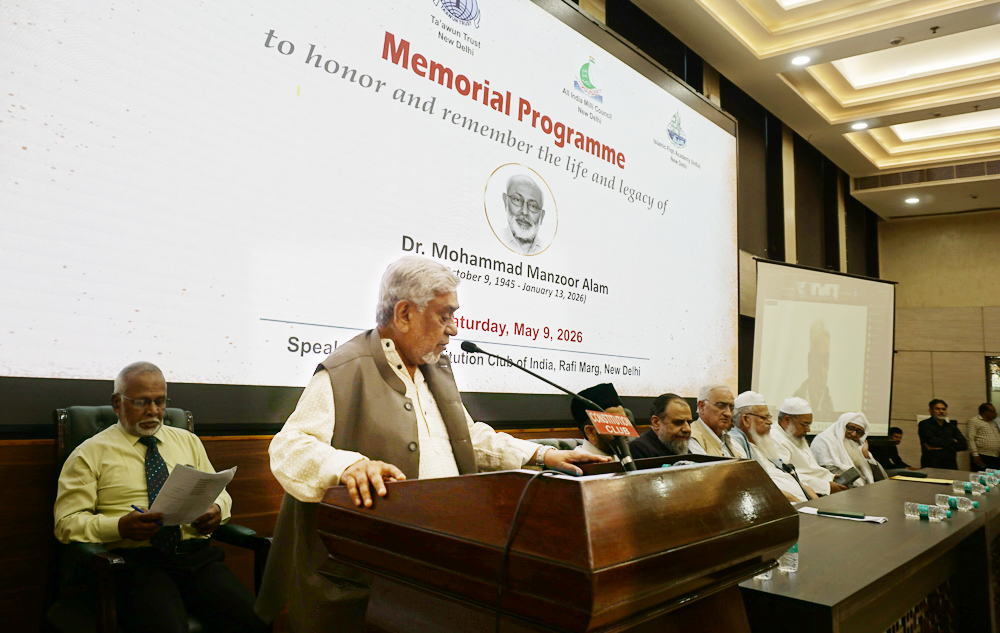
Professor Emeritus, Islamic Studies, Jamia Millia Islamia, Prof. Akhtarul Wasey, stated that he was strongly feeling the absence of Dr. Mohammad Manzoor Alam. He was responsible for establishing a think-tank in the country where the scholars and researchers could sit together for exchanging their views. He set up not only one institution, but also several institutions, like AIMC, IFA, etc., to promote knowledge and empirical studies. Through IOS, he published more than five hundred titles on diverse subjects. He instituted Shah Waliullah Award which was given to the scholars of immense. He was never disappointed over adverse atmosphere and always inspired confidence among the members of Muslim community. He expressed himself against mixing religion with politics. He said that the tragedy of Karbala could never have happened without sacrifice. He firmly believed that the morning would surely come after the night howsoever dark it was. Muslims of India survived the 1857 movement, and would also remain so because they were citizens of the country and enjoyed equal rights. He condemned the protagonists of Hindu-Muslim divide.
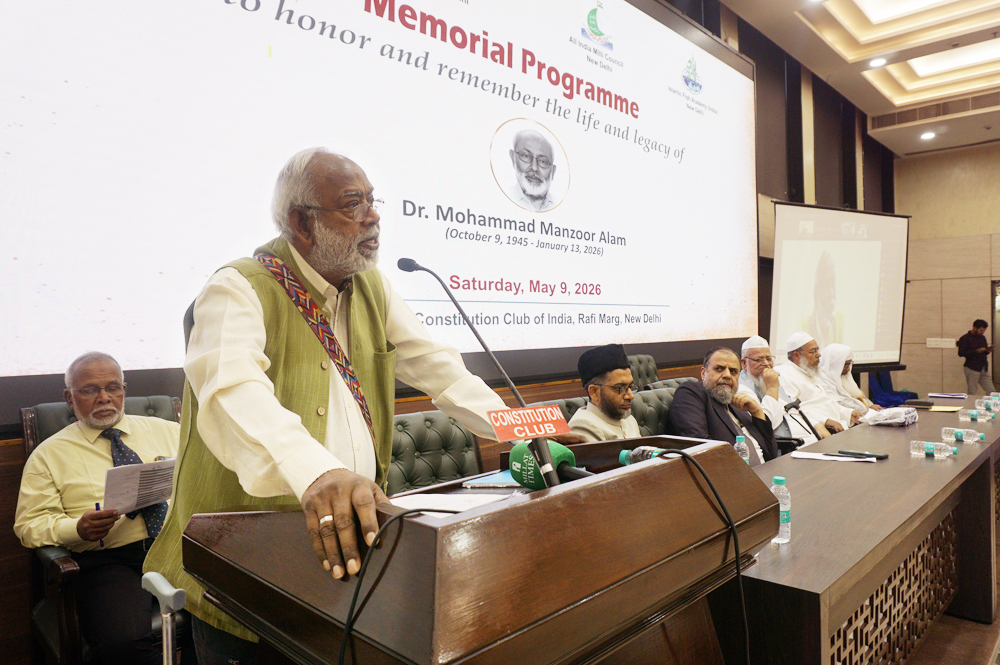
Eminent journalist and human rights activist, Dr. John Dayal, described Dr. Alam’s life as unique. He said that quality remained central to all his initiatives. He highlighted Dr. Alam’s consistent efforts to promote communal harmony and cooperation among different communities. He lauded his efforts towards inclusive social engagement. Quality and sincerity were the defining features of his work. He founded the IOS for quality and good work. He had been instrumental in assisting the Sachar Committee by way of suggestions and providing basic data on the plight of Muslims. He noted that the IOS was not confined to the work for Muslim but also for the Christian community.
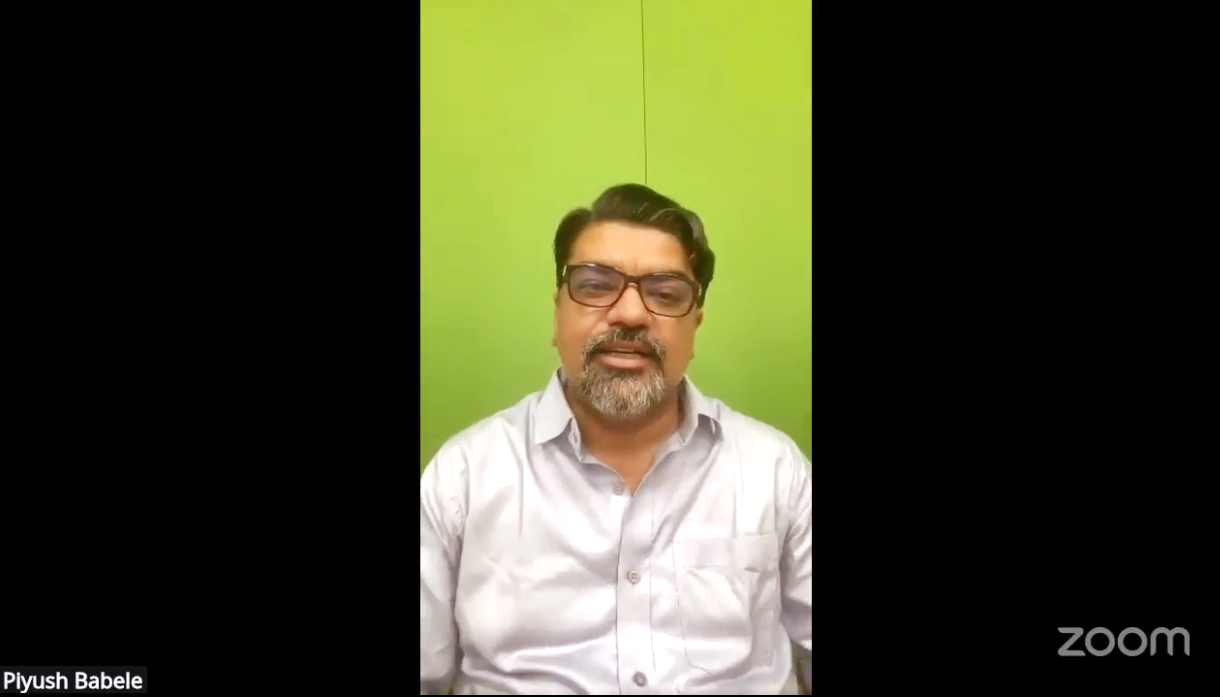
Journalist, political analyst and author based at Bhopal, Mr. Piyush Babele, stated that Dr. Alam was always firm and consistent in his convictions, but he never showed disrespect to the differing opinions. Despite ideological differences and intense discussions, he maintained dignity, patience and intellectual courtesy in every dialogue. He said that this quality reflected his democratic spirit and deep commitment to respectful public discourse. He added that he met Dr. Alam several times before his book “Gandhi: Siyasat aur Sampradayikta” was published by the IOS. He was very soft-spoken and in spite of being a devout Muslim, he institutionalized academic ideas. His temperament was scientific.
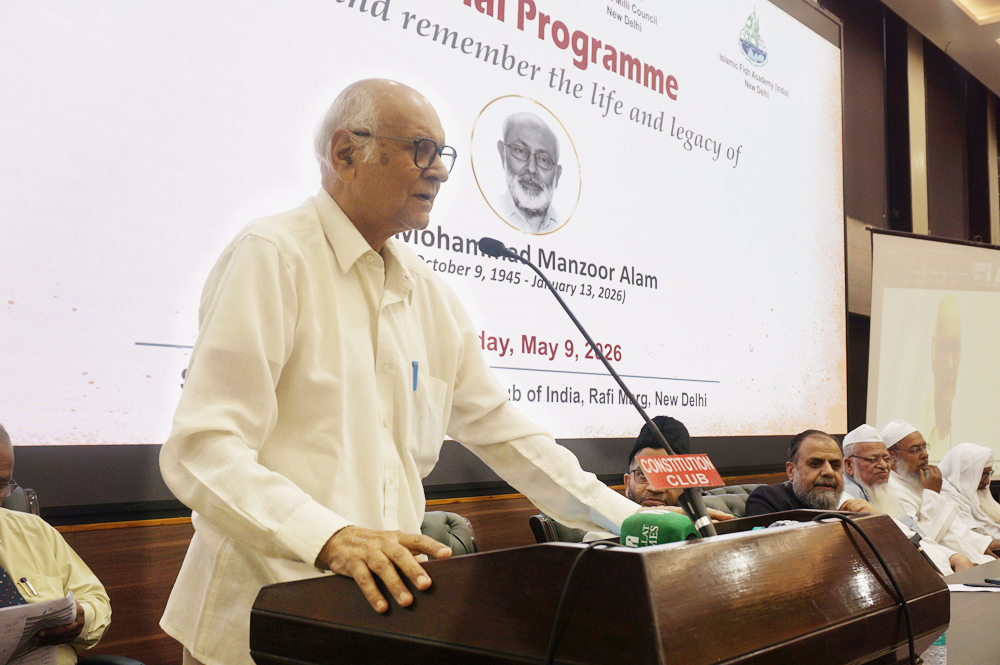
Former chair professor, at the Shri A. M. Khwaja Chair, Jamia Millia Islamia, New Delhi, Prof. M. H. Qureshi, said that he not only saw Dr. Alam but also worked with him. On his suggestion, he undertook the job of writing books on geography in Urdu for school students along with four senior professors. Since the syllabus for school students was changed after 1945, the need for producing books for school students in Urdu arose. In 1993, these books were published, though they were not textbooks. Later on, inter-faith dialogue came up for discussion with him. Referring to power, he said that it was of three types (1) Economic power, (2) Power of knowledge, and (3) Power of authority. There used to be a time when the power of authority was uppermost. But today, economic power ruled the roost. He repented that he could not complete the editing of the book assigned to him during his lifetime. However, the said book is now in the printing stage. He held that Dr. Alam possessed a broad outlook.
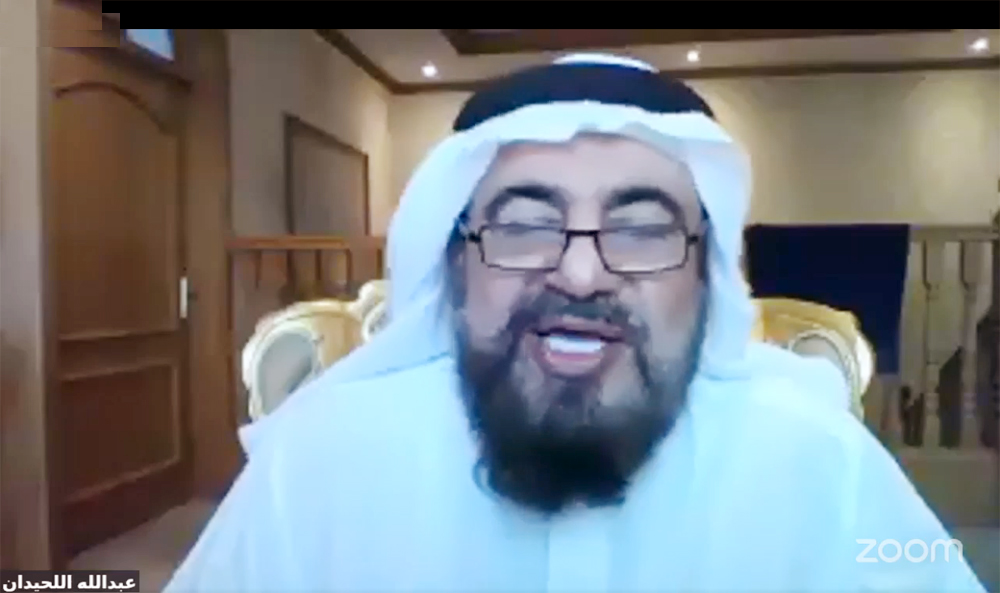
Dr. Abdullah Al-Lheedan, Ministry of Education, KSA, in his online address, noted that Dr. Manzoor Alam began his professional career in Saudi Arabia’s Ministry of Economy and Planning and achieved distinction in his work. He said Dr. Alam believed in institutional cooperation and remained connected with projects of the International Islamic University, Malaysia. He successfully linked sociology and economics with media studies, and undertook initiatives whose impact extended to Pakistan, Bangladesh, Kingdom of Saudi Arabia and Malaysia.
Prof. Dr. Thameen Ushama, AHAS KIRK, International Islamic University Malaysia, observed that Dr. Alam encouraged young scholars to delve into cultural paradigms and commit themselves to educational development. He called for perceiving knowledge in Islamic perspective. He also laid stress on exploring critical ideas and said that Dr. Alam contributed to intellectual development of the world. He did a lot for the benefit of Ummah and humanity.
Human rights activist and coordinator of GNRC, South Africa, Ms. Saydoon Nisa Sayed said that Dr. Alam was a noble soul. He nurtured the IOS and connected the people with it. She observed that she attended some important programmes organized by the Institute. She asked Office-Bearers of the Institute to perpetuate the legacy of Dr. Alam. His humility, humanity and immense patience were worthy of emulation. He always focused on justice and the vacuum created by his death was difficult to fill, she added.
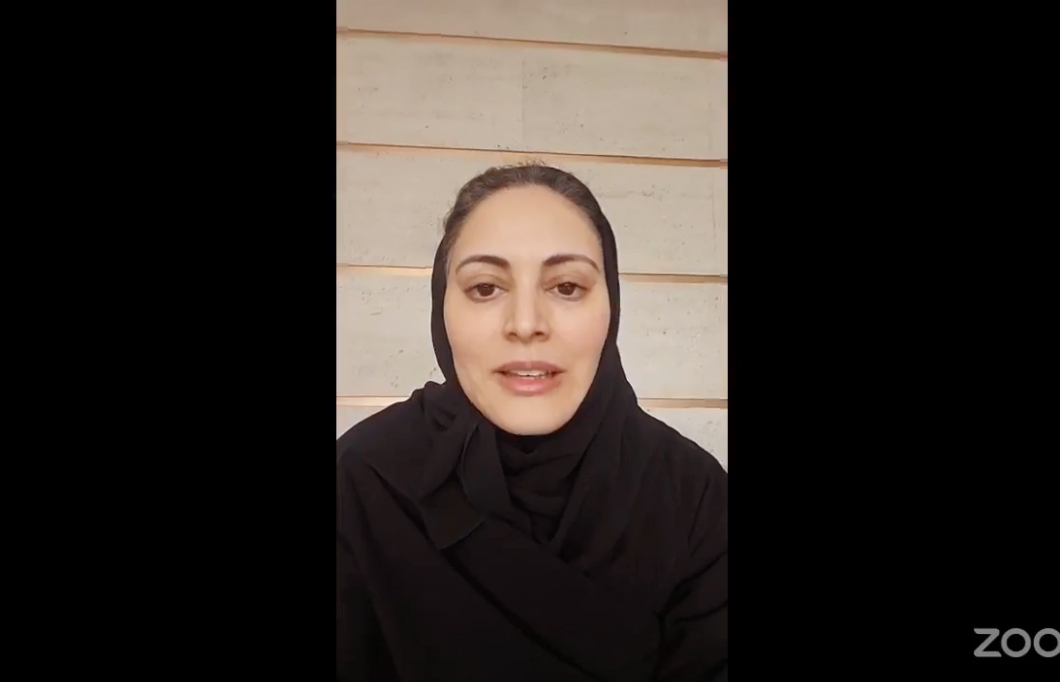
Dr. Muna AbuSulayman, an American-born Saudi business woman and activist, and the daughter of Late Dr. AbdulHamid AbuSulayman [(b.1936 - d.2021), who was the renowned Saudi-based Islamic scholar, educator and visionary thinker who dedicated his life to Islamic reform, the Islamisation of knowledge and educational transformation] fondly remembered Dr. Mohammad Manzoor Alam as ‘an amazing and beautiful soul’ blessed with extraordinary intellectual talent. She reflected on his wisdom, humility, compassion and deep commitment to the upliftment of society, describing him as a rare personality whose intellect was matched by his sincerity and humanity. She said that Dr. Alam’s presence inspired countless people across communities, and his contribution to education, social reform and intellectual discourse would continue to be remembered with great respect and admiration.
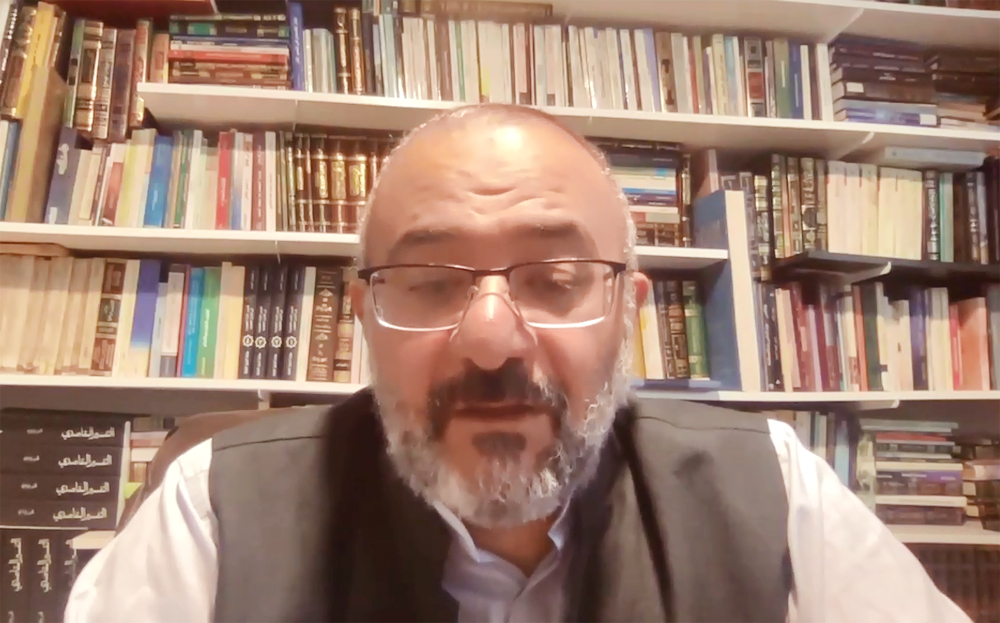
Prof. Dr. Jasser Auda, President, Maqasid Institute Global, USA, said that he visited India several times and observed that Dr. Alam’s intellectual and national vision extended far beyond India. He highlighted Dr. Alam’s efforts in promoting the study of Waqf and Islamic economics, saying that his ideas influenced an entire new generation. He also revealed that while staying in Madinah, he contributed to an English translation project of the Holy Qur’an for English-speaking students. He has left behind a valuable intellectual heritage that will continue to guide future generations, he added.
Former Member of Parliament and State Secretary, Communist Party of India (Marxist), West Bengal, Comrade Mohammad Saleem, said that Dr. Alam built institutions. He had been associated with him since a long time. At a time when majoritarianism was enveloping the country, he engaged himself in promoting study of Islamic thought. Unmindful of growing sectarianism, he laid emphasis on objectivity. He left behind a rich legacy which should be carried forward, he noted.
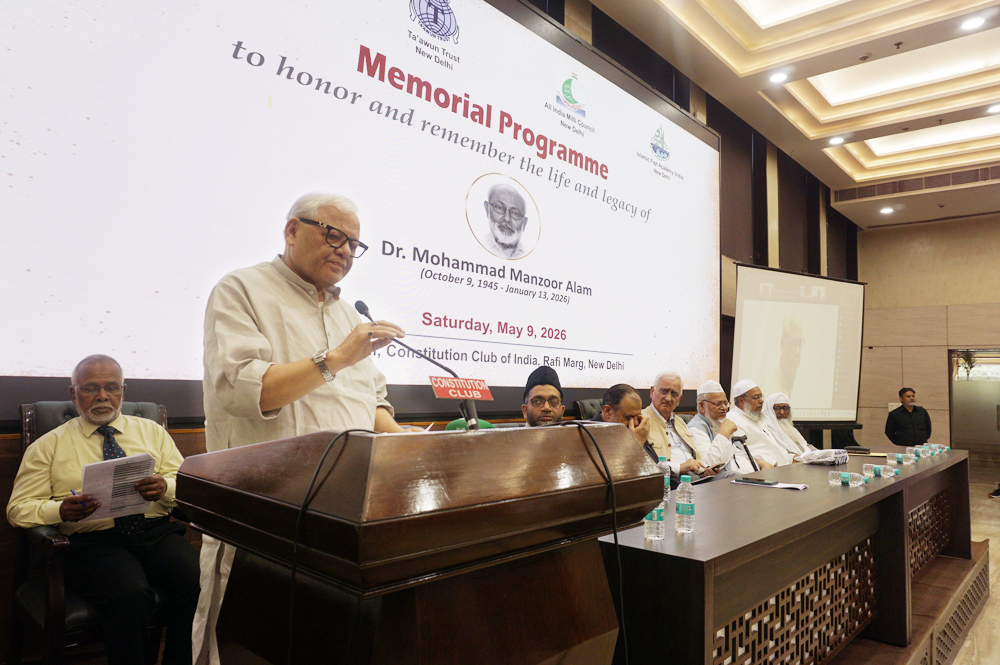
Dr. Ahmad Ashfaque Karim, Chairman and Director, Katihar Medical College & Hospital, Katihar, noted that Dr. Alam wrote several books. He was an expert in Islamic economics. He did his Ph.D. from Aligarh Muslim University. After reading Dr. Alam, he found that he was not only an individual, but also an institution in himself. He connected many people belonging to different faiths with his institute. He used to write letters to young scholars and encouraged them to write. He opined that nothing could become objective without object. He was well-known to many people in the world, particularly in Muslim countries. He suggested that research scholars should do researches on him.
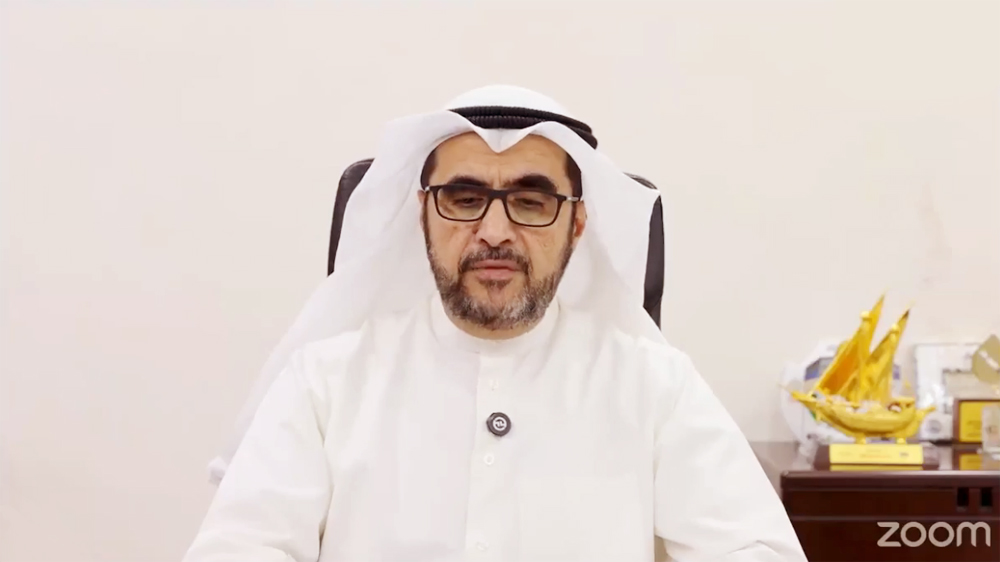
In his video message, Eng. Bader Saud Al-Sumait, Director-General, International Islamic Charity Organisation, Kuwait, described Dr. Alam an intellectual and academic figure whose influential presence was felt-across Indian Islamic and international arena. He spent his life for unity brotherhood and co-existence. He advocated for ummah’s cause through his knowledge and intelligence. He expressed the hope that the IOS would remain a platform of serious thoughts.
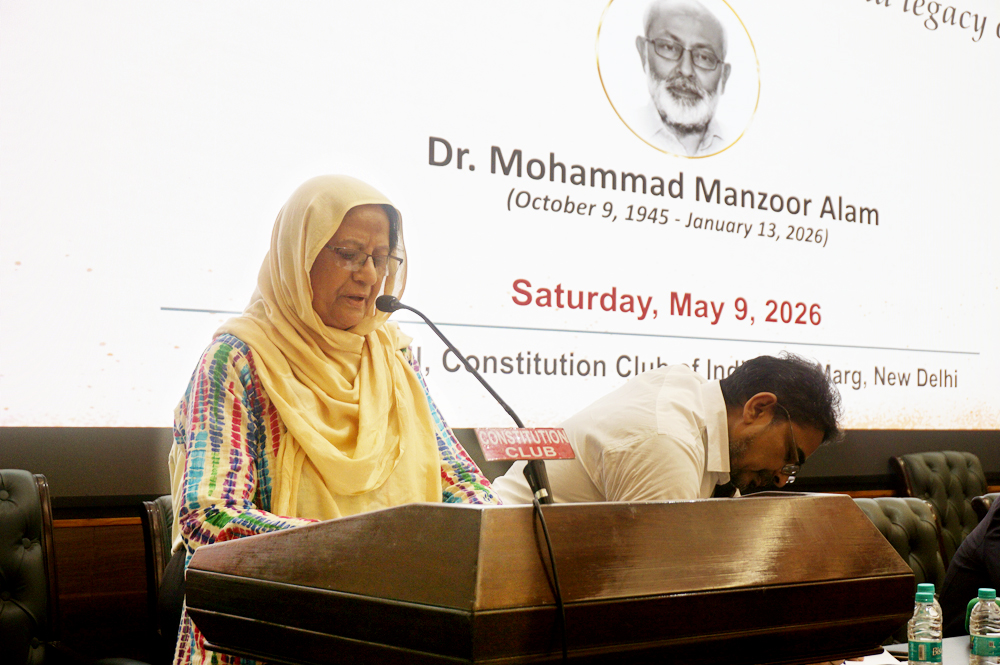
Vice-chairperson of the IOS, Prof. (Ms.) Haseena Hashia described Dr. Alam as a great scholar. Through Shaam-i-Muzakirahs (evening discourse), he provided an opportunity to research scholars to understand and share their views on a variety of subjects. He was a great visionary. By using the data, he facilitated the study of the conditions of Muslims in India. He worked on socio-cultural empowerment of Indian Muslims. She said that under his leadership, the silver jubilee programmes of the IOS was celebrated in a grand manner. His contribution to the development of knowledge was enormous. He organized conferences on media in the globalizing world and other topical issues. Muslims and marginalized sections also came up for discussion at the conferences and seminars, she added.
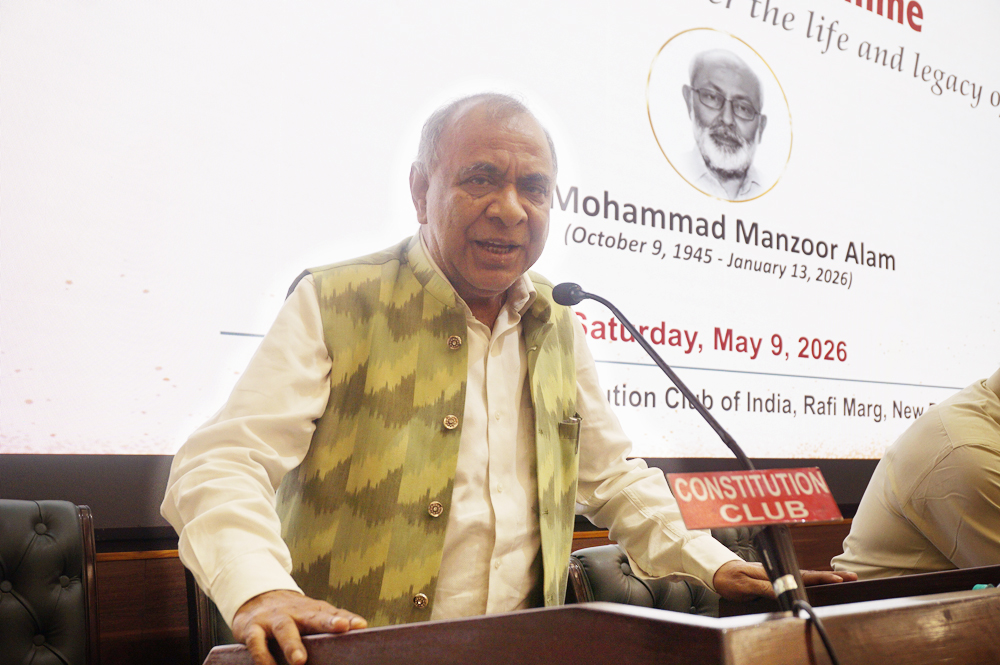
Senior journalist and the biographer of “Dr. Mohammad Manzoor Alam: Empowering the Marginalised”, Mr. A. U. Asif, observed that it was difficult to list qualities he possessed. Referring to his meeting with the then Lt-Governor of Delhi, he said that Dr. Alam had presented a developmental plan for Delhi which was still preserved in the file. He held that he also presented three such action plans to the government for Delhi. He also made several suggestions for freeing Delhi from pollution. He founded a think-tank and connected hundreds of people with it. Quoting the senior journalist, an author and Former Member of Parliament, Mr. Santosh Bhartiya, he stated that Dr. Manmohan Singh became India’s fourteenth Prime Minister the suggestion of Dr. M. Manzoor Alam, in 2004. He was a professional economist. He was also a member of the Kundu Committee which was appointed to assess the progress of the Sachar Committee Report. Dr. Alam formed the Indian Association of Muslim Social Scientists (IAMSS), he added.
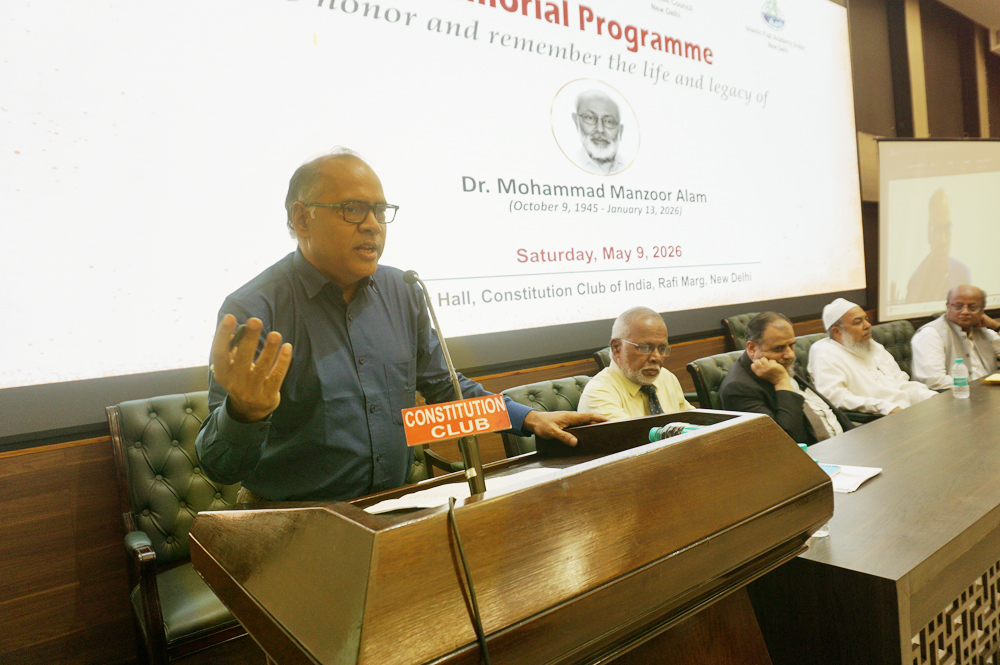
Senior journalist with the BBC, Iqbal Ahmad, said that Dr. Alam had a modest beginning and later studied at AMU. On return to India after spending a few years in Saudi Arabia, he founded the IOS which received pan-India recognition. He did not confine it to a particular school of Islamic thought. He used the institute to accommodate scholars of every shade. He succeeded in narrowing differences between ulema and the scholars. He reached out to non-Muslims as well. He established contact with the scholars globally and invited them to exchange ideas on knowledge, cooperation, brotherhood, culture and humanity. He endeared himself to everybody who came across him.
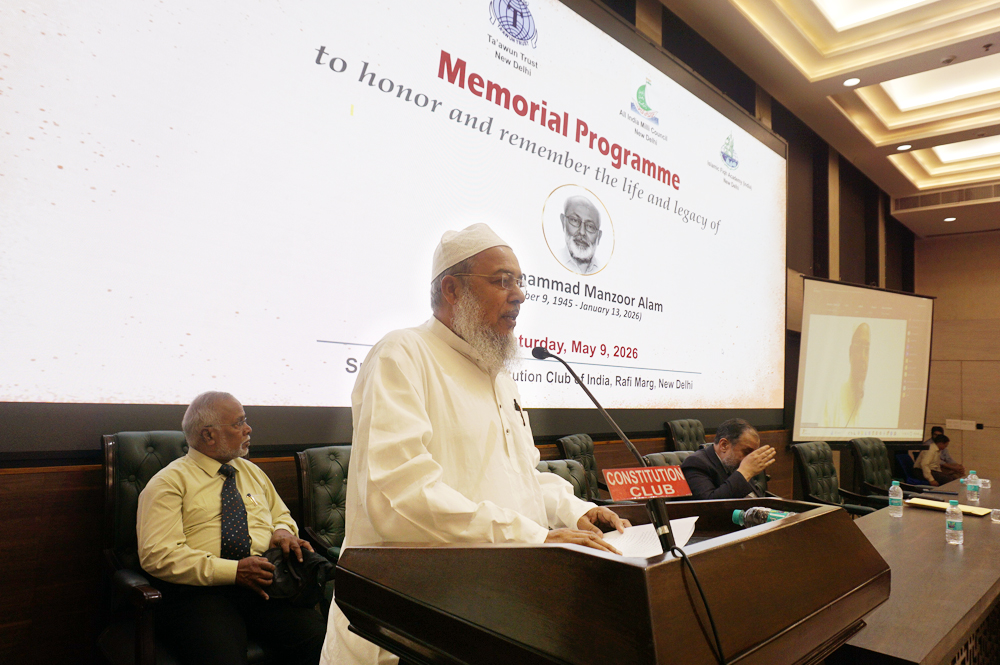
Acting President of AIMC, Maulana Anisur Rahman Qasmi, stated that Dr. Alam was known to him for the last 37-38 years. His predictions in 1990 came true today. His personal life was very spotless. He was a devout and prayerful Muslim. His dedication to work could be understood from the fact that even during his illness, he continued to devote time to the activities of the IOS. He wanted that the differences among various schools and thought be brought to the minimum. He was influenced from Maulana Syed Abul Hasan Ali Nadvi alias Ali Miyan and Qazi Mujahidul Islam Qasmi. He wanted unity in the Millat and cordial relations with non-Muslims.
Several messages paying tribute to Dr. Mohammad Manzoor Alam were received for the occasion. They were message from Dr. Ahmad Al-Alwani, vice-president, International Institute of Islamic Thought, USA, who said, “Dr. Manzoor Alam was a pillar of IIIT’s work after its establishment. I loved him dearly as an uncle, a scholar, and dedicated faithful Muslim who devoted his life to the betterment of the ummah, particularly Indian Muslims. Dr. M. Affan Badar, vice-president, Islamic Society of North America (ISNA), USA, in his message said, “Dr. Manzoor Alam was a person who could recognize other people’s skills and use it for a larger goal to benefit the community. He was a visionary with full of confidence from his student life at Aligarh Muslim University, India. He never let his humble and rural background limit his ambitions and goal”.
In his message, H.E. Mr. Tareq Sulaiman Al-Roumi, Minister of Oil of Kuwait, expressed his regret at being unable to attend the memorial programme due to the ongoing conflict in the region, particularly the attacks on Kuwait’s oil sector. He prayed that may Almighty Allah have mercy on Dr. Alam and grant him the highest place in Paradise.
Syedi Dr. Aziz Bhaisaheb Qutubuddin, Religious scholar, and Rasul Hudood al-Mayameen, Dawoodi Bohra Community, Mumbai, in his message to the Secretary General IOS, Mr. Mohammad Alam, said, “It is with deep sorrow that I extend my heart-felt condolences on the tragic passing of Dr. Mohammad Manzoor Alam. He was a trusted and steadfast supporter of our shared cause, devoted to the betterment and future of the community. His passion, commitment and years of dedicated service will always be remembered with the highest respect and admiration”.
Spiritual leader and founder, The Art of Living Foundation, Bengaluru, Gurudev Sri Sri Ravi Shankar in his message said, “I extend my greetings to all of you gathered here to honour Dr. Mohammad Manzoor Alam. To remember him is to celebrate a mind devoted to truth and a heart committed to bringing people closer together. His vision of education as a force to overcome prejudice, build bridges and affirm our shared humanity has become an urgent necessity in our time”.
Secretary-general, World Zakat and Waqf Forum, Malaysia, Datuk Dr. Mohd. Ghazali Md. Bin Noor, in his message observed, “In this long and distinguished historical continuum, the late Dr. Mohammad Manzoor Alam stood as a modern and contemporary Muslim leader whose life was dedicated to revisiting, reviving and re-writing the intellectual narrative of the Ummah. He understood that Muslim thought and scholarship must not remain confined to nostalgia, but must engage meaningfully with Western, Islamic and Eastern traditions of knowledge development and civilization”.
Former president, Supreme Council of Religious Affairs, Turkey, Dr. Ekram Keles, in his message stated, “The late Mohammad Manzoor Alam, as a contemporary thinker who emerged from India, was one of the guides and visionaries needed not only by India, but by the entire world–not only Muslims, but humanity as a whole, especially the marginalized sections of society. He closely followed contemporary developments and was also well informed about development in Turkey”.
Senior journalist, Ankara, Turkey, Mr. Iftikhar Gilani, in his message, said “For me personally, Dr. Manzoor Alam was far more than an intellectual figure or institutional leader. He was a mentor, a guardian, and a guide at a crucial point in my life. Dr. Alam believed that tradition and modernity were not opposites, but complements. He rejected both nostalgic isolation and unethical modernism. That balance made him a deeply far-sighted thinker. Dr. Alam also believed in self-reliance. Rather than depending entirely on donations, he established Bharat Offset Press in Old Delhi, along with publishing houses such as Qazi Publishers and Genuine Publications and Media Pvt. Ltd., ensuring that the institutions he built could sustain themselves. He believed nations and communities are not built through slogans, anger or constant complaint. They are built through institutions, research, scholarship planning and sustained intellectual effort’.
Mr. Arif Masood, Member of Legislative Assembly, Bhopal said, “The efforts made by Dr. Alam for the welfare of the community and the country can never be forgotten. He was successful in resolving ticklish issues very easily. He was a visionary. He visualized today’s happenings much before. I pray to Allah Almighty to grant a Dr. Alam a highest place in Jannah”.
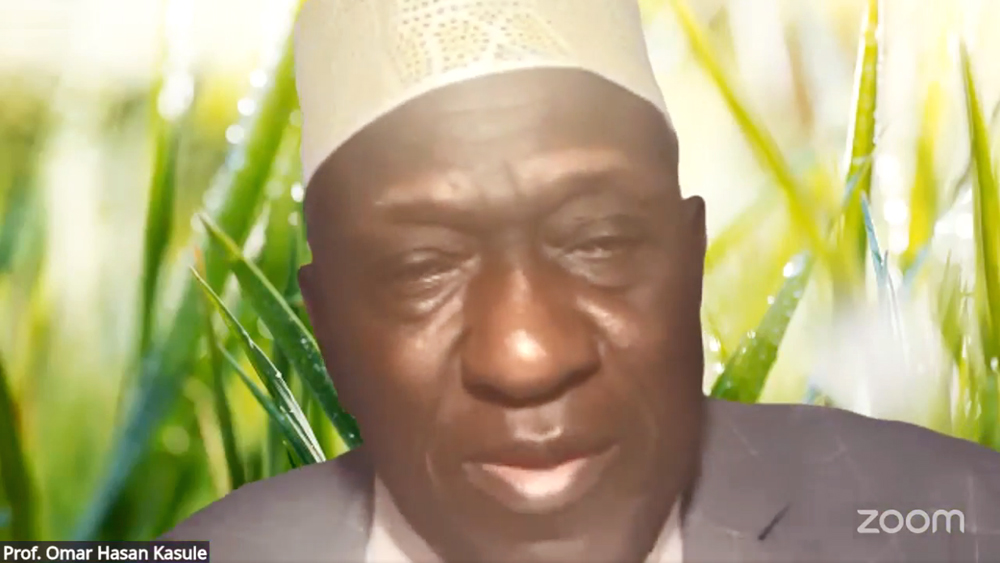
In his concluding remarks, Secretary General, International Institute of Islamic Thought, KSA, Prof. Omar Hasan Kasule, while thanking the Institute of Objective Studies and its Office-Bearers, described Dr. Mohammad Manzoor Alam as a great man. He likened Dr. Alam to a Sahabi who went to Madinah for establishing an Islamic state. In the same way, Dr. Alam studied at AMU, did job in KSA and returned back to India for serving his country and its people. He tirelessly worked for the unity of the Ummah and for cultivating cordial relations with non-Muslims. For this purpose, he organized inter-faith dialogues. He made a lot of sacrifices for achieving his goal to bringing the ulema and scholars of all shades of opinion together on one platform, called the Institute of Objective Studies. He set up the IOS for intellectual discourse on the issues ranging from knowledge, culture and socio-economic development. He put in place planning and action for the uplift of Indian Muslims. He organized seminars and conferences on a variety of topics. He was a hero who never looked back. He confidently stated that Dr. Alam’s work would continue to inspire scholars and researchers. IOS would hopefully carry on his legacy of research and engagement with scholars, he concluded.
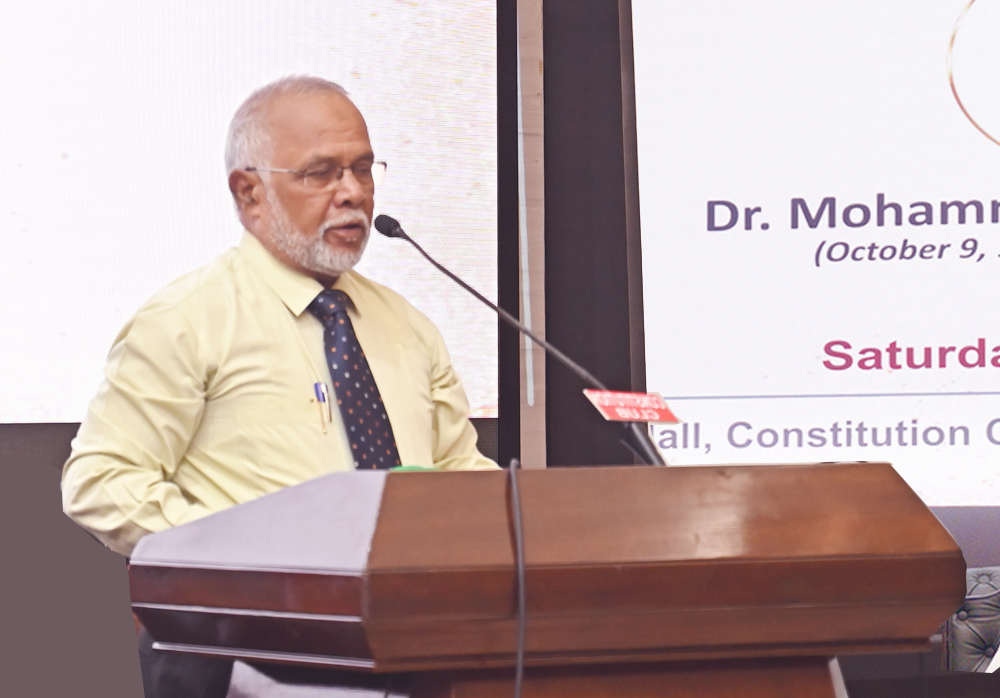
Mr. Shaikh Nizamuddin, assistant general secretary of AIMC conducted the proceedings. He announced that an “Award of Excellence” in the name of Dr. Mohammad Manzoor Alam shall be instituted by the IOS while scholarship scheme for school going students in the name of Dr. Alam shall be started by the All India Milli Council.
At the end, Ml. Anisur Rahman Qasmi offered the Dua for the maghfirah of Dr. Alam.
Prof. M. Afzal Wani thanked all those who attended the programme.
A view of the audience.
Go Back