IOS organises Five-day Online Winter School Programme on Islamic Studies
IOS organises Five-day Online Winter School Programme on Islamic Studies
New Delhi: A five-day online Winter School Programme on Islamic Studies was organised by the Institute of Objective Studies (IOS), New Delhi from March 9-13, 2026 in collaboration with the Department of Islamic Studies, Jamia Hamdard, New Delhi and KME Society’s G.M. Momin Women’s College, Bhiwandi, Maharashtra.
Inaugural Session
Moderated by Dr. Najmus Sahar, Asst. Professor, Dept. of Islamic Studies, Jamia Hamdard, New Delhi, the programme began with the recitation of a Qur’anic verse by Mohammad Husain, teaching faculty, Jamia Hamdard, New Delhi with translation in Urdu.
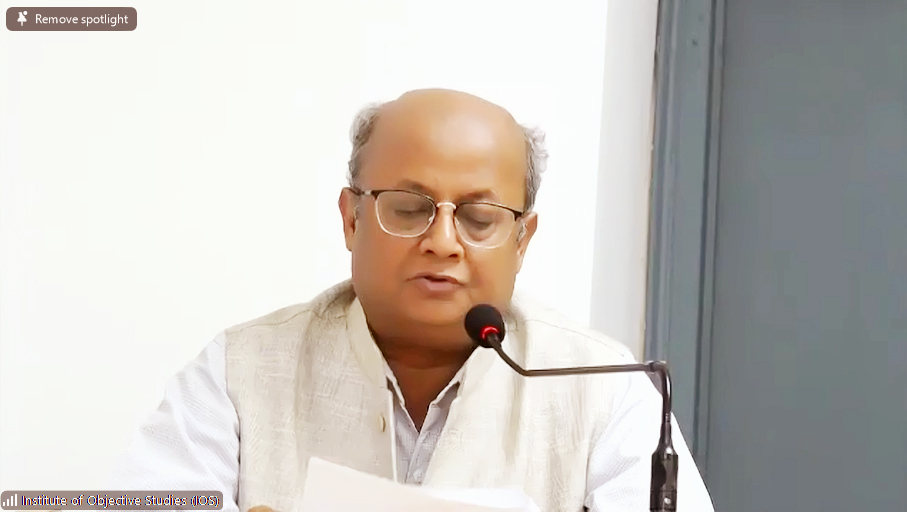
Welcoming the participants in the school programme, Secretary General of the IOS, Mr. Mohammad Alam, highlighted the activities of the institute. He said that it was a research institution which focused on the issues related to the economically and socially weaker sections of society, including the Muslims. Winter/Summer school programmes were one of the highlights of its activities. These programmes were aimed at imparting basic but deep knowledge to the college/university students pursuing courses in social sciences, humanities, education, Islamic studies, law and management, and who were interested in developing their knowledge and expertise. It was also thought necessary to acquaint them with the fundamental teachings of Islam as well as the great role played by it in the making of global human civilisation.
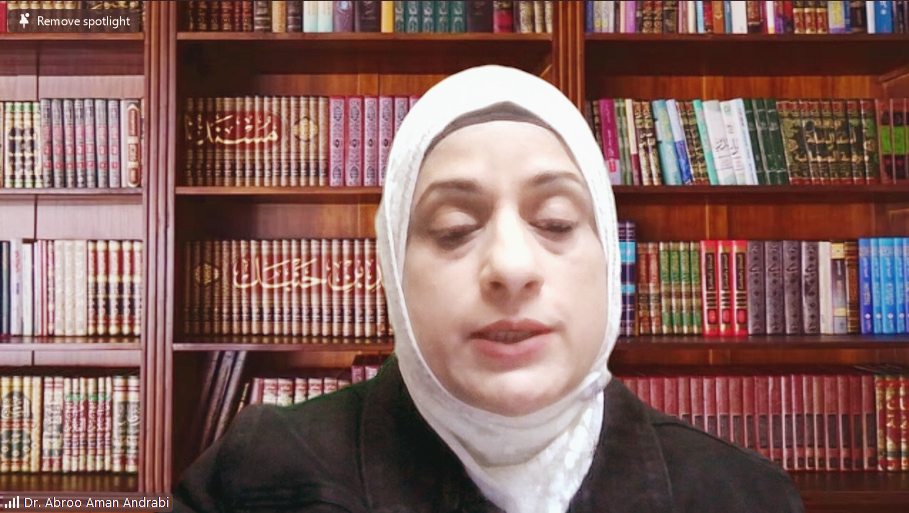
Introducing the programme, associate professor, deptt. of Islamic studies, Jamia Hamdard and co-convenor of the programme, Dr. Abroo Aman Andrabi, said that it sought to promote intellectual, spiritual and social understanding of Islamic studies. She briefly outlined the vision of Islamic studies which had a multi-disciplinary approach. She held that the subject encompassed Islamic history, literature, geography, economics, science, algebra and geometry, etc.
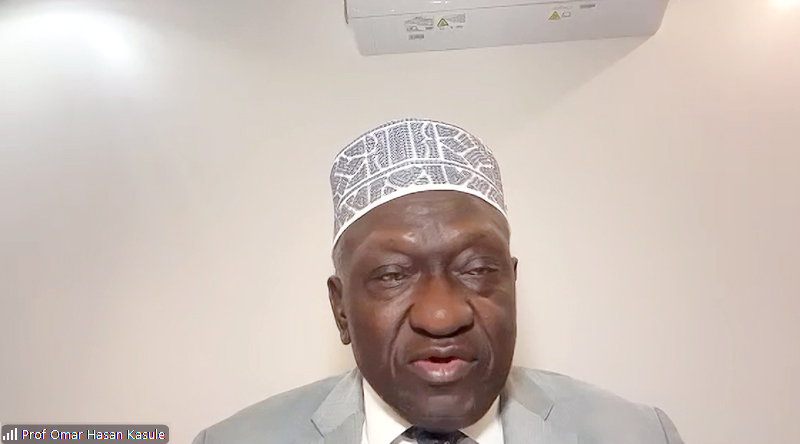
Inaugurating the programme, Secretary General of the International Institute of Islamic Thought (IIIT), USA, Prof. Omar Hasan Kasule, exhorted the attendees to be Aalim. He asked them not to be the fifth person. “You are Aalim because you are pursuing knowledge”. He also advised them to be Muallim, and try to learn from those who were learning. He asked them to listen to Khutba. He stressed the need for continuous learning and education. “Students who are participating in the school programme are learning. Babies in the womb of their mothers are learning. They listen to the Qur’an. If they listen to Azan (call to prayer), they know. They learn Allah and are very stimulated. They listen to the Qur’an and retain it. Thus the listening starts very early. This is due to Islamic Tarbiyah.” He told the participants that what they listened at the school programme, must relate that to their real life. He said, “Learning is a continuous process. Then it becomes passive. Whatever you learn here, you pass it to others. Then it becomes passive. This programme is an opportunity of networking to exchange ideas and questioning. Relate this knowledge to solving problems in life. You need to do research and further your knowledge”.
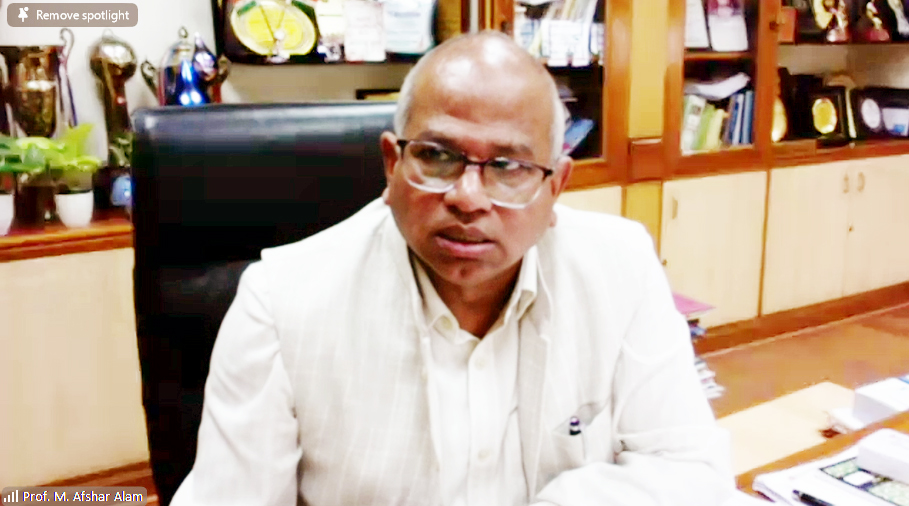
Speaking as a guest of honour, Vice-Chancellor of Jamia Hamdard, Prof. Dr. Afshar Alam, asked the participants to “seek knowledge”, quoting a Prophetic Hadith. “Scholars are gathering online from far off areas because it knows no boundaries”. He spoke a few words about the good work being done by the Islamic studies department of his university in the field of teaching and research. He asked the participants to understand Islamic belief and the very foundation of Islamic knowledge”. Islamic knowledge came to us through generations. Islamic knowledge came us through Shah Waliullah Mohaddis Dehlavi’s writings. Students participating in today’s programme are not passive learners, but they are guardians of knowledge and belief which they will spread far and beyond”. He urged the students to endure confidence and conviction.
.jpg)
Another guest of honour, Prof. Mukhtar Farid, patron-member, Konkan Muslim Education Society, Mumbai, observed that the oneness of God, (Tawhid) was the foundation of Islam. He is the one Creator, one Sustainer. We believe in the Day of Judgement and the divine decree. We believe in Revelation, Prophet Musa (Moses) and Isa (Jesus) and other prophets. We see rapid growth of technology. Knowledge is gathered from Revelation”. He called for understanding and believing correctly. He urged the students to lead a meaningful life and reform the society. Knowledge and action should be such that benefited society, he added.
In his presidential remarks, former dean, faculty of humanities and languages, Jamia Millia Islamia, New Delhi, Prof. Mohammad Ishaque, called upon the participants to inculcate knowledge in young minds. He asked them to become thought leaders and broaden their intellectual horizon. Social, political and global scenario demanded us to go deep into Islamic thought through learning and understanding. “Our ulema had debated with Christian scholars on Islam. Tazkiya and Tasawwuf are vital in Islam. Islam’s historical and civilizational contribution have been very significant. Muslim scholars made notable contribution to science, medicine, biology, arithmetic, algebra, geometry, astronomy, etc. Referring to Islam and modern challenges before it, he said that pluralism required thoughtful engagement. This programme is not only for the enhancement of theoretical knowledge, but also for thoughtful practices. This is also for ethical guidance.” He asked the participants to interact with the scholars. While laying emphasis on critical enquiry, he said that intellectual humility was equally important. He advised them to stand by truth and justice. He also called upon them to contribute positively to knowledge and thought, and work for peace and prosperity.
At the end of the inaugural session, the vice-chairperson of the Institute, Prof. Haseena Hashia extended a vote of thanks.
Lecture-1
The first lecture was focused on ‘Essentials of faith in Islam and their impact: Tawheed, Risalat, Akhirat’. While Dr. Abroo Aman Andrabi moderated the lecture, Secretary, Jamat-e-Islami Hind, Dr. Muhammad Raziul Islam Nadvi spoke on the subject. He said that faith had a central place in Islam. Life would become meaningless if there was no faith in it. Faith rested on Tawheed (Oneness of God), Risalat (Prophethood), Akhirah (Day of Judgement), Farishte (Angels) and Allah ki Kitab (The Revealed Book). Allah sent His Messengers in every age and Prophet Mohammad (pbuh) is the last Prophet. Faith in the Prophet was compulsory for every Muslim. This meant that love for the Prophet (pbuh) and faith in the Day of Judgement were part of Islamic faith. Besides, belief in Qayamat, (Doomsday), Hashr (Gathering on the day of judgement), Presentation of all human beings in Allah’s court, scaling of deeds of every individual, and reward and punishment for good and bad deeds, are other basics of Islam. He concluded saying that faith in Allah freed man of the sense of deprivation.
Lecture-2
.jpg)
The second lecture was devoted to ‘Introduction to the Qur’an as a source of guidance for modern life’. Moderated by Dr. Abroo Aman Andrabi, the lecture was presented by the visiting professor of Islamic studies, Aliah University, Kolkata, Prof. Hamidullah Marazi. He observed, “Qur’an shall always remain a source of guidance to humans for all times to come. Qur’an says there should be balance between the world and the spiritual life. “He said that justice was most important in all circumstances. Restlessness is due to human action.” Therefore, we have to perform our duties assigned to us. He noted that responsibility, spirituality and human dignity were part of the teachings of Islam. All the prophets taught Islam and nothing else. “Qur’an addresses both men and women; it addresses people at levels. It is the Qur’an which guides us today. He maintained that it was the duty of Muslims to preach the gospel of truth”. Qur’an is a mirror for us to look at our actions. It is time of Fitna (Chaos) for us and we have to understand modern challenges. We need to teach our youngsters about the basic values of Qur’an, so that they understand modern challenges”. He said, “Since we do not have the communication skills, we do not understand the message of Qur’an. This is also due to the generation gap. Our students are not well-versed in Arabic. To understand Qur’an, knowledge of Arabic is necessary”. He also called for studying classical books on Islam. He suggested that a council should be put in place to facilitate the study of Arabic knowledge and classical sources of the study of Qur’an.
March 10, 2026 (Day-2)
Lecture-3
The third lecture was featured on ‘Islamic Shariah and the emergence of Fiqh: A brief introduction’. Moderated by Dr. Mohd. Fazlur Rahman, assistant professor, deptt. of Islamic studies, Jamia Hamdard, the lecture was presented by professor of Islamic studies, Maulana Azad National Urdu University (MANUU), Hyderabad, Prof. Mohd. Fahim Akhtar. Defining Din (Religion) and Shariah, he said that the former was in existence since Allah sent human being in the world. “Shariah is an Arabic word. Allah declared certain things as valid while the other things are forbidden. These are called Ahkaam (commands). These Shariahs were sent to human beings through prophets. Owing to their tyrannical ways, Jews were cursed to use flesh with tallow. Since Shariah is based on Revealed Knowledge, it has a sense of devotion”. He said that it was a protected Shariah. Qur’an too is protected. Shariah was comprehensive and complete, and covered every aspect of life. Fuqhas (Experts in Islamic law) did not have their opinion, they derived it from Qur’an and Hadith. Qur’an is one and would remain same forever. Ibadah and Faraiz (Mandatory religious injunctions would remain unchanged for all times to come. He noted that Shariah had another part which had been made flexible. Deceit and falsehood were prohibited under Islam. Shariah had the concept of Halal (Permissible) and Haram (Forbidden). Besides Allah, the Prophet (pbuh) had been given the right to make laws. He defined Shariah as the collection of practical commands. Fifteen schools of Islamic thought sat together and zeroed in on four schools of thought – Hanafi, Hambali, Maliki and Shafi’i, he added.
Lecture-4
The fourth lecture was focused on ‘Women in Islamic Society’. Moderated by Dr. Mohd. Fazlur Rahman, the lecture was presented by the assistant professor, deptt. of Islamic studies, Jamia Hamdard, Dr. Safia Amir. Speaking on the subject, she said that the Qur’an did not blame Hawwah for Adam’s first mistake. Referring to the family, she said that both the sexes had been granted reciprocal legal rights within the family in Surah Nisa. A woman enjoyed a very exalted status as a mother and daughter. After the first Revelation, the Prophet (pbuh) found reassurance in his wife, Hazrat Khadijat-ul-Kubra (RA). She was the first believer among women. During the second prophetic period, women were free to pray in mosques and fought in the battlefield. Women were placed on equal footing with men. Commenting on polygamy, she said that polygamy to female orphan under one’s care, was restricted.
Lecture-5
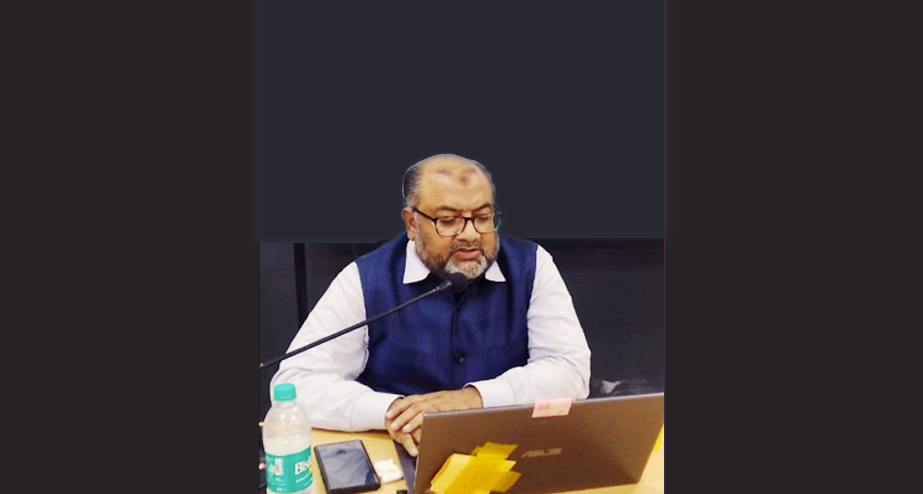
The fifth lecture was devoted to ‘Islamic teachings on money and wealth’. While Dr. Fazlur Rahman moderated the lecture, former faculty, Islamic Economics Institute, King Abdulaziz University, KSA, Dr. Kaleem ALAM spoke on the subject. He explained the role of money from past to the present. He said that money evolved from the constraints of the barter system. Money has been defined as the medium of exchange or agreed medium of exchange. According to the Encyclopaedia Economica, gold and silver were the legal means of payment. The most common money base was gold and silver as they met the requirement of money. As regards paper money, he said that the popularity of this money rose after gold and silver. Regarding Fiat money, he said that the United States, in order to support its programme and Vietnam war efforts, printed more dollars. Referring to the Qur’anic view of wealth, he said, “wealth is a blessing and Amanah to be used for good”. Every Muslim was commanded to earn and use wealth in a righteous way. Fair trade and honesty were the sources of Halal income. Ninety-two percent of the consumers in Muslim majority countries were satisfied with honesty. Two and a half percent qualifying wealth was given annually as Zakah, Sadqah and voluntary charity. Money is not defined in Qur’an. Qur’an only refers to wealth, he added.
Lecture-6
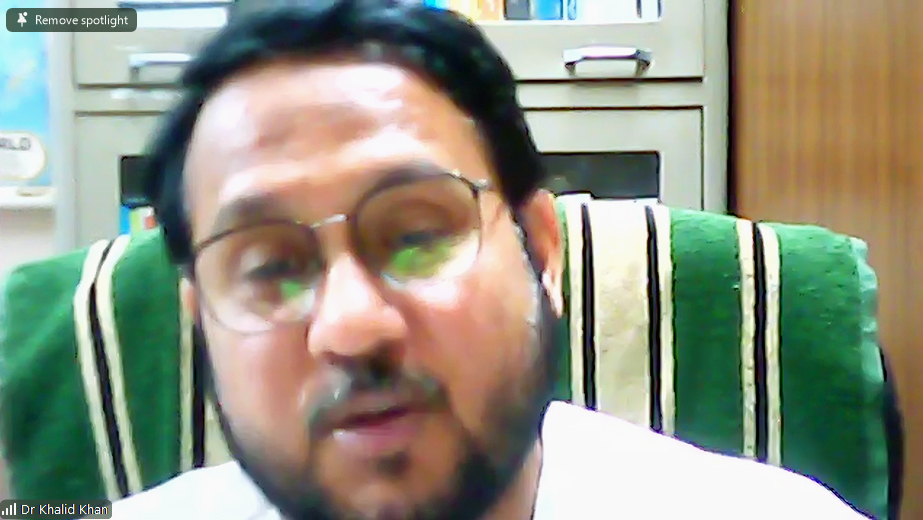
The sixth lecture was devoted to ‘Introduction to Hadith: Meaning, Compilation and a source of Islamic Law’. While Dr. Safia Amir moderated the lecture, Dr. Mohd. Khalid Khan, assistant professor, deptt. of Islamic Studies, Jamia Millia Islamia, New Delhi, spoke on the subject. He said that after the Qur’an, obeying the commands of Allah was called Sunnah. Besides Qur’an, Jibraeel (Gabriel) used to train the Prophet (pbuh) in Sunnah. A Muslim is commanded to follow Qur’an and Sunnah. He noted that the Prophet (pbuh) left behind him the Qur’an and Sunnah. Qur’an is an authority as also the Hadith. Faith in both Allah and the Prophet (pbuh) is necessary (Wa Ati-ullah Wa Ati-ur-Rasool). He said that a big treasure of Hadith was available with the Muslims. The work on the correction of Hadith was also taken up. Since writing the text was not in vogue those days, Ahadith were memorized. The work of writing Hadith had started in the life-time of the Prophet (pbuh) Himself. The writing of Hadith had six phases. The compilation of Hadith still continued, he noted.
Lecture-7
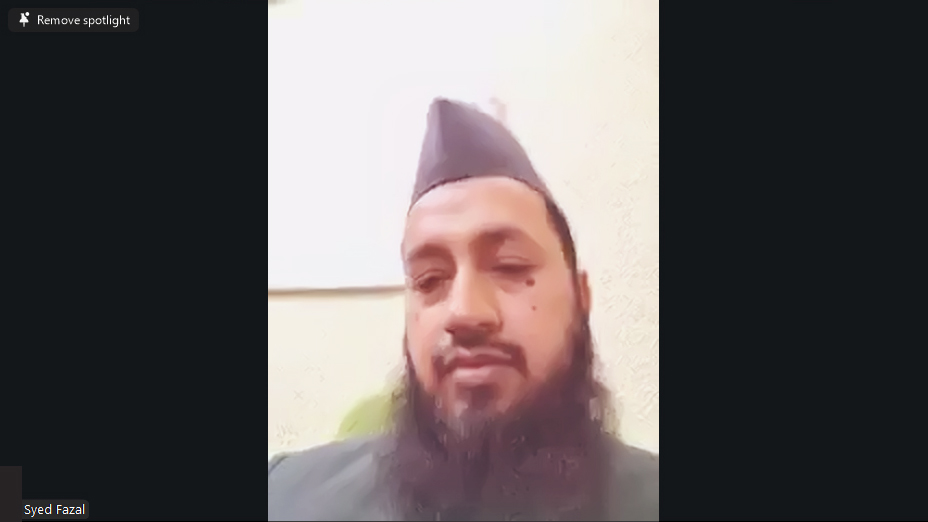
The seventh lecture was focused on ‘Introduction to Tasawwuf and its significance’. While Dr. Mohd. Fazlur Rahman, spoke on the topic, Dr. Safia Amir moderated it. Dr. Rahman said that Sufism was not found either in Qur’an or Sunnah. Purification of heart had been given much importance in Qur’an and Sunnah. Going to cave for meditation, continuous fasting, speaking less and eating less were some of the elements of Tasawwuf. He held that Tasawwuf came from Ahle-Suffa, who used to sit continuously before the Prophet (pbuh) for most of the time. Some say it comes from Safa (Purification of heart). It means freeing heart from worldly things. They are in the fore front of obeying the command of Allah. Some believed that Tasawwuf was derived from Soof. Those who wore woolen clothes were called Sufis. This view had been accepted by many scholars. There were three phases of Tasawwuf. 1- Hasan Basari. He was one of the Taba’in whose focus was on fear in Allah in initial stages; 2- Data Ganj Bakhsh. In Indian sub-continent, he was the first Sufi who practiced Tasawwuf; 3- Khwaja Usman Harooni who belonged to the Chishti order of Sufism. He held that Sufism became very popular in the Indian sub-continent.
March 11, 2026 (Day-3)
Lecture-8
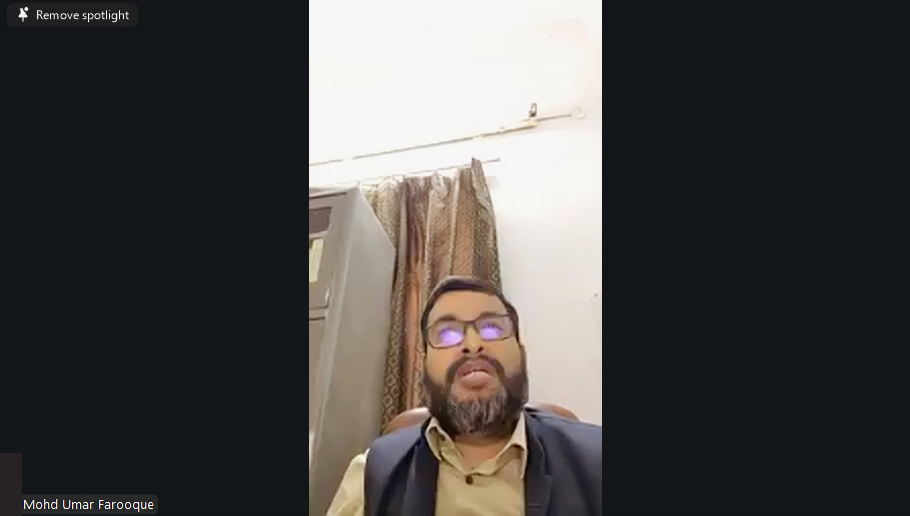
The eighth lecture was devoted to ‘Muslim Contribution to Natural Sciences’. While Najmus Sahar, assistant professor, deptt. of Islamic Studies, Jamia Hamdard moderated the lecture, Dr. Mohd. Umar Farooque, assistant professor, Islamic Studies, JMI spoke on the topic. He said that after the Revelation of Qur’an, Muslim scholars significantly contributed to various fields. These included Physics, Chemistry, Geography, Cartography, Biology, Zoology, medical science and the making of surgical instruments. This took place in the 15th century. He noted that the Qur’an provided man with spiritual and the natural perspective. In Surah Al-Baqra, there is a reference to the creation of skies and land which have signs. Emphasis on knowledge and nature too have signs of Allah. Creation of universe also has one of the signs of Allah. He held that the study of Qur’an indicated that it had worldly approach as well. He stressed the need for using scientific method for the deep study of science. Physics was the first subject which received attention in the 14th-15th century. For physics, the term Al-Physicia was used. Al-Razi made notable contribution in physics. Similarly, Al-Zahravi excelled in medicine and is credited to have produced more than 300 surgical instruments, he added.
Lecture-9
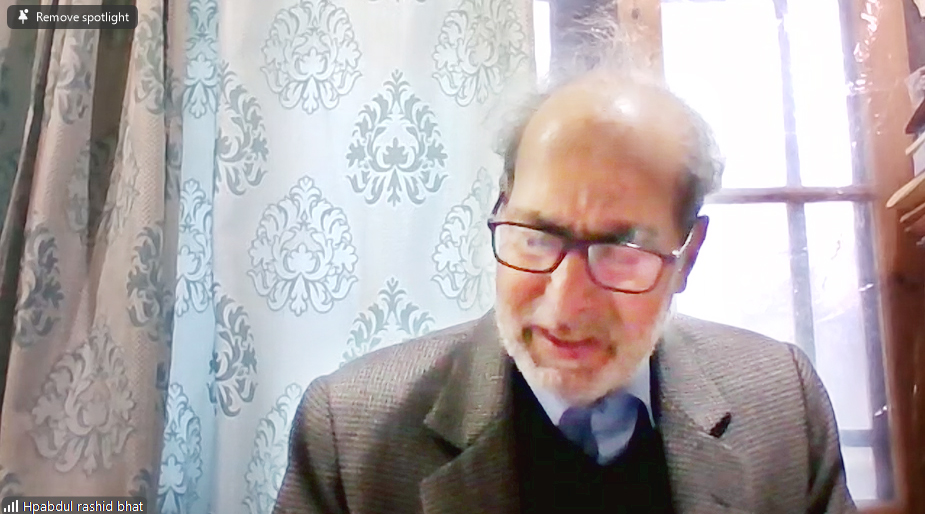
The ninth lecture was focused on ‘Islam and multiculturalism: Modern debate and Islamic position on the subject’. The moderator of the lecture was Dr. Najmus Sahar and the speaker was Prof. Abdur Rashid Bhat, former head, Shah-i-Hamadan Institute of Islamic Studies, Srinagar. He described the topic as vast and wide. He said that multiculturalism was a concept of many cultures. Culture was a way of life and society at a particular time. Culture was a method to make man perfect. Belief and moral made man a member of society. Multiculturalism was the integration of society. He noted that the success of multiculturalism depended on the recognition of society. He observed that the dialogue with non-Muslims could promote multiculturalism. Multiculturalism was the product of Enlightenment. Colonization also led to the emergence of multiculturalism. This was a policy pursued by the Christians in Australia. This was also based on the principle of universal citizenship. Minority rights were also recognized under multiculturalism. In India, minorities’ rights were recognised and protected by the Constitution, he concluded.
Lecture-10
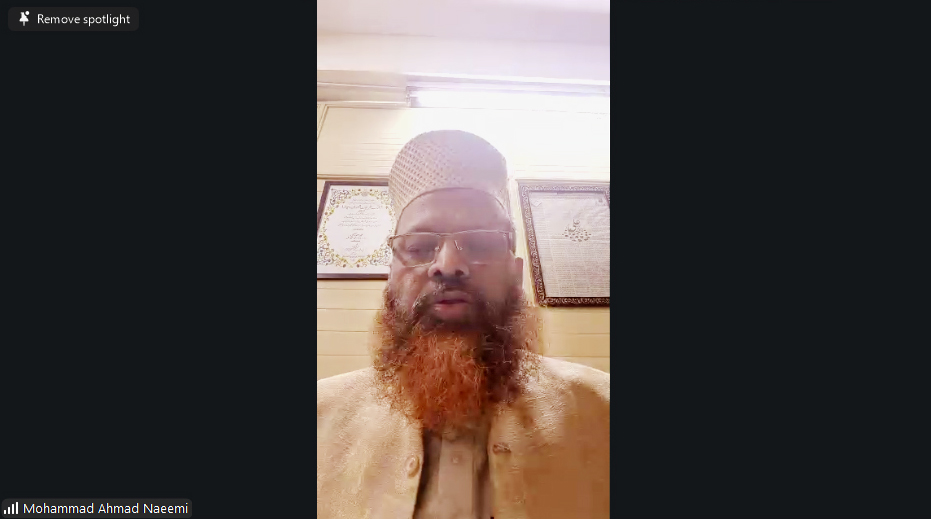
The tenth lecture dealt with ‘Parenting in Islamic perspective’. Dr. Mohammad Ahmad Naeemi, assistant professor, deptt. of Islamic Studies, Jamia Hamdard, spoke on the subject. Dr. Waris M. Mazhari, assistant professor, deptt. of Islamic Studies, Jamia Hamdard, moderated the lecture. He said that it was the duty of parents to give training to their children. In old age, it was the duty of the children to look after their parents. After commanding the faithful to worship Him, Allah requires them to serve their parents. Parents are their patrons. Allah does not require anything from His Banda (Servant). Similarly, parents also do not want anything from their wards in return. Surah Yusra and Surah Luqman explicitly mention the relationship of parents with their children. Like Allah, parents also punish their children for their improvement. Surah Al-Baqarah, Ayah No. 215 also refers to this. Allah asks the believers to spend on their parents and the relatives. They are asked to avoid disrespecting their parents. They must be given due respect and treatment. He said that service to the parents takes precedence over Jihad (Striving in the path of God). Jannah (Paradise) is under the feet of parents.
Lecture-11
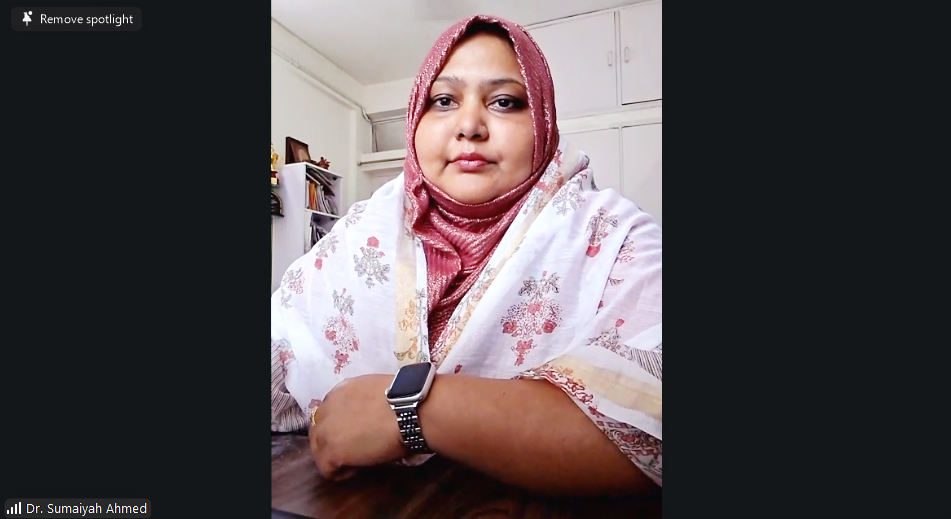
The eleventh lecture centered on ‘Muslims contribution to humanities and social sciences. While Dr. Sumaiyah Ahmed, assistant professor, deptt. of Islamic Studies, Jamia Hamdard presented her lecture on the topic, Dr. Waris M. Mazhari moderated the lecture. She observed that in the medieval period, Muslims contributed a lot to humanities. She said that Abbasid era encouraged scholarship and translation of texts. Institutions like Baitul-Hikmah (House of Wisdoms) promoted research. Greek, Persian and Indian Knowledge was integrated with Islamic thought. There developed historical analysis and review of classical texts. Ibn Khaldun developed the concept of historiography. Philosophical contributions were also very noteworthy. Ibn Sina developed the philosophy of consciousness and soul. Al-Ghazali (1035-1080 AD) contributed to integration of philosophy, theology and ethics. He noted that Muslim historians documented political and cultural history. He also developed critical methods of verifying sources. Referring to Ibn Khaldun and sociology, she said that he was the author of Al-Muqddimah. He also introduced the concept of Asabiyyah (social cohesion). Al-Mawardi, a prominent Shafi’i jurist whose seminal work, Al-Ahkam al-Sultaniyyah (The laws of Islamic governance) established a comprehensive, legally grounded theory of the Caliphate to stabilize the Abbasid era. Al-Biruni wrote Kitab Al-Hind and undertook comparative cultural studies. Al-Muqaddasi was a geographer whose work on human geography and regional analysis deserve mention, she added.
March 12, 2026 (Day-4)
Lecture-12
.jpg)
Twelfth lecture was devoted to ‘Non-Muslims during the medieval period in India’. While Dr. Mohammad Ahmad Naeemi moderated the lecture, Prof. M. Waseem Raja, professor of History, Aligarh Muslim University, Aligarh, spoke on the topic. He said that equal treatment to non-Muslims began during the Ottoman Empire where no one was forced to embrace Islam. Under Misaq-e-Madina (Charter of Madina), non-Muslims were given protection to create peace. The concept of Khiraj was developed under which it was made compulsory for non-Muslims to pay to the state something for their protection. They were not treated like other persons. Inter-religious marriages were allowed. This pattern continued till the Ottoman Empire. Their religious leaders were appointed to various posts. This system was adopted by the Ottoman Empire in the entire Middle East, Europe and Africa. The Empire adopted the policy of peaceful co-existence. Islam set its first foot hold in Sindhi. That time Sindh was under the Brahminical rule and atrocities were committed on the people. They were waiting for someone who could save them from atrocious rule. Mir Qasim who established Muslim rule in Sindh, ensured that there was no interference in religious matters of the people. They were not forced to convert to Islam. Cultural synthesis was witnessed during the period of Delhi Sultanate, he maintained.
Lecture-13
.jpg)
The thirteenth lecture was focused on ‘Non-Muslims during the Time of the Prophet and the pious caliphate. Moderated by Dr. Mohammad Ahmad Naeemi, the topic was discussed by Dr. Mohd Arshad, associate professor, deptt. of Islamic Studies, Jamia Millia Islamia. He argued that there was no distinction between Muslims and non-Muslims during that time. Both of them lived peacefully. He said that the treatment with non-Muslims in the time of the Prophet (pbuh) and the Caliphs had been documented. The Prophet (pbuh) had two phases of his life. One was his life spent in Mecca and other was the life he led while in Madinah. In Surah Al-Baqarah, Allah asked the Prophet (pbuh) to convey His message to the people and no coercive method should be adopted. The Prophet had said that everybody had a right to practice his faith. He also asked that everybody was free to follow the principles of his religion. They were allowed to take their own decisions. Their freedom of religion must not be curbed. He wanted that the plurality in society should be maintained. The Prophet (pbuh) did good to the people in His life. He used to visit the ailing people to enquire about their health. He also ensured that some amount be given to non-Muslims as financial support.
Lecture-14
The fourteenth lecture was devoted to the ‘Human Rights in Islam’ Prof. Haseena Hashia moderated the lecture. Dr. Najmus Sahar presented her talk on the topic. She observed that the UN Charter of Human Rights was influenced by the Islamic values. Rights have been decided by Allah. He gave the human beings rights over everything on land and under the skies because they belonged to Him. People of one area could not be given precedence over the people of other area. All are equal in the eyes of Allah. Under Islam, suicide is prohibited. The Prophet (pbuh) paid the compensation to two children who sold their land for Masjid-e-Nabwi. He did not allow forced conversion to Islam. All the Muslims are brothers among themselves. She briefly explained the rights of the neighbour. Even the slaves should receive orderly treatment and be given their due, she added.
Lecture-15
The fifteenth lecture was centered on the ‘Foundation of ethics and morality in Islam’. While Prof. Haseena Hashia moderated the lecture, Dr. Abroo Aman Andrabi presented her views on the subject. She laid stress on understanding how moral values were constructed and practiced within Islam. She examined the primary sources of moral ground. If examined in universal perspective, ethics and morality had two aspects—right and wrong. Besides, justice, harmony and social order were important. Referring to the divine foundations of ethics and morality, she said that there were divine sources, like Almighty Allah, Qur’an and Sunnah, and the Prophetic moral model (Perfection of Akhlaq). Core ethical foundations in Qur’an are, justice (Adl), mercy (Rahmah) and truthfulness (Sidq). She said that Taqwa was the inner moral engine that produced justice, mercy and honesty.
March 13, 2026 (Day-5)
Lecture-16
.jpg)
The sixteenth lecture was focused on ‘Islam and knowledge’. Dr. Mohd. Asif moderated the lecture and Dr. Waris M. Mazhari spoke on the topic. He explained the Islamic concept of knowledge. He said that according to the Islamic concept, anything that came to mind was called knowledge. Knowledge is the state of mind sans doubt. Greek and Hindu philosophies defined knowledge in different ways. According to Sophists, knowledge cannot be fully attained. He noted that according to the Islamic concept of knowledge, realization of Maghfirah is the ultimate goal. This is the Islamic tradition of knowledge. The importance of knowledge has been described in Qur’an and Hadith. Acquisition of knowledge has been made compulsory under Islam. The method of acquiring knowledge has also been explained. He said that Allah gave the entire repository of knowledge to Adam. Knowledge was put into the mind of man. This is a divine gift of Allah to man. Knowledge had a purpose and sources of its acquisition have been explained in detail. Knowledge should be such that is beneficial for the world and the life hereafter, he maintained.
Lecture-17
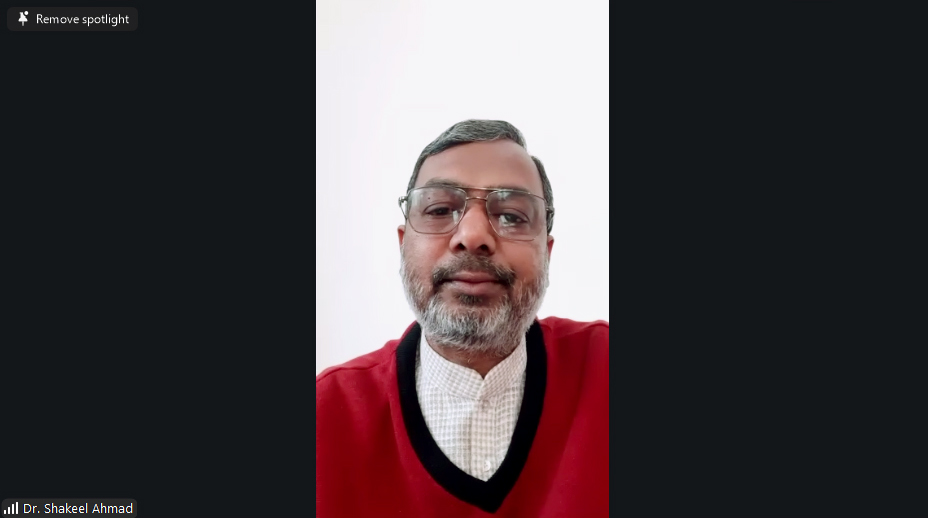
The seventeenth lecture was centered on ‘Islamic perspective of environmental sustainability’. Dr. Shakeel Ahmad, assistant professor of Islamic Studies, MANUU, Hyderabad, discussed the subject while Mohammad Husain moderated the lecture. Dr. Shakeel said that the issue of environment had been causing concern among the environmentalists. This issue was not confined to a particular geographical area. Several organisations were actively engaged in finding the ways to save environment. Referring to Qur’anic Ayahs that speak of environmental preservation, he said Allah commands the human being to create a happy and peaceful society. He observed that water pollution, air pollution and environmental pollution were a matter of great concern to the survival of human life. The Prophet (pbuh) Himself had laid emphasis on maintaining good health. He also asked to avoid the things that were hazardous for human health. The Prophet (pbuh) asked the believers to receive treatment in case of ailment. Emphasis has also been laid on consuming permissible articles. Qur’an also asks to not put oneself into perdition. Whatever Allah created, was all for the benefit of human beings. There are 10 Ayahs which refer to conflict. Whenever a victorious race passes through field, it destroys standing crop and butchers animals. Allah’s commandments against pollution are discernible, he argued.
Lecture-18
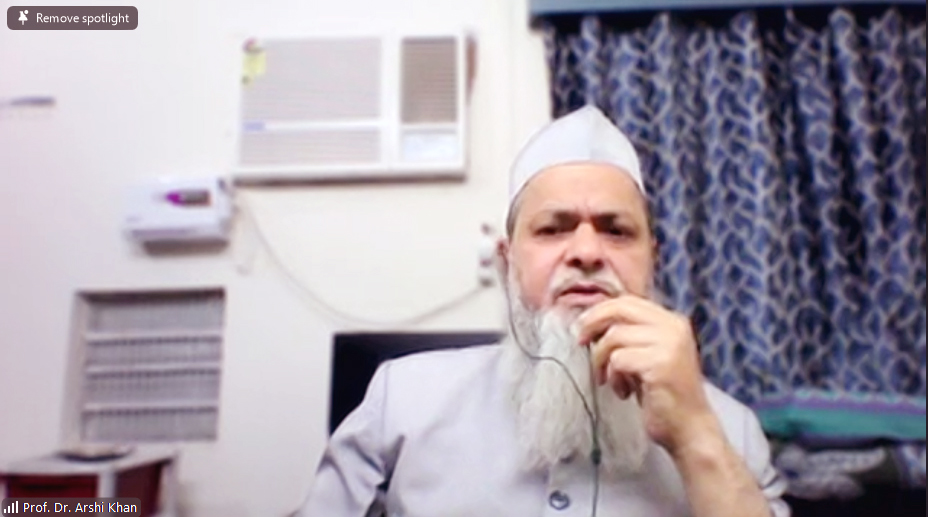
Last lecture of the 5th day focused on ‘Portrayal of Islam and Muslims in media: Exploring the modern and objective outlook’. While Prof. Haseena Hashia moderated, Prof. Arshi Khan, professor of political science, Aligarh Muslim University, Aligarh, presented his lecture. He said that the anti-Muslim sentiments had swept all over the world. In Europe, common murders were being imputed to Muslims. Sometime ago, a teacher was killed in Paris by a Muslim for using abusive language against Islam. But the face of the killer was not shown. Significantly, murderer did not know the person whom he killed. This explicitly showed that negative image of Islam and Muslims was being built in the West. Muslims were portrayed as criminals. Every killer in Europe was identified as a Muslim. One cartoonist portrayed the image of the Prophet of Islam. And the cartoonist was killed and the killing was blamed on a Muslim who he was not. Much hype was created by spreading Islamophobia. In Europe, there was the presence of Christian militants. False writings were published in Western media. Biased role of Christians about Islam and Muslims was responsible for sullying their image. He said that Palestine was not a problem till the Balfour Declarations in 1917 promised to settle Jews there. It was due to Palestine being under the administrative control of Britain, he added.
Valedictory Session
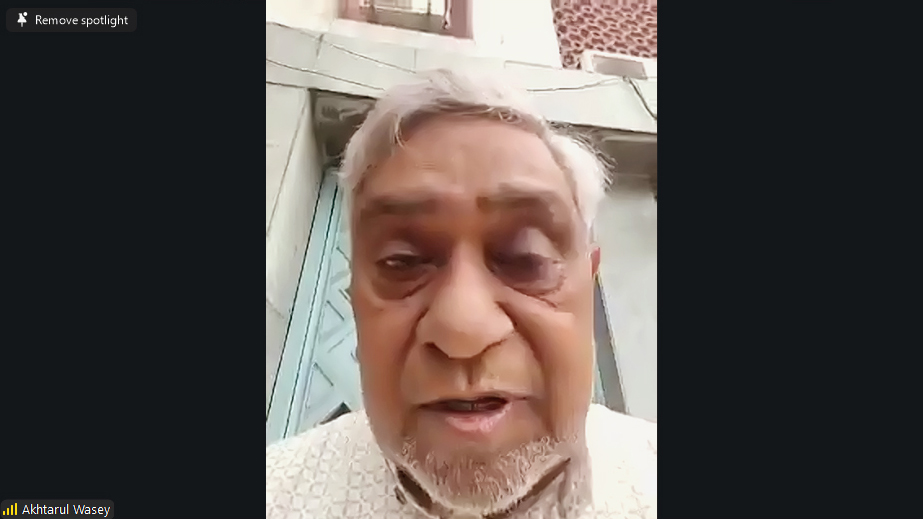
In his valedictory address, former president, Maulana Azad University, Jodhpur, Prof. Akhtarul Wasey, said, “In Arabic, we teach the text of Islamic Studies. But, we teach Islamic Studies as a discipline with context. In Islamic Studies, we study Islam in the context of political science, sociology, economics, history, geography, etc. He said that new requirements were sought to be explored, thought there was nothing new in it. What was puzzling was how the Qutub Minar, Red Fort and Taj Mahal were constructed when there was no engineering and technology at that time. Earlier, there was no delineation of knowledge but it spread with the passage of time. Referring to Ibn Sina, he said that his book was a text book in Tibb. Meaning thereby, if they did it yesterday, they could do it today also. It was Hakim Abdul Hameed, an Indian physician who first introduced Islamic Studies as a subject in Delhi. He was followed by the founder of IOS, Dr. Mohammad Manzoor Alam who took it forward, he held.
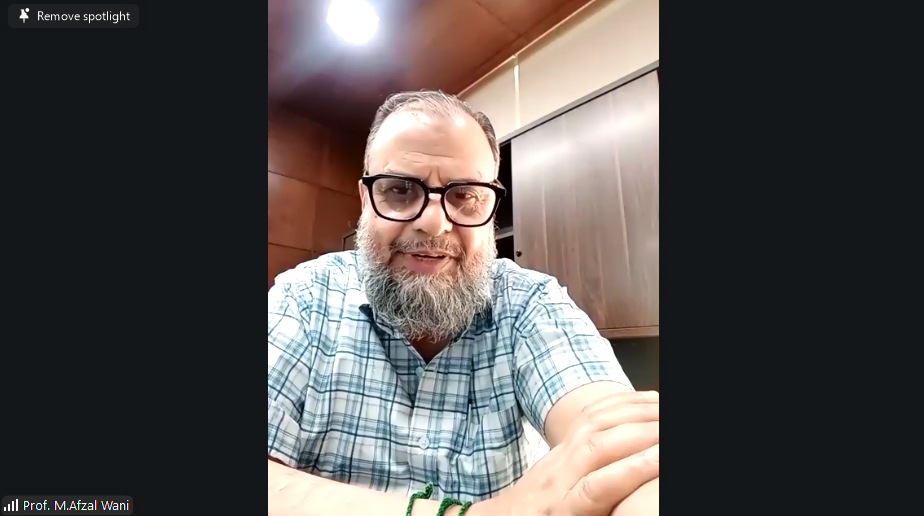
In his presidential remarks, Chairman of the IOS, Prof. M. Afzal Wani said that winter school programme was very important because the new generation was eager to know about Islam. Studying was a big task and students were very important for society. He called for developing closeness with Allah. There needed to be a spiritual kind of connection with Allah. Allah talked of spirituality and physical development of man. Thus spiritual elevation of a person was necessary. Islam wanted betterment of human kind at every moment. But, at the same time Iblis Satan had the only agenda to disturb. He also emphasised that spiritual and physical growth should be balanced. He called for inculcating both the things. Underlining the importance of spirituality, he said that Prophet Hazrat Yusuf (Joseph) would have collapsed without spirituality. He asked the students to read Qur’an and everything would be easy to understand. Qur’an is the repository of knowledge and once it is understood, all vistas of knowledge will open up. He held that nothing should be seen in isolation. The spirituality of a thing should be explored. Sharing his own experience, he said that he wanted to posses something which he could love. His ceaseless efforts bore fruit and he found the Prophet (pbuh). He believed that love for the Prophet (pbuh) would fetch both spiritual and material pleasure. This would also open gates of knowledge. Mind was never alighted from Sirah. Nobody felt tired of spirituality. He called for reading Sirah and Qur’an. Both the books had spiritual and worldly aspects. They were for spiritual good and material well-being. While our approach is balanced, the approach of Friedrich Hegel and Immanuel Kant was lopsided, he concluded.
At the end of the winter school programme, Prof. Haseena Hashia, proposed a vote of thanks to the participants.
Go Back