IOS Seminar on “We are Republic”
IOS Seminar on “We are Republic”
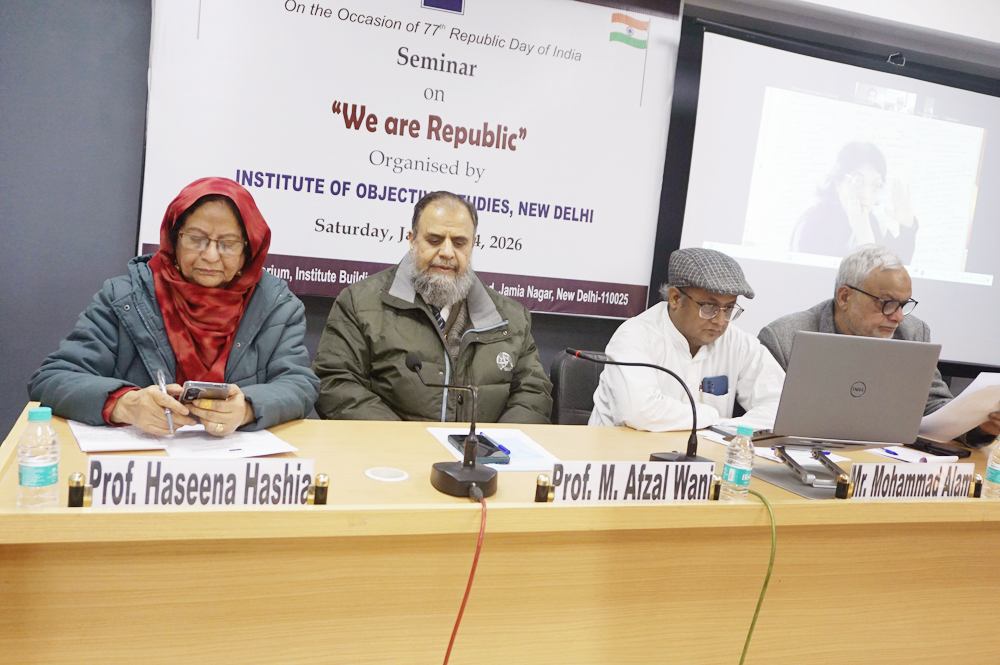
New Delhi: A seminar on “We are Republic” was organised by the Institute of Objective Studies in hybrid mode on January 24, 2026, marking the 77th Republic Day of India.
The seminar began with the recitation of a verse from the Holy Qur’an by Mr. Mansoor Ahmed, in-charge of the IOS multimedia division.
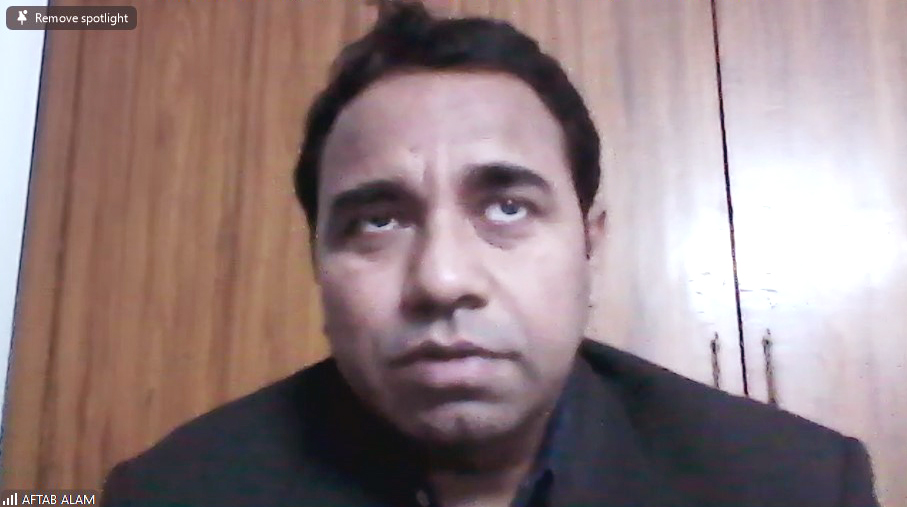
Dr. Aftab Alam, Associate Professor of Political Science at Zakir Husain College, Delhi, conducted the proceedings. Introducing the IOS, he said that it was engaged in conducting research in various fields, particularly on the socio-economic status of deprived sections, including Muslims. The Institute regularly organises national and international seminars, conferences, and discussions on various subjects and issues. It has so far published around 500 titles on a variety of subjects. It also provides a platform to scholars and public intellectuals. He said that discussion on the idea of a republic assumes more importance in the present context.
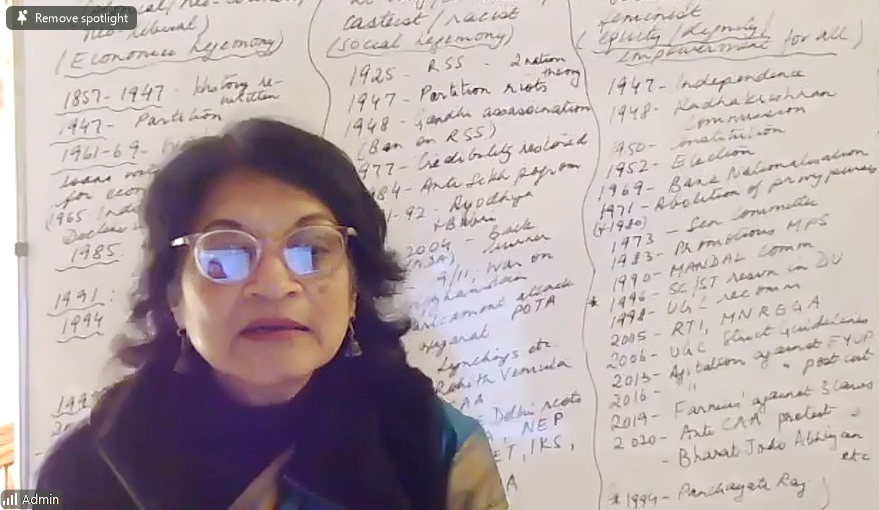
Initiating the discussion, renowned education activist and former President of the Delhi University Teachers Association (DUTA), Prof. Nandita Narain, said that no country could progress under subjugation. On the other hand, there are several rulers who would go to any extent to remain in power. There are certain forces that want to sustain their hegemony at any cost, while others want their writ to run. However, no country can prosper without the welfare of all.
Going back into India’s past, she said that the British had realised after the First War of Independence in 1857 that Hindus and Muslims could not co-exist. In 1925, the Rashtriya Swayamsevak Sangh (RSS) was founded, and a two-nation theory was propounded by it. “These things are in the public domain, and anybody desirous of knowing them may access them.” She held that the RSS was responsible for majoritarian communalism. All Indians took part in the freedom movement in different ways. Our forefathers consciously adopted democracy for the country.
Referring to the Radhakrishnan Commission, Prof. Narain said that it recommended several measures, including the privatisation of education. She noted that the RSS gained prominence in public imagination after its inclusion in the Janata Party. With the beginning of globalisation in 1991, the question arose as to why the government should invest in education. Another development was witnessed in 1994 when vocational education was introduced in universities; earlier, it was part of the curriculum in polytechnics. The industry did not support educational promotion. The Panchayati Raj initiative, introduced in 1994, was taken with good intentions.
In 2016, the education sector began to suffer due to a lack of government aid. The reason cited by the government was that there was no need to make teachers permanent. Commenting on the Shaheen Bagh protest against the Citizenship (Amendment) Act (CAA), National Register of Citizens (NRC), and National Population Register (NPR), she said that it was democratic and peaceful. She alleged that attempts were being made to take control of educational institutions. Activists were being jailed for years without trial. Similarly, universities were being targeted, and three-year programmes were being converted into four-year programmes.
To make matters worse, a bill was introduced in Parliament to deprive the University Grants Commission (UGC) of the power to grant funds to higher educational institutions. She said that consumerism was being promoted and resistance weakened. She called for avoiding slackness in the field of education.
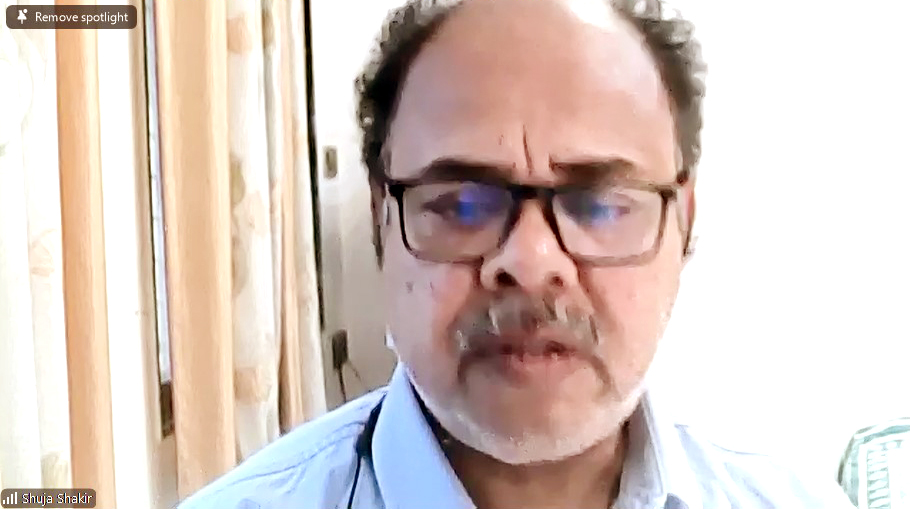
Prof. Shuja Shakir, Department of Political Science, Babasaheb Ambedkar Marathwada University, Aurangabad, raised the question of accountability as machines were often said to be fair in decision-making. He pointed out that biases have always existed in a republic, and accountability in AI is not a new problem. He also questioned the source of AI data. When humans exhibit bias, it can be corrected, but machines are harder to fix. He clarified that critiquing technology does not mean rejecting it and stressed the importance of social analysis. Engagement with democracy, he said, involves questions about the future and the health of democratic systems.
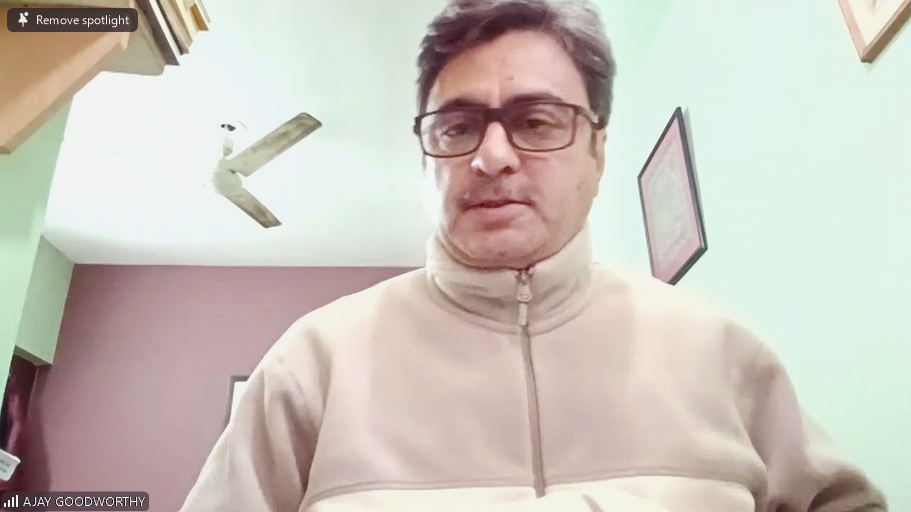
Associate Professor at the Centre for Political Studies, School of Social Sciences, Jawaharlal Nehru University, Prof. Ajay Gudavarthy, observed that democracy is facing a crisis. He argued that the Constitution failed to address inequalities adequately. While it was prepared within a democratic framework, he questioned whether it was elitist or public-oriented. He suggested that it had elements of elitism, as institutions like the police, army, and judiciary were part of the colonial legacy.
The Constitution, drafted after Partition, showed an overreach of the state. Though social revolution was in the minds of its framers, the challenge was implementing it in a diverse society. Constitutional imagination focused on poverty, low education, and cultural diversity. He argued that the Constitution was influenced by Western models and did not fully reflect Indian culture. He pointed to a perceived clash between faith and justice and questioned whether the Constitution could generate emotional and cultural resonance. He advocated for aligning cultural values with constitutional principles.
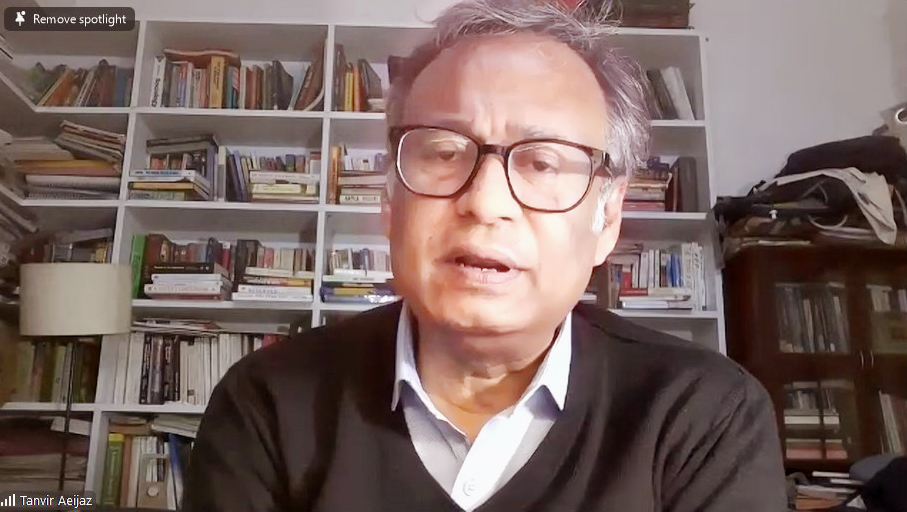
Dr. Tanvir Aeijaz, Associate Professor of Political Science at Ramjas College, University of Delhi, defined a republic as a system without monarchy, where elections are central. He warned that India appears to be moving towards a dangerous terrain due to authoritarian populism. He emphasised that the Constitution is cosmopolitan and rooted in liberal values. He rejected the idea that it is purely Western or Eurocentric. Referring to calls for a “second republic,” he cautioned that such ideas could undermine secularism and the liberal vision of the Constitution.
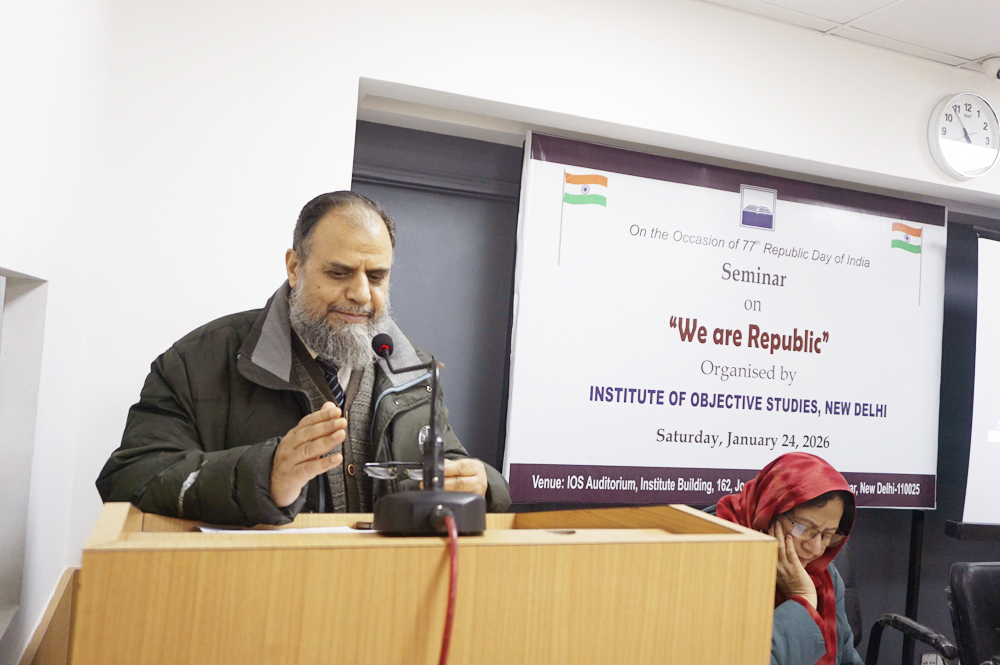
Presiding over the seminar, the Chairman of the IOS, Prof. M. Afzal Wani, observed that after adopting the Constitution, the first task should have been to educate people about the meaning of a republic—a task that remains incomplete. “A republic is the rule of the people. They are sovereign. Where has the Republic reached in seven decades?”
He stressed the need to address inequality and poverty and questioned whether sustainable development goals had been achieved. He urged Parliament to focus on meaningful debates rather than controversial issues. He called for making India competitive in every field and for revisiting the education system to ensure it is aligned with republican values.
He emphasised that the state must ensure equality, avoid interfering in matters of faith, and formulate policies for public welfare. He also called for action against hunger, starvation, and poverty, urging the setting of a clear development agenda.
Referring to the late Dr. Mohammad Manzoor Alam’s vision, Prof. Wani said he believed in action over slogans. He encouraged empathy for people’s suffering and emphasised finding practical solutions. “Pain should be minimised and pleasure maximised,” he concluded.
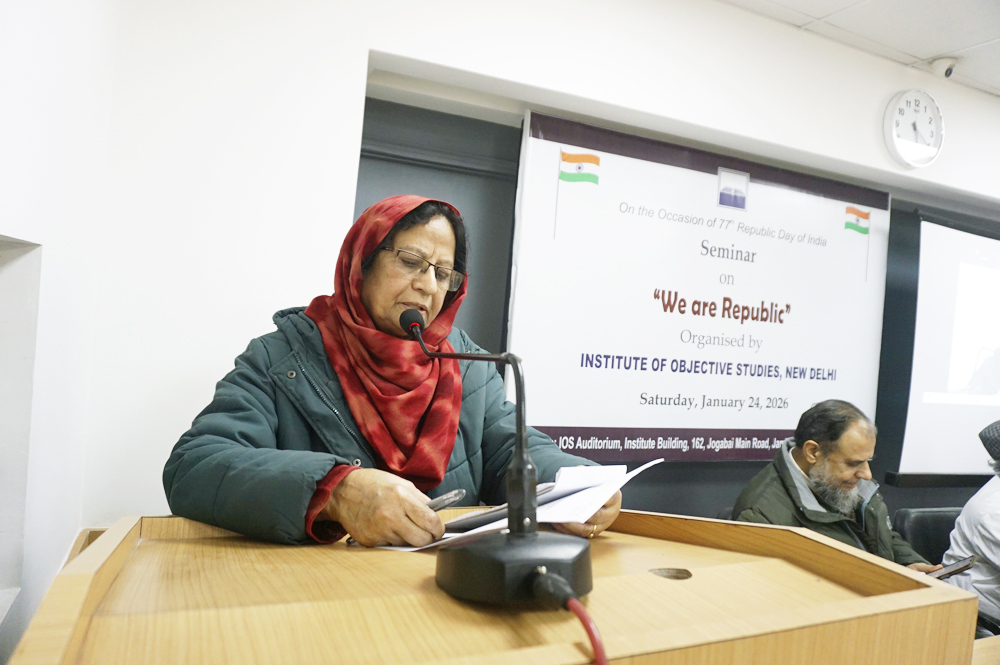
The seminar concluded with a vote of thanks by Prof. Haseena Hashia, Vice-chairperson of the Institute.
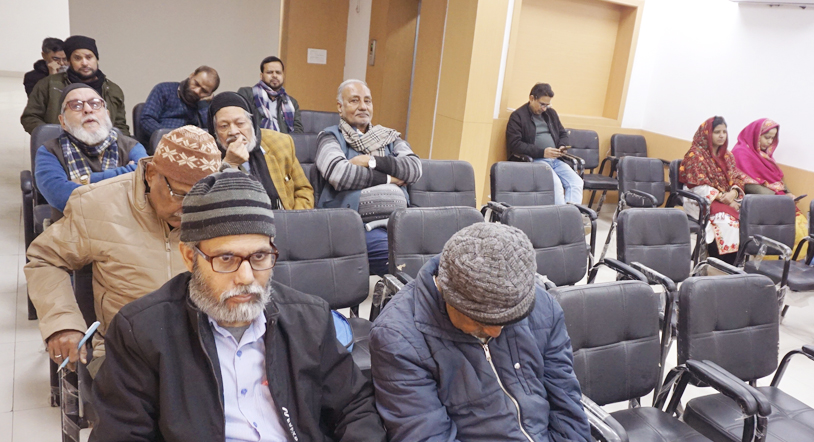
A view of audience
Go Back