Mujaddid IOS Centre for Arts and Literature organises discussion on “Intellectual Traditions of Maulana Abul Kalam Azad”
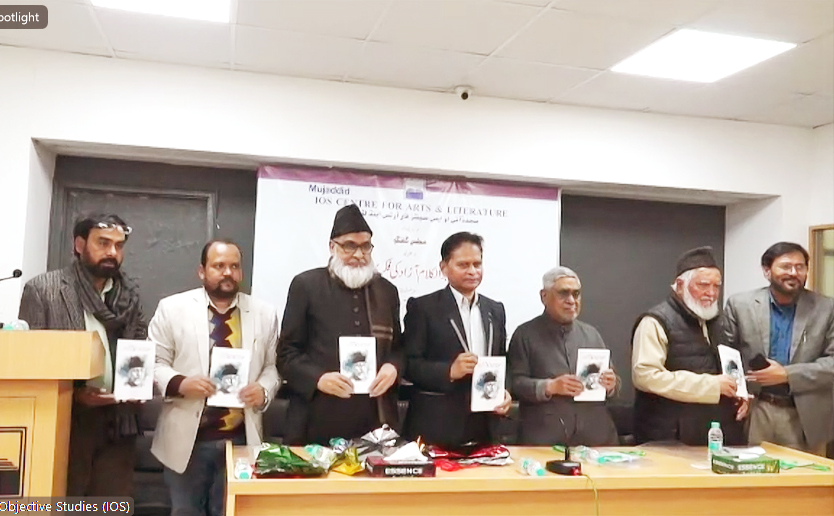
Mujaddid IOS Centre for Arts and Literature organises discussion on “Intellectual Traditions of Maulana Abul Kalam Azad”
New Delhi: A discussion on “Intellectual traditions (Fikri Riwayaat) of Maulana Abul Kalam Azad” was organised by the Mujaddid IOS Centre for Arts and Literature on December 6, 2025. Presided over by the noted Islamic scholar and professor emeritus Islamic Studies, Jamia Millia Islamia, Padma Shri Prof. Akhtarul Wasey, the discussion got off to a start with the recitation of a Qur’anic verse by Dr. Khan Mohammad Rizwan, who also conducted the proceedings.
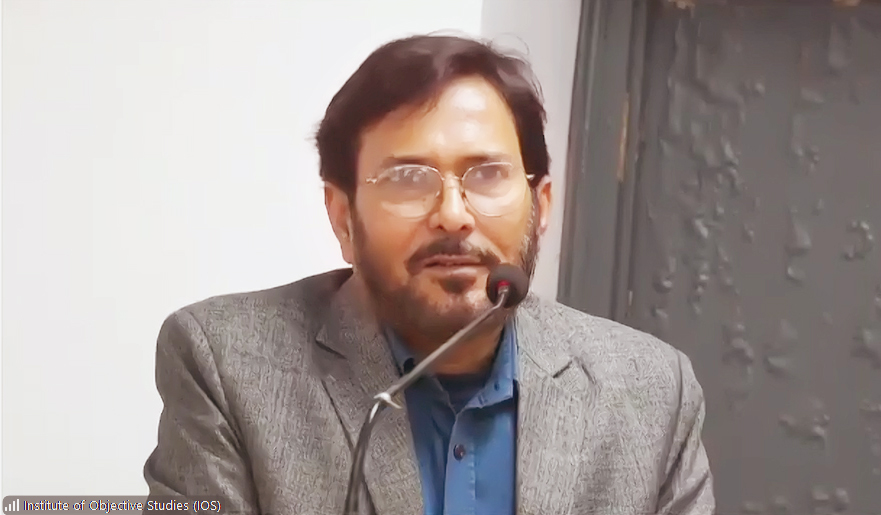
In his introductory remarks, senior Urdu journalist and writer, Mr. Ahmad Javed, observed that Maulana Abul Kalam Azad needed no introduction. His contribution to education as the first Union Minister for Education after Independence was immense. Referring to the activities of the IOS, he said that it was promoting institutions. It was engaged in conducting and promoting research on socio-economic issues of the marginalized sections of society since its inception in 1986. Institute’s chief patron and founding-chairman Dr. Mohammad Manzoor Alam, gave width to its activities by adding arts and literature to them. He selected senior journalist and Urdu writer, Mr. Anjum Naim as the Centre’s in-charge. Today’s discussion was being organised on Maulana Azad who was the symbol of secularism and a votary of modern education. This also happened to be the day on which the anniversary of demolition of Babri Masjid was being observed as ‘Black Day’. The day should be remembered as the day of introspection. Referring to Maulana Azad, he said that if one wanted to know about him (the Maulana) he must read his works like Ghubar-e-Khatir, Tarjumanul Qur’an, Meesaq-e-Madina, etc. He observed that the demolition of Babri Masjid was the murder of a tradition.
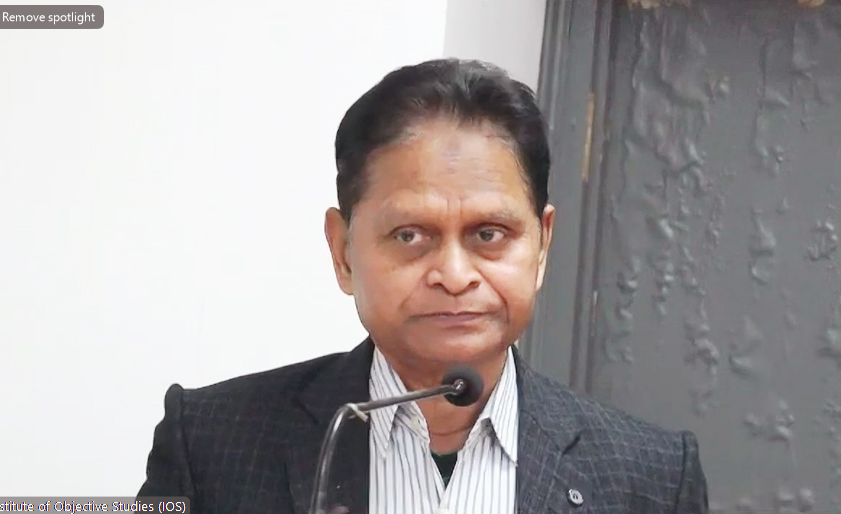
In his key-note address, professor of Urdu, Delhi University, Prof. Abu Bakar Ebad, held that Maulana Abul Kalam Azad was living in both past and present at the same time. He had equal command over Urdu, Persian and Arabic languages. He said that according to C. Rajagopalachari, the last Governor-general of India, Maulana Azad also used to read books in English. Mahadev Desai, Gandhiji’s personal secretary, too had the same opinion about him. The Maulana had keen interest in Islamic theology and philosophy. His personality was multi-dimensional and his study very diverse. He noted that the agenda for the national life of Indians he set was still relevant for the community. His works were a beautiful blend of history, philosophy, science, Fiqh and sufism. His Tarjumanul Qur’an was free from prejudice and bias. He nurtured his interest in aesthetics. As an Urdu journalist, he proved his worth through the newspapers like Al-Balaagh and Al-Hilal. Al-Hilal was the best Urdu paper of that time as unbiased and independent. He was acclaimed for his contribution to the establishment of institutions and Madrasas. He was also responsible for persuading Maulana Mahmud Hasan Deobandi to join the freedom movement. Maulana Mahmud was externed by the British Raj and sent to Malta jail. He maintained that Maulana Azad was against the use of violence to attain freedom. He used his educational, intellectual, literary and political foresight to achieve success in different fields.
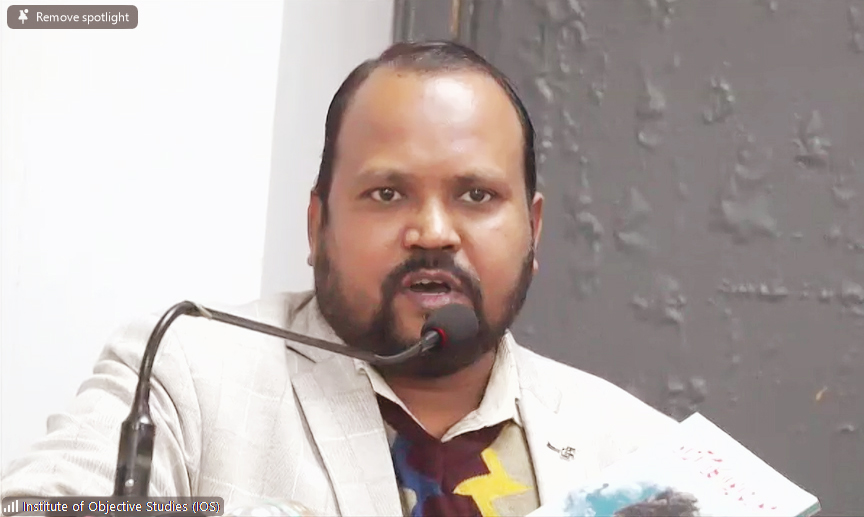
On this occasion the book titled “Maulana Abul Kalam Azad” written by senior Urdu journalist and ex-correspondent of Voice of America (Urdu service), Mr. Suhail Anjum and published by the IOS, was released. Since Mr. Suhail Anjum himself could not make it to the programme due to inordinate delay in the flight to Delhi, he was represented by his son, Dr. Salman Faisal. He thanked Dr. Mohammad Manzoor Alam for publishing his father’s book. He briefly highlighted the main features of the book. He said that Maulana Azad’s anecdote about Chidiya (Bird) as written by him in Ghubar-e-Khatir, had also found reference in Mr. Anjum’s book.
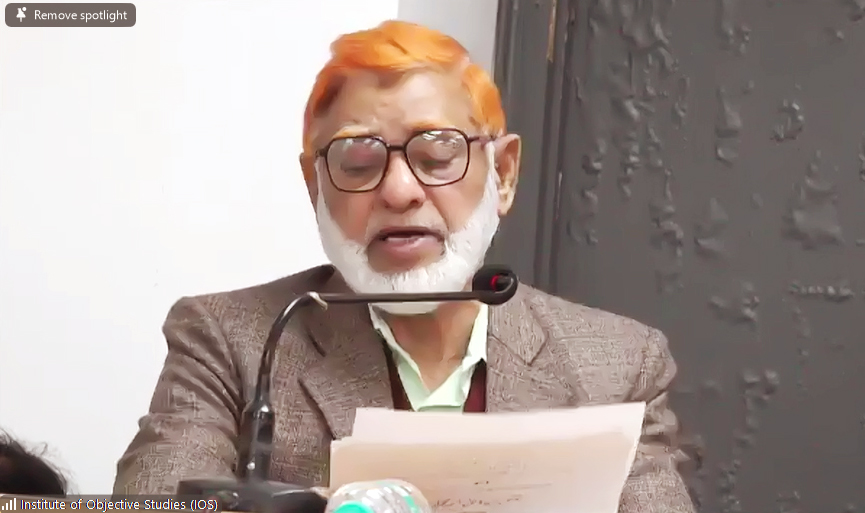
Well-known Urdu fiction writer, Mr. Ishrat Zaheer, said that Maulana Azad believed detachment from traditions and setting new precedents. He was a firm believer in giving respect to human values. It was his broad-mindedness to set up institutions like Sahitya Akademi and Sangeet Natak Akademi to promote literature and culture. Basically, he was an Aalim, but his area of work stretched beyond that. His treatise on Surah Fatiha was a glaring example of his scholarship. He was a creator of perspectives and philosopher. He described Ghubar-e-Khatir as a literary masterpiece. He had a deep sense of self-realisation. He left an indelible mark on every aspect of life. He called for using Maulana’s vision for the benefit of the community.
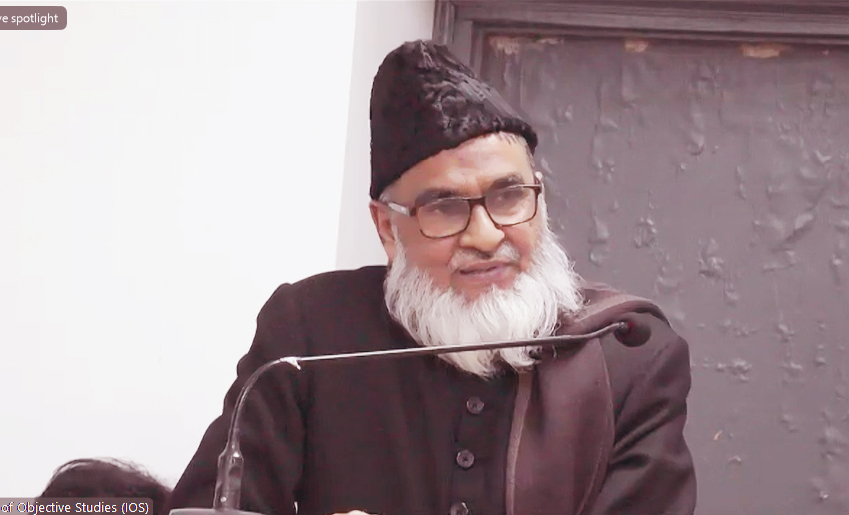
Mufti Ataur Rahman Qasmi, who devoted a long time to the study of Maulana Azad’s life and works, observed that there was perfect understanding of ideas in his traditions. His importance in the freedom struggle and the Indian National Congress could be gauged from the fact that Gandhiji wrote a letter to him on the death of his father. Gandhiji described the Maulana as the “future of India”. He was very much impressed with him. Famous Islamic scholar, Maulana Najmuddin Islahi presented the manuscript of his book to Maulana Azad for his perusal and suggestions. He arranged to grant pension to Maulana Islahi because he had participated in the freedom struggle. He understood the worth of people. He was a prolific writer and commentator. He was an ardent believer in Wahdat-i-Deen and the Day of Judgment. He said that the Maulana was bitterly against the two-nation theory. He strongly believed that the situation of the country would worsen after Partition. He had an extra-ordinary command over Arabic language. Eminent scholar of Urdu, Prof. Malik Ram called the Maulana “Urdu-e-Mubin”.
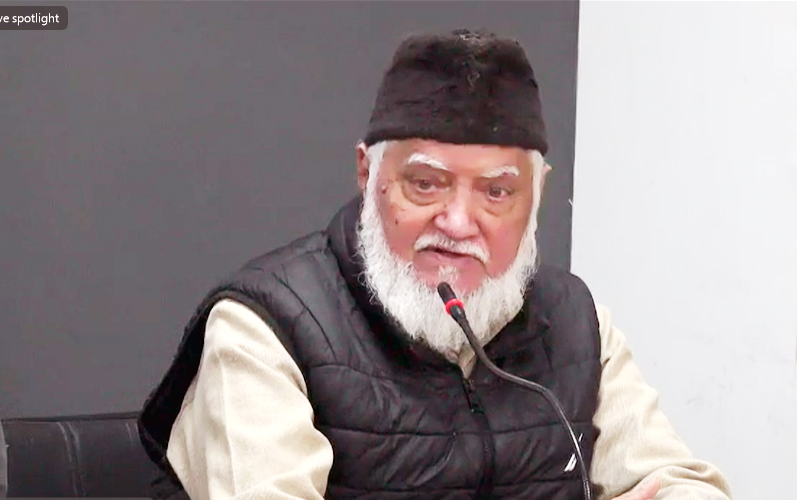
Ex-professor of Arabic at English and Foreign Languages University, Hyderabad, Prof. Mohsin Usmani Nadwi, noted that Maulana Azad’s personality was extra-ordinary from different perspectives. His Ghubar-e-Khatir was an excellent book. His political career was outstanding. He was a votary of one-nation theory. His personality was multi-farious. He said that Prof. Mohammad Mujeeb wrote a wonderful book on Maulana Azad. Maulana’s monumental work, ‘Tarjumanul Quran’ was well-received by the world. He held that every leader of the Congress, from Gandhiji to Nehru, agreed on Partition, but Maulana Azad opposed it till the end. Indian Muslims lost much by not heeding the advice of Maulana Azad. Followed by Maulana Syed Abul Hasan Ali Nadwi alias Ali Miyan, Maulana Azad was at top of the Ulema who had expertise in literature, particularly the poetry. He expressed concern over the growing backwardness among Muslims. Their backwardness worsened during the last 200 years. He strongly felt the need for improving relations with non-Muslims. Things only worsened with the widening gap between the two communities, he added.
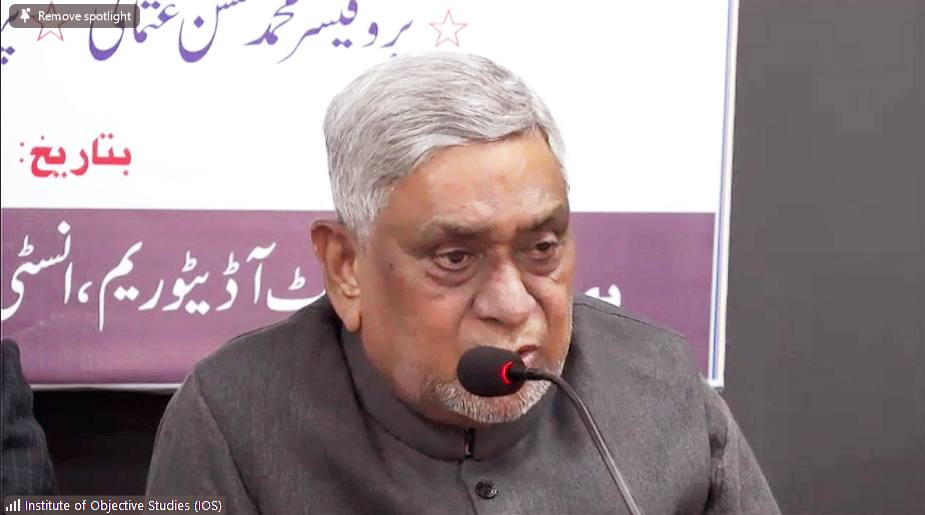
In his presidential remarks, Prof. Akhtarul Wasey lauded Mr. Suhail Anjum for writing an important book on Maulana Azad. He also praised the IOS for encouraging him to pen a book on Maulana Azad. He said that Maulana Azad always opposed Partition. Muslims of both the countries suffered a lot. He used to say he would not accept an offer of freedom from an angel in exchange for the country’s Partition even if he declared it from the top of the Qutub Minar. He described several anecdotes in Ghubar-e-Khatir were symbolic. He was credited with creating institutions of higher education in science and technology, and academies for the promotion of literature and culture. He called for initiating inter-faith dialogues for better understanding of each other. Dialogues could not be held with bricks and stones. He described Mr. Suhail Anjum’s work, a collection of articles on Maulana Azad, as magnificent.
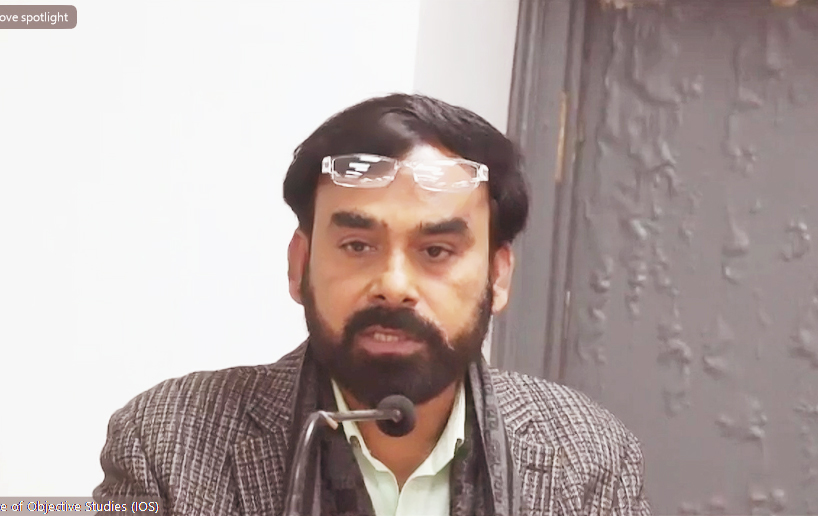
At the end, Dr. Khan Mohammad Rizwan extended a vote of thanks to all those who were present on the occasion.
Go Back