IOS two-day online International Conference on “The Life and Contributions of Taha Jabir al-Alwani”
IOS two-day online International Conference on “The Life and Contributions of Taha Jabir al-Alwani”
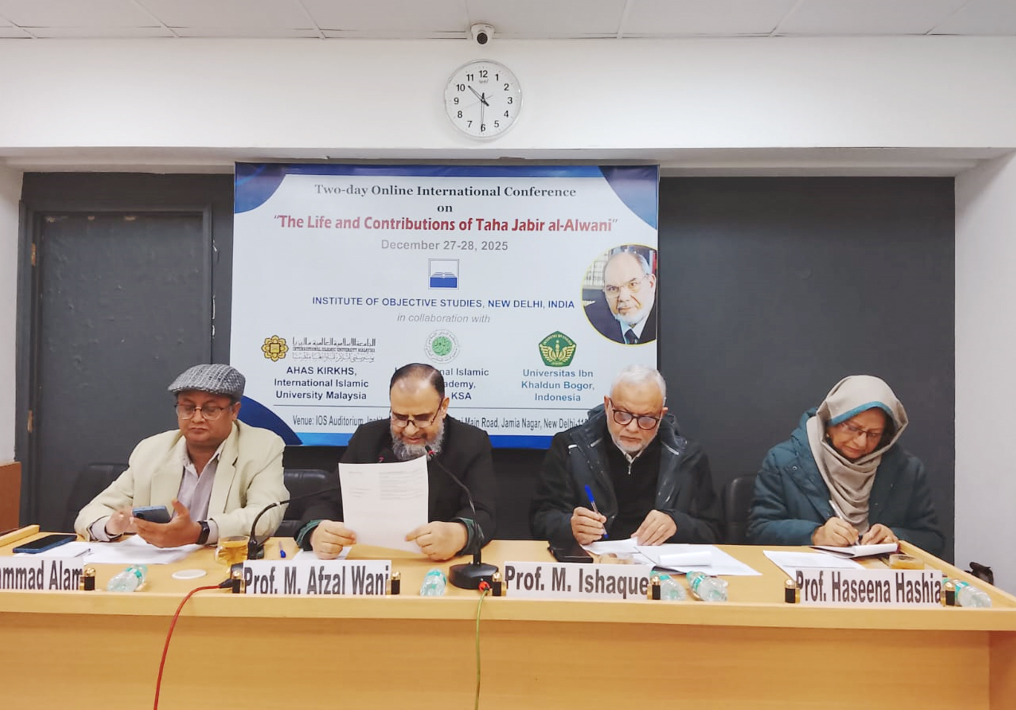
New Delhi: A two-day online international conference on “The Life and Contributions of Taha Jabir al-Alwani” was organised by the Institute of Objective Studies (IOS) in collaboration with AbdulHamid AbuSulayman Kulliyah of Islamic Revealed Knowledge and Human Sciences, IIUM Malaysia (AHAS KIRKHS), Universitas Ibn Khaldun Bogor, Indonesia (UIK) and the International Islamic Fiqh Academy, Jeddah, KSA (IIFA) on December 27 and 28, 2025.
Inaugural Session
.jpg)
The conference formally began with the recitation of a Qur’anic Verse by Hammad Kaleem Alam. Welcoming the participants of the Conference, Secretary General of the IOS, Mr. Mohammad Alam, extended a warm and heartfelt welcome to them, and highlighted the activities of the Institute. He said that the IOS, established in 1986, sought to contribute to intellectual discourse by integrating ethical values with contemporary social science research. It focused on areas such as education, social justice, minority studies, human rights, culture and civilisational dialogues. Through research projects, seminars, publications and academic collaborations, the Institute aimed to develop alternative perspectives that promoted equity, harmony and inclusive development. With a strong commitment to academic rigour and social responsibility, the Institute of Objective Studies has emerged as an important platform for scholars and researchers engaged in thoughtful analysis of social challenges, both in India and globally. He observed that Dr. Taha Jabir Al-Alwani was a towering scholar of Islamic jurisprudence and Qur’anic studies whose intellectual legacy continued to guide researchers, institutions and thought leaders across the world.
.jpg)
Introducing the theme, former dean, faculty of Humanities and Languages, Jamia Millia Islamia, New Delhi, and convenor of the conference, Prof. Mohammad Ishaque, said that Dr. Taha Jabir al-Alwani occupied a significant place among contemporary scholars of Islamic thought. His engagement of Ijtihad and Tajdia with modern times made him an acclaimed Islamic scholar. His holistic framework set a new trend in Maqasid-e-Shariah-oriented research. His Islamic legal theory was universal. His methodical approach to Qur’anic thought had deeper intellectual insights. He briefly dwelt on Al-Alwani’s pioneering contributions in the areas of Islamisation of knowledge and the activities of integration of Islamic knowledge. His innovative approach to Qur’anic epistemological methodology sustained a significant influence on contemporary scholarly discourse. He opined that Al-Alwani’s intellectual legacy would continue to dominate Islamic thought in future as well.
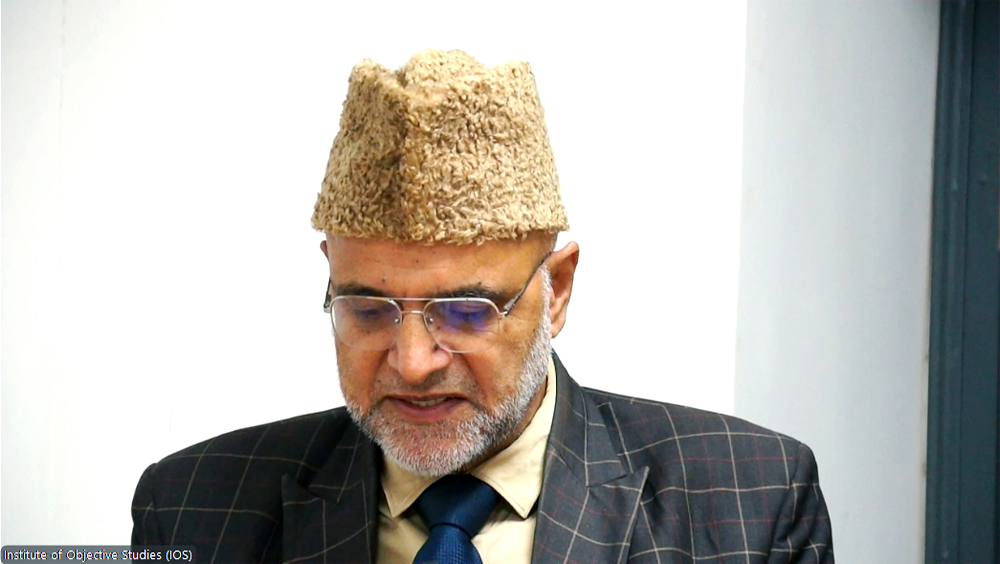
Former head of Shah-i-Hamadan Institute of Islamic Studies, University of Kashmir, Srinagar, Prof. Hamidullah Marazi presented the profile of Dr. Taha Jabir al-Alwani. He said that Dr. Al-Alwani was an intellectual reformer who worked for the development of Islamic jurisprudence. He had a modest background but became a contemporary thought leader. He made significant contributions in the areas of Islamic Usul al-Fiqh and he fully involved himself in the schools of Islamisation of Knowledge. He also took forward the Islamic legal tradition. His Islamic scholarship was recognised both in the East and the West. He touched upon contemporary Islamic issues and developed modern intellectual framework to solve them. He theorised empirical knowledge of Wajud. His theory of integration of Islamic teachings with modern knowledge remained a vital reference point for researchers. He sought integration of Islamic ethics with modern knowledge. He also suggested how Islamic law could be applied to non-Muslims. He founded a global platform for scholars. He left an indelible mark on modern Islamic thought. He studied at Al-Azhar University, Cairo, and was a scholar, teacher and institution-builder. He was the president of International Institute of Islamic Thought (IIIT), USA. He was a reformer and knew several languages, like Arabic, Turkish, English etc., Prof. Marazi added.
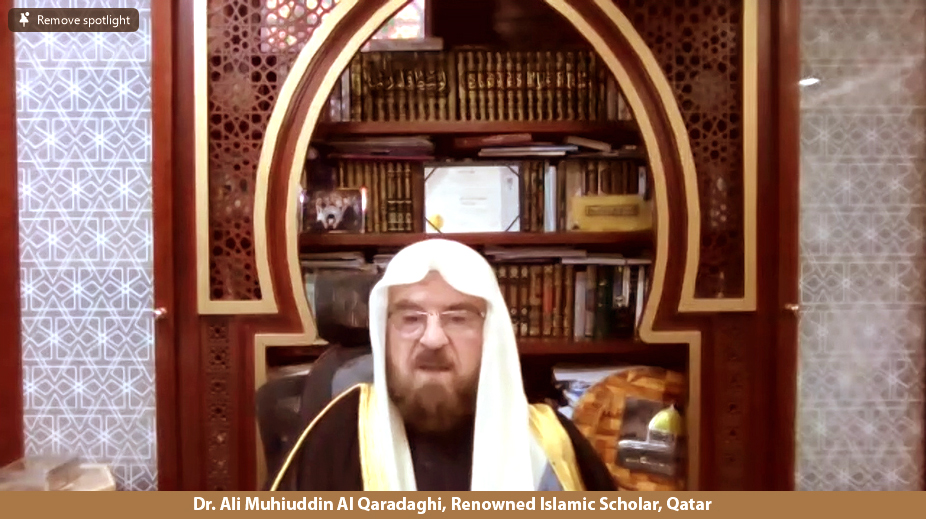
In his inaugural speech, renowned scholar and president, International Union of Muslim Scholars, Qatar, Dr. Ali Muhiudden Al-Qaradaghi, held that Dr. Taha Jabir al-Alwani was a prominent Islamic jurist and thinker known for his influential work on Islamic law, especially in relation to Muslim minorities. He studied at Al-Azhar University, Cairo and later taught at Imam bin Saud University, Riyadh, KSA. He also served as legal advisor to the Ministry of Interior, KSA. At the International Institute of Islamic Thought (IIIT), USA, he played a key role in theorising Islamisation of knowledge. After moving to the United States, he founded the Graduate School of Islamic and Social Sciences, (GSISS) and led major scholarly initiatives in North America. As a prolific author, Dr. Al-Alwani’s works addressed Qur’anic authority, legal methodology, ethics of disagreement and Fiqh al- aqalliyyat. Beyond his scholarship, he was remembered as a devoted family man and an inspiring teacher, he said.
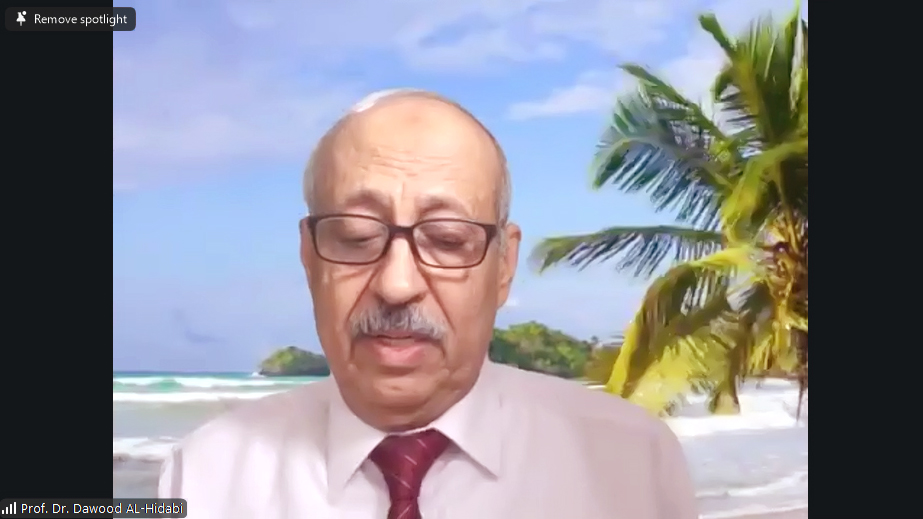
In his key-note address, professor, Kulliyyah of Education, IIUM, Malaysia, Prof. Dawood Abdulmalik Yahya Al-Hidabi, observed that Dr. Taha Jabir al-Alwani was an outstanding scholar who left a rich legacy for young scholars by revisiting Islamic intellectual tradition. He belonged to the group of scholars who were concerned about the Ummah. He was for the socialisation of environment. He also spoke on Dr. Al-Alwani’s Usul of Shariah and his activities in the United States of America and the KSA. He had his own concern about Muslim Ummah. His contribution through epistemological foundation based on the Qur’an was very important. His life went through his education with several stages. He applied modern paradigms to understand integration of Islamic knowledge system. He defined the concept of Tawhid and Tazkiyah. He emphasised the re-evaluation and re-interpretation of Sunnah. He also called for renewal of Usul of Fiqh and Maqasid-e-Shariah. He propounded the ethics of disagreement and laid emphasis on truth rather than argument. He believed in deep epistemology of transformation and argued for synchronisation of knowledge and establishment of global Ummah, Dr. Hidabi added.
A brief message received from Dr. Ahmad Al-Alwani on behalf of his family, was read out by Dr. Nakhat Husain Nadvi, in-charge of the Arabic section of the IOS. In the message, the Al-Alwani family was specifically pleased to announce the forthcoming launch of the ‘Taha Jabir al-Alwani Award’, an academic award that seeks to honour conscious thought, maqasid-oriented research, and service to the causes of Ummah through an authentic and contemporary methodology—one that might be established and articulated in his writings, dialogues, scholarly debates, teaching and documented courses.
Chief patron and founder-chairman of the IOS, Dr. Mohammad Manzoor Alam, in his speech, read out by Prof. Mohammad Ishaque, said, “Dr. Taha Jabir al-Alwani, was among the most distinguished Islamic scholars of our time, whose intellectual legacy will continue to inspire generations of scholars, thinkers and students of Islamic thought. He was a visionary scholar who combined deep fidelity to the Qur’an and Sunnah with an acute awareness of the challenges confronting the contemporary world”. He observed that Dr. Al-Alwani’s most significant contribution lay in his efforts to revive Ijtihad as a living and dynamic process. He consistently emphasised that Islamic jurisprudence must remain responsive to changing social realities while remaining anchored in the higher objectives (Maqasid) of Shariah. His pioneering work in the field of Fiqh al-aqalliyyat (Jurisprudence of Muslims) provided much-needed guidance to Muslims living in non-Muslim societies, enabling them to practice their faith with confidence, integrity and civic responsibility.
Dr. Alam noted, “Equally noteworthy was his role in advancing the project of the Integration of Knowledge. As a founding figure and later the President of International Institute of Islamic Thought (IIIT), Dr. Al-Alwani worked tirelessly to promote an integrated vision of knowledge that harmonises revelation and reason, ethics and empiricism, faith and social sciences. He firmly believed that the intellectual crisis of the Muslim world could not be resolved without reforming its epistemological foundations”.
“Dr. Al-Alwani was also deeply committed to the ethics of disagreement. At a time when divisions and intolerance increasingly afflict Muslim societies, he called for scholarly humility, intellectual pluralism and mutual respect. His writings and public engagements reflected a Qur’an-centric approach that sought unity without uniformity and dialogue without compromission principles.”
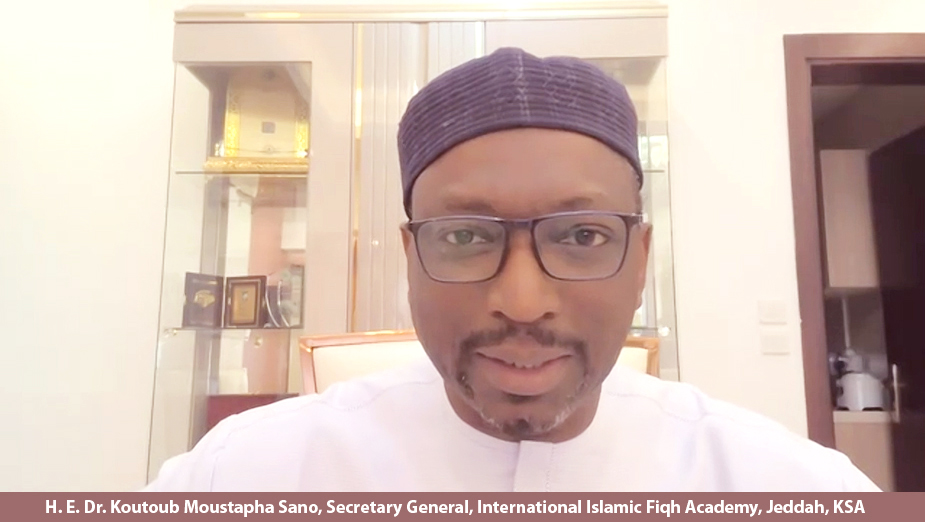
Speaking as a guest of honour, secretary general, International Islamic Fiqh Academy, Jeddah, H.E. Dr. Koutoub Moustapha Sano thanked Dr. Mohammad Manzoor Alam for recognising Islamic scholars and highlighting their contributions. Referring to Dr. Al-Alwani’s contributions, he said that Islamisation of Knowledge could be described as one of the significant theories he propounded. He wrote several wonderful books on the subject. In 1985, he did his Ph.D. and moved on to work in the areas of the Integration of the Knowledge of Shariah with the modern knowledge system. He came from an Islamic background—his father was an engineer. He did everything at Al-Azhar, from High School, Undergraduate and Ph.D. He also went deep into social service. He called for debating on the concept of Haraam and Halal. He referred to Dr. Al-Alwani’s contribution in the IIIT. He always talked of Islamisation and integration of knowledge. He developed the concept of the ‘Integration of Knowledge’ and believed that knowledge would come only when it was integrated, Dr. Sano averred.
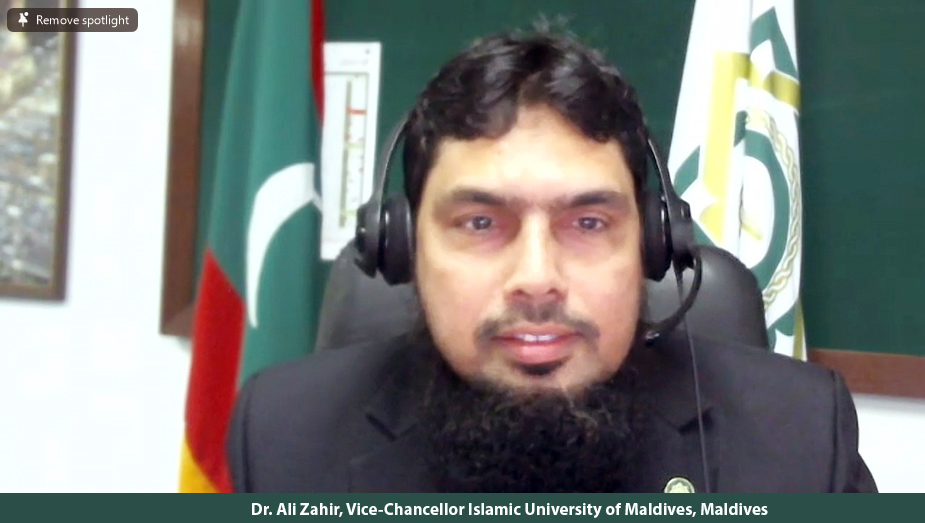
Rector of Islamic University of Maldives, Male, Prof. Dr. Ali Zahir was another guest of honour, who called Dr. Al-Alwani a visionary thinker. His Maqasid-e-Shariah was rooted in the Qur’anic Revelations. In his view, Ummah and humanity at large were important. His concept of the fragmentation of knowledge and ethical consciousness opened new vistas of research. His work was a trajectory of research among younger scholars. His contribution would strengthen intellectual solidarity with a lasting impact in future, Dr. Zahir maintained.
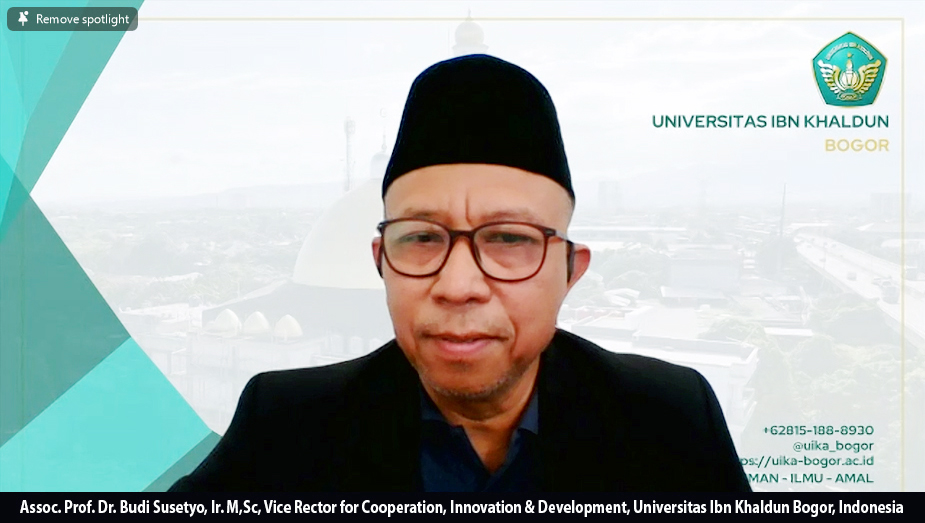
Vice-Rector for Cooperation, Innovation & Development, Universitas Ibn Khaldun Bogor, Indonesia, Prof. Dr. Budi Susetyo, Ir M.Sc., also a guest of honour, observed that Dr. Al-Alwani did ground breaking works. His work was related to the integration of Islamic knowledge. He worked for the Muslim minority and stressed the need for Ijtihad. His concept was based on Qur’anic values as envisioned by the IIIT. He continued his noble work for the uplift of humanity. He called for taking forward Dr. Al-Alwani’s legacy.
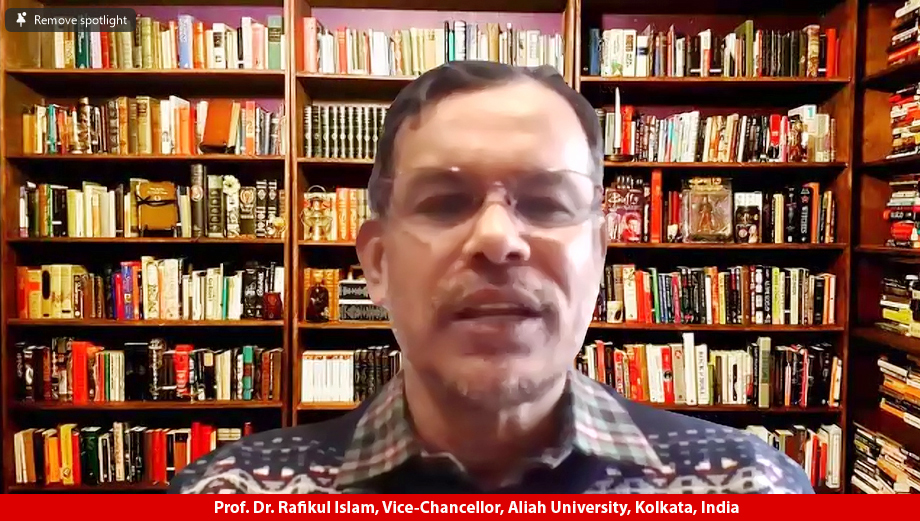
The fourth guest of honour was the vice-chancellor of Aliah University, Kolkata, Prof. Dr. Rafikul Islam. He said that there was the crisis of methodology. There was the need to restore integration of knowledge. Islamic knowledge should be integrated with modern knowledge. He called for restoration of the coherence of the Qur’an and said that the Qur’an remained the source of knowledge. He described Dr. Al-Alwani as a methodical visionary. He also shed light on the ethics of disagreement.
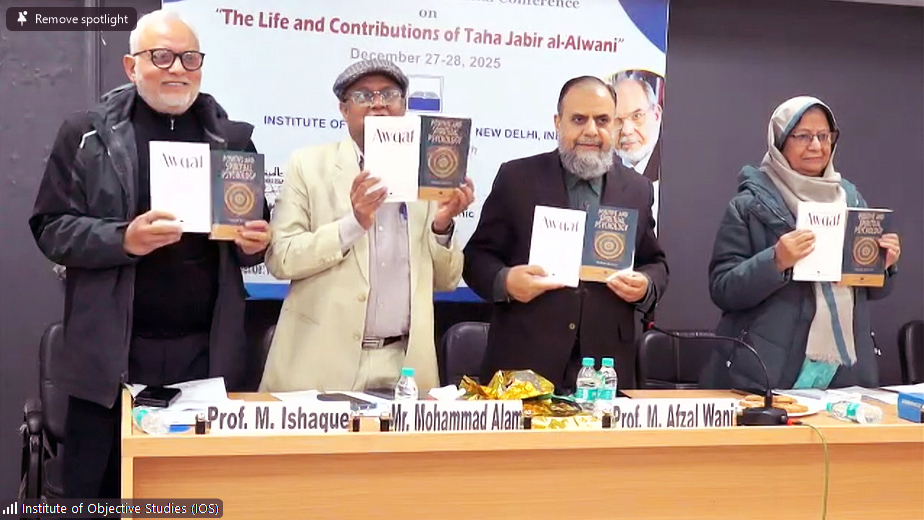
The occasion was marked by the release two books published by the Institute of Objective Studies. The books were: “Economics of Awqaf” authored by Prof. Dr. Adul Azim Islahi, and “Positive and Spiritual Psychology”, authored by Prof. Dr. Akbar Husain.
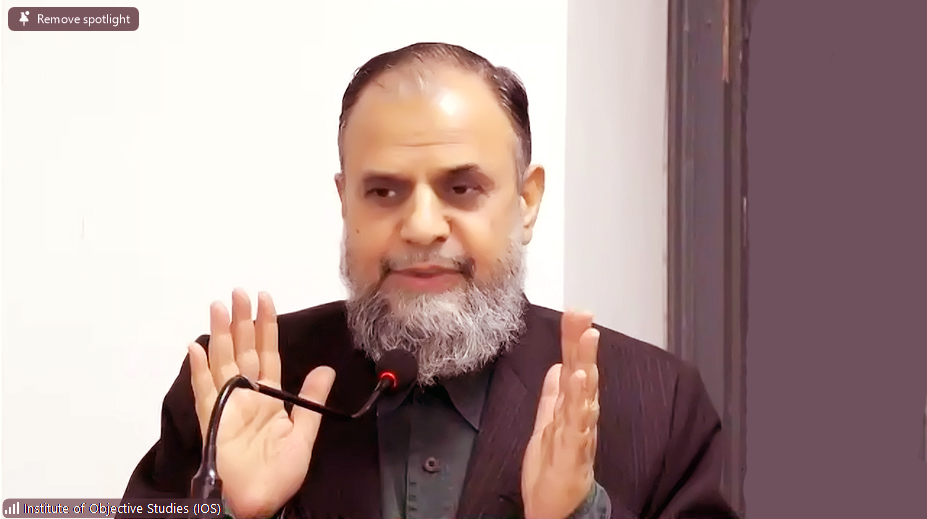
Presiding over the inaugural session, Chairman of the IOS, Prof. M. Afzal Wani, described Dr. Taha Jabir al-Alwani as the greatest scholar of his time. His life was important to ponder over, he said. He said that the new age of emerging technology was dawning on. And in this age, he responded to legal, social and economic issues confronting the Muslim Ummah. He contributed to Fiqh and issues of ethics, and wrote on the relations between state and the people. He deeply studied the Qur’an. He held that the study created dynamism in a person. The best person was one who had Taqwa. Dr. Al-Alwani theorised Qur’anic intellectualism. He also said that one should be careful of languages; and the language of the Qur’an. Interpretation of Ahadith and Tafsir of the Qur’an were very important. Thought should be in consonance with the branch of knowledge. He called for going into the question how he was empirically correct. He held that the method was important and one should reflect how he was right. Practice should be to develop Fiqh which was a real knowledge. And the Qur’an was the real source of real knowledge.
Prof. Wani noted that every knowledge came from the divine source. All knowledge was for the welfare of humanity. He held that the IOS had a timely opportunity to fill a gap by organising an international conference on Dr. Taha Jabir al-Alwani. He suggested that an award in the name of Dr. Al-Alwani be instituted and given to a scholar of Islamic thought. Fiqh al-aqalliyat would connect Islamic thought with other thoughts, he concluded.
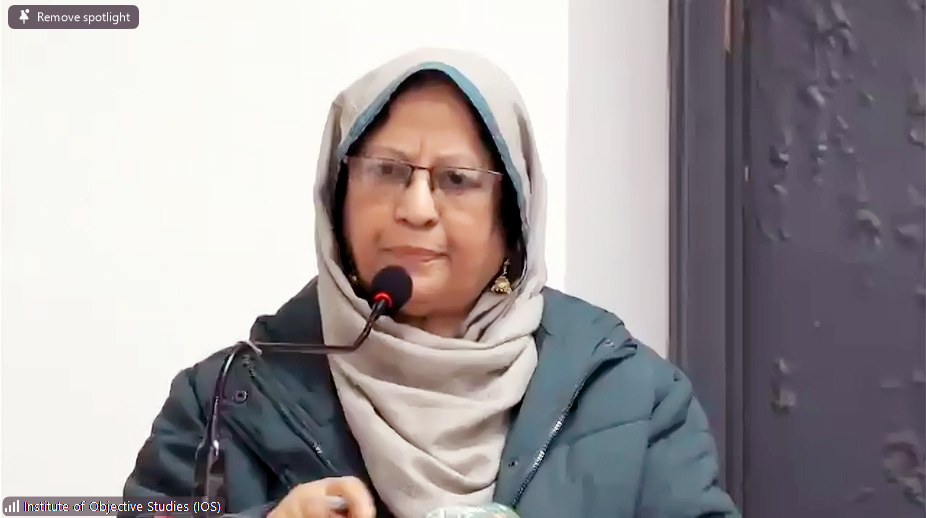
At the end of the session, vice-chairperson of the Institute, Prof. Haseena Hashia, extended a vote of thanks to the participants.
Technical Session-I
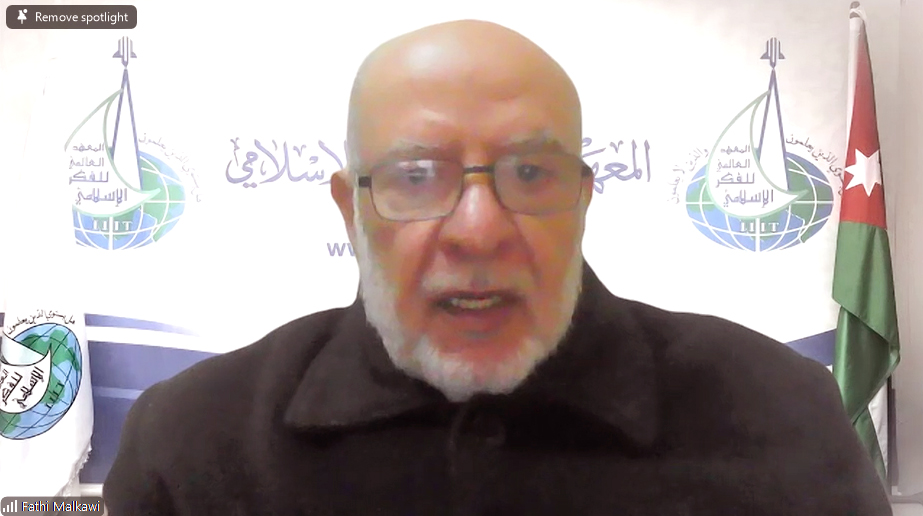
The first technical session was devoted to “Life, legacy and intellectual formation of Taha Jabir al-Alwani”. The session was chaired by Dr. Fathi Hasan Malkawi from the International Institute of Islamic Thought, Jordan. There were two key-speakers of the session.
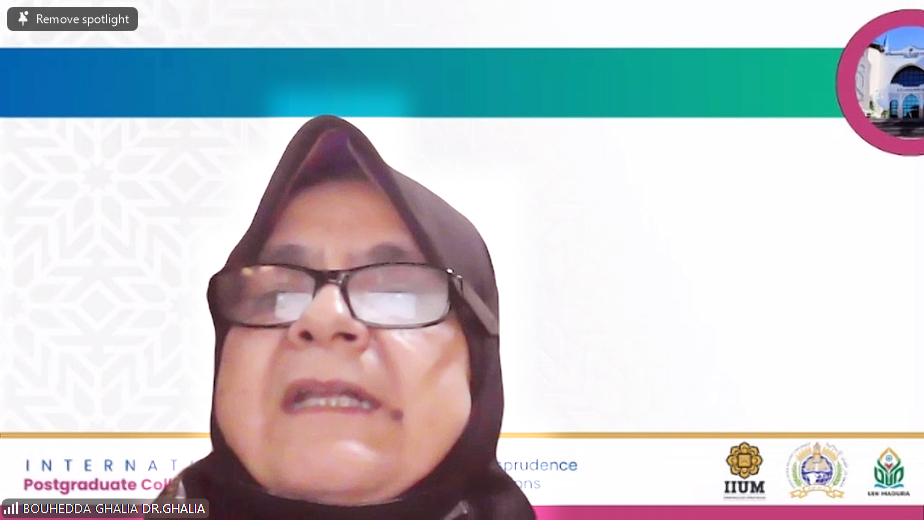
The first key speaker was Prof. Dr. Bouhedda Ghalia, professor at AHAS KIRKHS IIUM, Malaysia. She spoke on ‘The Conditions for the Islamisation of Knowledge in the intellectual legacy of Taha Jabir al-Alwani’. In her paper, she laid emphasis on creating good conditions to achieve Maqasid-e-Shariah. She was followed by the second key-speaker, Dr. Hamidullah Marazi who touched upon the topic ‘Islamisation and Integration of Knowledge and the Contribution of Taha Jabir Al-Alwani with the special reference to the IIIT’. Referring to the theory of Dr. Al-Alwani, he said that inclusion of Islamic content in knowledge was a secular paradigm. Disintegration of knowledge was the disorientation of knowledge. ‘Integration of Knowledge’ was fundamentally a project of Islamic knowledge. He held that the IIIT became a global platform for Islamic knowledge. He significantly contributed to the contemporary Islamic thought. He practically helped the Muslims, and had an agenda for their welfare. He explained Ijtihad in the modern context. Dr. Al-Alwani was an Ijtihadi, he noted.
In his presidential remarks, Dr. Fathi Hasan Malkawi spoke about his close relationship with Dr. Taha Jabir al-Alwani for over 37 years as an academic advisor to the IIIT during his presidency. He emphasised that his extensive discussions with Taha Jabir Al-Alwani covered IIIT’s activities and programmes, the content of his lectures and writings, and the programmes of the Graduate School of Islamic and Social Sciences (GSISS) founded and led by him. He concluded by highlighting that the most important thing he learnt from Dr. Al-Alwani was his constant commitment to growth and learning from every opportunity and in every subject.
Technical Session-II
The second technical session focused on “Taha Jabir al-Alwani’s approach to understanding the Qur’an and the Sunnah”. Prof. Mohammad Ishaque was in the chair.
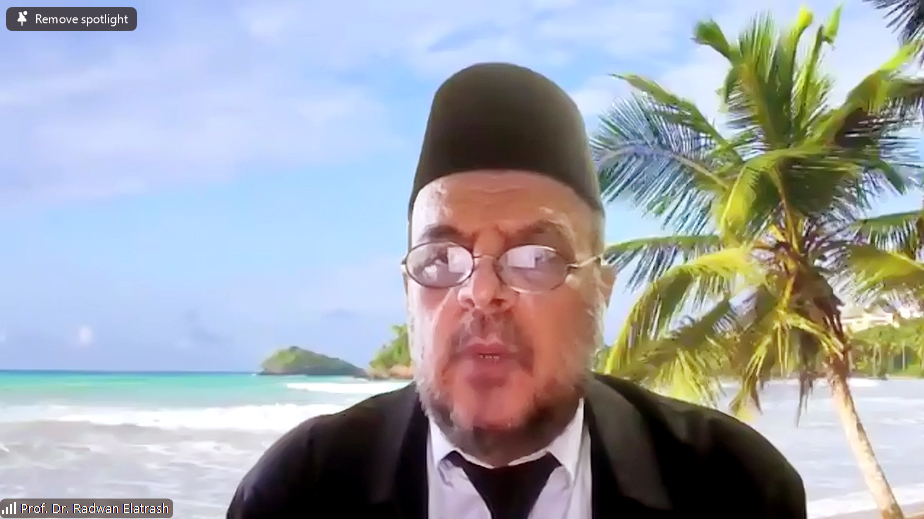
The key speaker of the session was Prof. Dr. Radwan Jamal Yousef Elatrash, professor, AHAS KIRKHS, IIUM, Malaysia. He spoke on the ‘The Qur’anic centrality in the Maqasid-based methodology of Taha Jabir Al-Alwani: An analytical study’. He said that the centrality of the Qur’an constituted one of the major methodological pillars in contemporary projects of Islamic intellectual renewal. Among the foremost scholars who articulated this concept within an integrated maqasid-framework, was Taha Jabir al-Alwani. His project represented an advanced model of a comprehensive Islamic methodology grounded in Qur’anic centrality as the foundation for reconstructing the juristic and intellectual mindset, and for transforming maqasid from an abstract theoretical construct into an effective instrument of civilisational thinking and decision-making, he added.
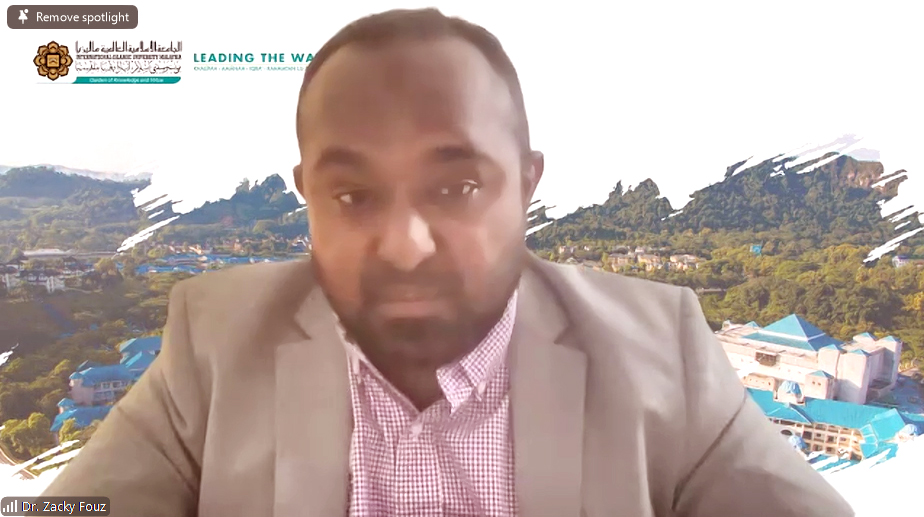
Dr. Mohamed Fouz Mohamed Zacky, assistant professor AHAS KIRKHS, IIUM, Malaysia spoke on ‘Is Qur’anic Sovereignty the Answer? Rethinking Political Authority through Taha Jabir Al-Alwani’s Vision.’ He said that Al-Alwani explained how shariah could be reconciled to sovereignty. He propounded new theory called ‘Qur’anic sovereignty’. His Qur’anic vision was rooted in divine sovereignty.
He was followed by Dr. Muhammad Junaid Mughal, assistant professor from department of fundamental and inter-disciplinary studies who jointly presented his paper with Prof. Dr. Muhammad Mumtaz Ali, professor, department of Usul al-Din and comparative religion and philosophy, AHAS, KIRKHS, on ‘The challenge of the Development of Muslim Mind: A critical study of the Discourse of Taha Jabir Alwani’. They said that Al-Alwani wanted to establish Tawhid-based epistemology and the Qur’an as source of knowledge. Islamisation of knowledge is Qur’anic and universal, he commented.
The third speaker of the session was Dr. Nirwan Syafrin, a senior lecturer at Universitas Ibn Khaldun Bogor, Indonesia. He shared his views on ‘Revisiting Qur’anic Definitive Text in Contemporary Islamic Thought: Insights from Taha Jabir al-Alwani’s perspective’.
He was followed by Dr. Waseem Hassan Raja, assistant professor from department of Arabic Language and Literature, Islamic University of Science and Technology, Awantipora, Kashmir, India. His topic was ‘Taha Jabir Al-Alwani: The voice of the Qur’an in the time of heedlessness’. He said that Al-Alwani emphasised that the human being constituted the centre of the Qur’anic discourse and that the ultimate purpose of Revelation was the realisation of justice, mercy, and the cultivation of the earth. He advocated linking religious texts to social and political realities, so that the Qur’an might become a living force guiding the life of the Ummah.
Dr. Mohammad Yousuf Mir, assistant professor, Islamic University of Science and Technology, Awantipora, Kashmir, India, was the fifth speaker who devoted his speech to the topic, ‘Taha Jabir Al-Alwani and his contribution to Qur’anic studies’.
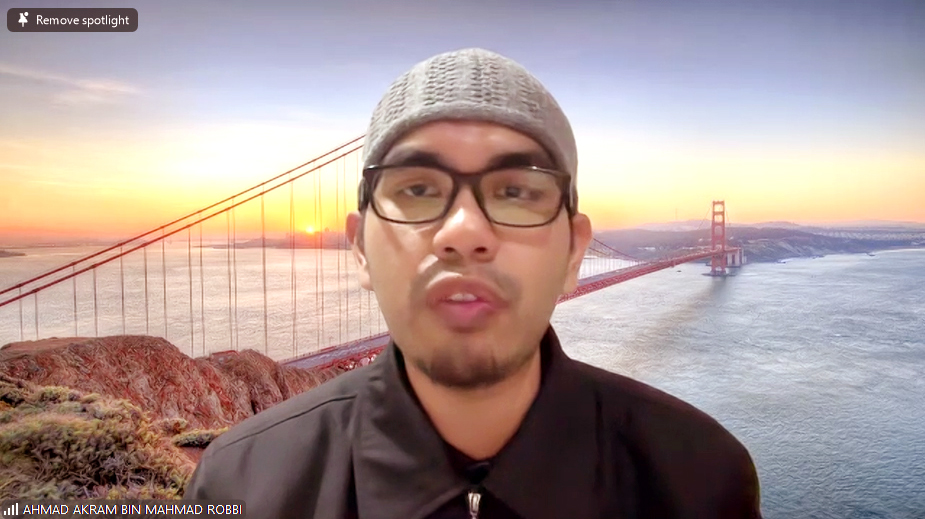
The sixth speaker was Mr. Ahmad Akram Bin Mahmad Robbi, associate fellow at the Islamic Social Finance, Universiti Sultan Zainal Abidin, Malaysia. He spoke on ‘Text, Context and Maqasid: Taha Jabir Al-Alwani’s contribution to the contemporary Hadith Scholarship’. He said that the Prophetic Traditions were contextual. Al-Alwani developed methodological innovations and approaches. Supremacy of Qur’anic guidance was necessary for Maqasid-e-Shariah, he held.
The seventh and last speaker was a senior research fellow (Ph.D.) Mr. Zafer Ahmad Ganai, who together with Dr. Nasir Nabi, senior assistant professor at Shah-i-Hamadan Institute of Islamic Studies, University of Kashmir, Srinagar, India, jointly presented the paper on ‘Evaluating the Sunnah through the Qur’anic criterion: A critical analysis of Taha Jabir al-Alwani’s methodology’. They said that the Prophet (pbuh) was the final authority in the event of disputes. Qur’anic revelations were the main source of Islamic knowledge.
Chairperson of the session, Prof. Mohammad Ishaque summarised the presentations made in the session.
Technical Session-III
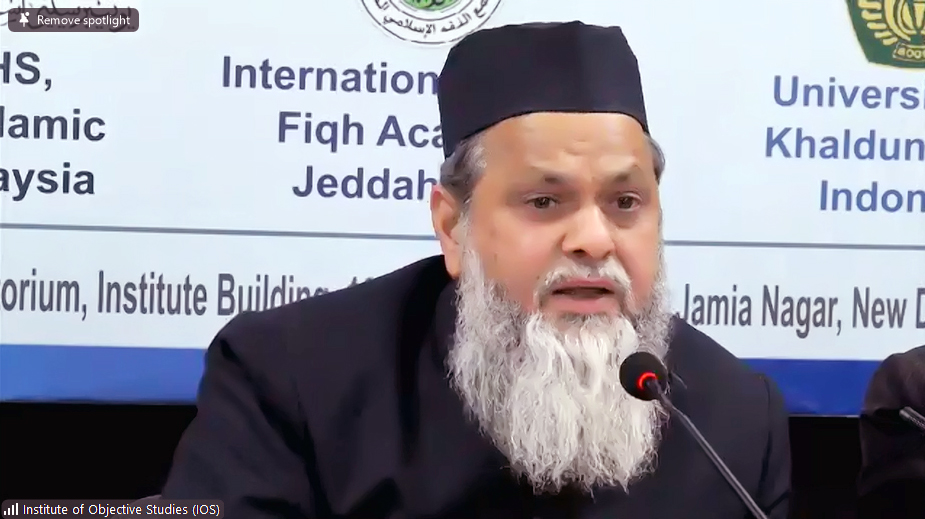
Chaired by Prof. Arshi Khan, Vice-Chairperson of the IOS, and Professor of Political Science, Aligarh Muslim University, Aligarh, India, the third session focused on “Integration of Knowledge: Taha Jabir al-Alwani’s vision for integrating traditional Islamic education with modern sciences”.

The key speaker of the session was Prof. Dr. Thameem Ushama from AHAS KIRKHS, IIUM, Malaysia. He presented his paper on ‘The theory and the process of Islamisation of Knowledge: A comparative analysis of Ismail Raji al-Faruqi and Taha Jabir al-Alwani’. The purpose of his paper was to analyse the theoretical framework of both the thinkers. There were two visions but the mission was one. There was also the epistemic crisis in the modern Islamic world. This was due to educational dualism and the colonial legacy of the West. Besides, there was the loss of Tawhidic World view. Al-Alwani built a Tawhid-based epistemology.
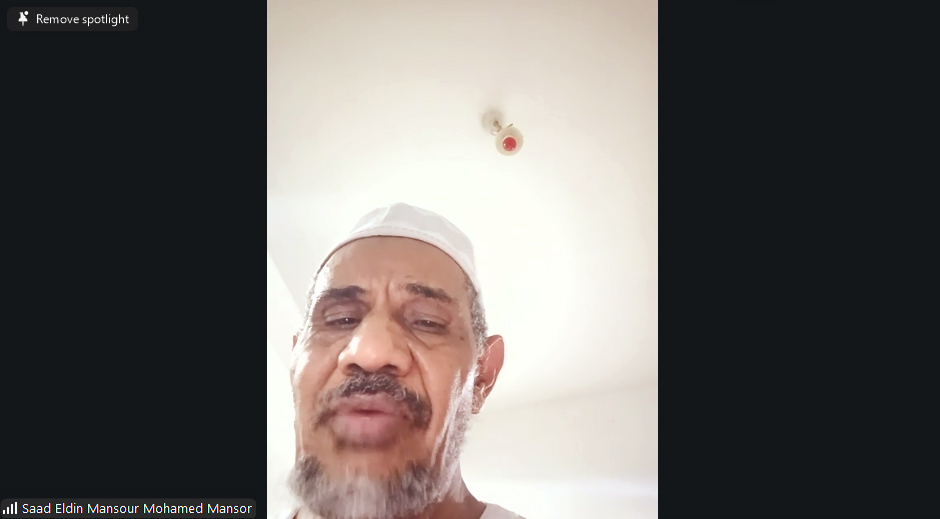
The first speaker was Prof. Dr. Saadeldin Mansour Gasmelsid, associate professor, AHAS KIRKHS, IIUM spoke on ‘Taha Jabir Al-Alwani and his role in the sciences of Hadith and Usul al-Fiqh’.
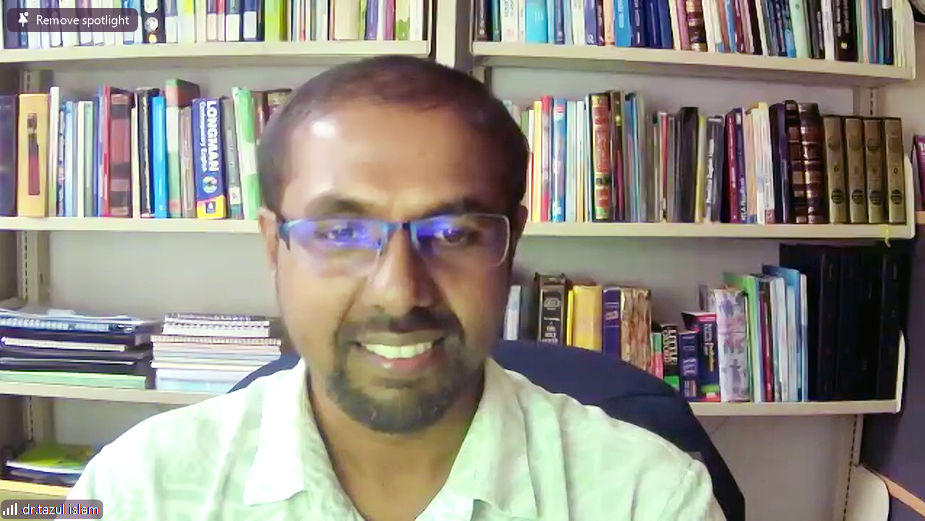
The second speaker was Dr. Tazul Islam, senior lecturer, Universiti Sains Islam, Malaysia. He presented his paper on ‘From Islamisation to Maqasidic Integration: Taha Jabir Al-Alwani’s epistemic turn and the methodology of Al-Jam bayna al-Qira’atayn’. He said that in his later writings Islamisation became less used and integration became preferred. It was a shift from Islamisation discourse to a more explicit integration model.
Dr. Abas Mansur Tamam, lecturer at the Graduate School, Master of Islamic Religious Education, Universitas Ibn Khaldun was the third speaker. He touched upon the topic, ‘Taha Jabir Al-Alwani’s Tawhidic epistemology and knowledge integration in Islamic education reform’.
The fourth speaker was Dr. Mohammad Ajmal, assistant professor, Centre of Arabic and African Studies, School of Language, Literature and Culture Studies, Jawaharlal Nehru University (JNU), New Delhi. He presented his paper on ‘Taha Jabir Al-Alwani and his methodological approach to integrating religious and social sciences’. He argued that there was a gap between religious and secular knowledge. He laid stress on the need for unity of knowledge and Islamic methodology of knowledge. Al-Alwani wanted that Islamic knowledge be integrated with human and social sciences.
Mr. Wahyu Hidayat, a Ph.D. candidate, ME Sy, at Universitas Ibn Khaldun Bogor, Indonesia, presented his paper on ‘Shariah Micro-economic empowerment with the Fiqh Al-Aqalliyyat approach: Integration of Maqasid Al-Shariah and Shariah finance’. He observed that Maqasid Al-Shariah was to empower the community. Thus, Shariah became economic empowerment of the Muslim community.
The last speaker was Showkat Ahmad Najar, research scholar, department of Islamic Studies, Aligarh Muslim University, Aligarh, India. He spoke on ‘Re-integrating Revelation and Cosmos: Reassessing Taha Jabir Al-Alwani’s two-readings methods for a contemporary Islamic Epistemology’. He held that the fragmentation of knowledge deviated from classical Islamic knowledge. He broadened the scope of Ijtihad.
December 28, 2025 (Day-2)
Technical Session-IV

The fourth technical session was chaired by Prof. Abdul Rashid Bhat, former professor, department of Islamic Studies, University of Kashmir, Srinagar. The theme of the session was “Taha Jabir Al-Alwani’s Reforming Thought, Ijtihad, Maqasid-e-Shariah and Islamic Jurisprudence”.
The first key speaker of the session was Prof. Dr. Mohammad Mumtaz Ali, professor, department of Usul al-Din and Comparative Religion and Philosophy, AHAS KIRKHS, IIUM, Malaysia, whose presentation was on ‘Humanity and Universality in Contemporary Islamic Thought: An analysis of the view of Taha Jabir Al-Alwani’. He opined that a particularly consequential feature of this era was the prevalence of misrepresentation. Intellectual discourse was more exclusive and dialogical, demonstrating a deep concern for humanity and universal values. Islam for him was true, authentic and universal. Islamic civilisation also produced rich traditions of spirituality that emphasised inner transformation of people.
The second key speaker was Prof. Mohd. Fahim Akhtar, professor of Islamic Studies, Maulana Azad National Urdu University, Hyderabad. He focused on ‘Apostasy in Islam: An analysis of the views of Taha Jabir Al-Alwani’. He said that Dr. Al-Alwani was a towering personality and differed with other scholars on the subject. According to him, if an apostate created disorders, it might not be allowed. He prescribed legal punishment for it. He held that in Qur’an, as explained by the Prophet (pbuh), the killing of an apostate was prohibited. But, there was consensus among scholars that the punishment for apostasy was death.
Dr. Mahamed Fathy Eltrebi, assistant professor, faculty of Shariah and Law, Universiti Islam Antarabangsa Sultan Abdul Halim Mu’adzam Shah, Malaysia together with Dr. Hassan Suleiman, assistant professor, AHAS KIRKHS, IIUM, were the first speaker who jointly presented their paper on ‘Al-Maqasidi Al-Olya Wa Athroha Al-Fiqhy of Taha Jabir Al-Alwani: An analytical perspective’. They held that Dr. Al-Alwani utilised inductive reasoning to establish the higher objective (Maqasid) of Islamic law, which he identified as Tawhid (Oneness of God), Tazkiyah (purification) and Ithmar (civilizational) development. Al-Alwani’s framework emphasised the importance of mercy for the message and the messenger, the removal of hardship and the pursuit of benefits.

The next speaker was Dr. Zulqernain Haider, department of Fiqh and Usul al-Fiqh, IIUM, Malaysia. He focused on ‘Methodological Renewal in Contemporary Islamic Fiqh: Taha Jabir al-Alwani’s approach to the primary texts of Qur’an and Sunnah and its impact on selected Fiqhi issues’. He said that Al-Alwani represented modern Islamic thought. He contended that the Qur’an was the ultimate criterion. He revitalised the Qur’anic tradition. He was followed by Dr. Jamaliah Jamil, research scholar at the Institute of Knowledge Integration Academy, Tbilisi, Georgia. She presented her paper on ‘Taha Jabir Al-Alwani’s contribution to holding the advancing universal welfare Maqasid in global Muslim Al society’. She referred to the intellectual and ethical contribution of Taha Jabir al-Alwani. His thesis was grounded into Islamic epistemology. He called for protection to women suffering due to polygamy. He left a rich intellectual legacy.
Dr. Ishaq Amin Parrey, adjunct faculty, department of Islamic Studies, Baba Ghulam Shah Badshah University, Rajouri, Jammu, spoke on ‘Reconstructing Ijtihad: Taha Jabir Alwani’s Maqasid-oriented framework for the renewal of Islamic thought.’

He was followed by Ms. Umesa Jan, junior research fellow (Ph.D.), and Dr. Nasir Nabi, assistant professor, both from Shah-i-Hamadan Institute of Islamic Studies, University of Kashmir, Srinagar, India. They jointly presented their paper on ‘Advancing the scope of Maqasid Al-Shariah: A scholarly contribution of Al-Alwani’s perspective on environmental conservation’. Dr. Uzma Khatoon, a columnist at the online web portal, New Age Islam, based in New Delhi, presented her paper on ‘An analytical study of Ijtihad and Tawhid in the context of Taha Jabir Al-Alwani’s intellectual discourse’. She said that the Muslim intellect had become stagnant leading to the crisis in the Muslim world. Referring to Ijtihad, she held that it was a part of belief in Islam.
Mohammad Ikrar Nur Fikri, a post-graduate student at Universitas Ibn Khaldun, Bogor, Indonesia, focused on ‘Beyond Capital and Labour: Testing the Classical Production in the context of Shariah-compliant Firms’. He said that Shariah-compliance business in Islam was significant.
During the discussion, Dr. Fathi Hasan Malkawi made a comment on several papers that spoke of a transition from Islamisation of Knowledge to Integration of Knowledge. He stated that the views expressed by participating scholars represented the personal interpretations of Taha Jabir Al-Alwani’s ideas and that this was natural for such interpretations to sometimes lacked in conveying Taha Jabir Al-Alwani’s intended meaning.
Technical Session-V
The fifth technical session was chaired by Prof. M. Afzal Wani. The theme of the session was “Contemporary Intellectual Crisis: Diagnosis and Proposed Cure”.
The first key speaker of the session was Dr. Fathi Hasan Malkawi, who spoke on ‘The Intellectual Renewal Efforts in the thoughts of Taha Jabir Al-Alwani’. He referred to the claim that Al-Alwani developed his thought from Islamisation of Knowledge to Integration of Knowledge, and then to Maqasid. This claim might not be accurate about Al-Alwani. He claimed that his understanding was based not only on reading Al-Alwani’s works, but also on long personal acquaintance and specific discussions with him on this particular matter. He said that Allah Almighty bestowed upon him psychological and intellectual qualities such as questioning and confusion. Tajdid (Renewal) in Al-Alwani’s perspective was way beyond a topic in Usul-al-Fiqh. He had also called for renewing and reforming knowledge.
The next key speaker was Prof. Dr. Abdul Salam @ Zulkifli B. Muhamad Shukri, associate professor, AHAS KIRKHS, IIUM, Malaysia. He touched upon the topic, ‘Taha Jabir al-Alwani and Islamic Thought: A discourse on the contemporary intellectual renewal’.
The first speaker of the session was Dr. Suhaimi Mhd. Sarif together with Dr. Yusof Ismail, professor and former academic fellow, respectively at IIUM, Malaysia, who jointly presented their paper on ‘Evaluation of select intellectual legacy of Taha Jabir Al-Alwani’. The second speaker was Dr. Ahmad Syahirul Amin, lecturer in the department of Islamic Economics, IPB University Bogor, Indonesia. He spoke on ‘Assessing the alignment of contemporary Islamic economics with Taha Jabir Al-Alwani’s Islamisation of knowledge methodology’. The third speaker was Dr. Khalid Hussain, a former researcher in the department of Islamic Studies together with Dr. Mohammad Rafique Anjum, chair professor, Tribal Studies, Baba Ghulam Shah Badshah University, Rajouri, Jammu, India. Their paper was focused on ‘Reconstructing Islamic thought in modern times: The reformist vision of Taha Jabir Al-Alwani, and the quest for a balanced epistemology’. Dr. Fauzia Maraam, former Ph.D. fellow in Islamic Studies, Aligarh Muslim University was the fourth and last speaker of the session who spoke on ‘Taha Jabir Al-Alwani: Intellectual crisis and Islamisation of knowledge’.
At the end, Prof. M. Afzal Wani summed up the presentations made in the session.
Technical Session-VI
The sixth technical session was chaired by Prof. Arshi Khan. The theme of the session was focused on “Taha Jabir Al-Alwani’s views on the ethics of disagreement in Islam: His vision for dialogue, disagreement and pluralism”.
The key speaker of the session was Dr. Noor Mohammad Osmani, associate professor, AHAS KIRKHS, IIUM. He spoke on ‘Taha Jabir Al-Alwani’s Qur’anic approach to Ijtihad, violence and peace’.
He was followed by the first speaker of the session, Dr. Mohammad Ilham Sheikh, assistant professor of Islamic Studies, Centre of Central Asian Studies, University of Kashmir, Srinagar, India. He presented his paper on ‘Ethics of disagreement and contemporary Muslim Ummah: Relevance of Taha Jabir Al-Alwani’s vision of modern challenges’.
The second speaker of the session was Dr. Mohammad Nazmus Sayadat, assistant professor of Fundamental and Inter-Disciplinary Studies, AHAS KIRKHS, IIUM, together with Dr. Tazul Islam, senior lecturer, faculty of Qur’an and Sunnah Studies, University Science and Islam, Malaysia. They jointly presented their paper on ‘Perpetuation of unison and circumventing dissections as the tools in ascertaining ethical disagreement’.
The third speaker was Salman Faris TC, lecturer, Busthanul Uloom Arabic College, Kannur, Kerala, who devoted his paper to ‘The Moral foundations of disagreement: Re-examining Taha Jabir al-Alwani’s contribution to Islamic legal thought’.
The fourth speaker was Dr. Yusof Ismail, former academic fellow at IIUM who focused on ‘Taha Jabir al-Alwani and the ethics of disagreement in Islam: A comparative study with classical and modern thinkers’.
He was followed by Mr. Shakeelur Rahman, research scholar, department of Islamic Studies, Jamia Millia Islamia, New Delhi, India. His topic was ‘An introduction to the ethics of disagreement in Islam by Taha Jabir al-Alwani’.
The sixth speaker was Dr. Muhammad Redha, a Ph.D. candidate, Universitas Ibn Khaldun Bogor, Indonesia. He presented his paper on ‘The ethics of difference in Islam and national religious governance: The contribution of Taha Jabir al-Alwani’s thoughts in strengthening Islamic ethics in Indonesia in the midst of religious differences and moderation’.
The last paper presenter of the session was Dr. Mohammad Azam Qasmi, former research scholar in the department of Sunni theology, Aligarh Muslim University, Aligarh. He presented his paper on ‘The Islamic ethical framework of Taha Jabir al-Alwani’s concepts of Ikhtilaf and Adab’.
At the end of the session, Prof. Arshi Khan, summed up the proceedings of the session Prof. Fathi Hasan Malkawi and Prof. Hamidullah Marazi also made certain observations on Ijtihad and disagreement.
Valedictory Session
Speaking as a guest of honour, Dr. Mustafa Ceric, former Grand Mufti of Bosnia and Herzegovina, and President, World Bosniak Congress, Bosnia, said that Taha Jabir al-Alwani was an extra-ordinary Muslim scholar. He faced challenges of every kind. His legacy called upon the young scholars to take it forward. He belonged to a rare breed of scholars. He emphasised that this conference and similar gatherings should not be limited to commemorating the achievements of thinkers, but they must serve as a call to continue the mission of contemporary Islamic intellectual reformers. Taha Jabir Al-Alwani used to say knowledge must restore dignity. He gave intellectual direction to Islamic thought. He laid stress on justice, mercy and rigour. According to him, the Prophet (pbuh) made Shariah easy. The Muslim society was under transformation. It required something deeper, like courage. He said that the world ahead was not only academic, but also spiritual.
The second guest of honour was Dr. Ildus Rafikov, Vice-President - Research at the Maqasid Institute, USA. He held that reading of Qur’an led him to the change of positions. It was a courageous statement from him. He was courageous to take challenges. His humility brought him to a position of eminence. He gave 13 points to strengthen his position. He developed his own vocabulary and his legacy would continue to dominate the Islamic discourse. He was an authority on the Qur’an. He spoke about the diverse intellectual legacy of Taha Jabir al-Alwani and his contributions to renewal and reform.
In his valedictory address, Prof. Mohammad Ishaque, elaborated on several aspects of Taha Jabir al-Alwani’s life, highlighting his courage in expressing the reformist positions and views he believed in. He said that Al-Alwani created scientific reason. He had asked Muslims to open to full reasoning. His knowledge was beneficial for Muslims. His intellectual journey began with questioning the views of earlier thinkers. His intellectual and empirical approach to issues of Ijtihad and other things drew attention of the Islamic scholars. He did admit to certain mistakes pointed out by his students and researchers and he begged for Allah’s pardon for them. He explained Tadabbur and its meaning. In his Tafseer al-Qur’an, he presented the brief spirit of Tafseer. He joined the company of distinguished scholars and academician. He contributed immensely to the renewal of Islamic thought. According to him, knowledge was a fundamental issue of Islam. He used to say he loved all the people of the world. He had international legacy and faced social and political challenges.
In his presidential speech, the patron of the IOS, Prof. Z.M. Khan, spoke about his relationship with Taha Jabir al-Alwani and how his conversations with him had a profound impact on his own intellectual life. He said that he had hosted him during his visit to the United States of America and had one-to-one dialogue with him. He noted that he had a religious family background, but he received secular education. He called for taking up Islamic methodology in a different fashion. He was invited by him to work on a project of his college.
Speaking on the outcome of the conference, Prof. M. Afzal Wani said that the ideas had the requirement of implementation. He called for knowledge creation. Integration of Knowledge meant creation of knowledge. And it should come from Revealed knowledge through Qur’an. He observed that when one read Qur’an, he had some doubts. And then came the clarity. Continuous indulgence created more ideas which were unending. He held that sincerity and clarity were most important. But just and reasonable Taqwa and Adl were also important. There might be differences but they should co-exist. He called for developing ideas and the unity of Ummah. He hoped that the agenda would be carried forward with implementation.
Earlier, a seven-point resolution, adopted by the participants by a voice vote, was read out by Prof. Arshi Khan. The resolution read as:
It is a matter of immense satisfaction that the Institute of Objective Studies (IOS), New Delhi, India, in collaboration with the AbdulHamid AbuSulayman Kulliyyah of Islamic Revealed Knowledge and Human Sciences (AHAS KIRKHS), the International Islamic University Malaysia; the Universitas Ibn Khaldun (UIK) Bogor, Indonesia and the International Islamic Fiqh Academy (IIFA), Jeddah, KSA successfully organised a two-day online international conference on “The Life and Contributions of Taha Jabir al-Alwani” at New Delhi on December 27-28, 2025 in which academicians and scholars, at a good scale from many nations, like India, USA, KSA, Malaysia, Indonesia, Qatar, Jordan, Bosnia and Herzegovina, Maldives, Georgia, etc., participated and presented their research papers.
- The effort should continue to highlight that the prime focus on the works and thoughts of Taha Jabir Al-Alwani which make prominent the objectives of Shariah to give dignity and protection to life, establish social justice and ensure fairness, mercy and security in societies.
- That effort should be made to facilitate the understanding of the problems and crisis faced by the world in an analytical manner with reference to the indices identified by Taha Jabir Al-Alwani in the Qur’anic text and Sunnah to promote purposeful research and academic environment in Islamic studies in general and Islamic fiqh in particular.
- That all efforts should be made to work towards the requirement of Integration of Knowledge and carrying forward the civilisational dialogue navigating without diluting essentialities of Islam.
- That all efforts should made to make the thought of Fiqh al-aqalliyaat more explicit for the comprehension of the global communities for the purpose of harmonisation of the system prevalent in the world.
- That the Institute of Objective Studies shall cooperate with the family of Shaikh Taha Jabir al-Alwani in effective processing of the “Taha Jabir Al-Alwani Award” for encouraging Maqasid-oriented research and service to the cause of Ummah through authentic and contemporary methodology.
- That institutions and universities shall make a sincere attempt to establish chairs and centres of study for carrying forward the legacy of Taha Jabir Al-Alwani with clarity and commitment.
- That an effort shall be made by the Institute of Objective Studies to carry out research projects to present a comparative view of the thoughts of Taha Jabir Al-Alwani and other contemporary thinkers.
The two-day international conference ended with a vote of thanks extended by Prof. Haseena Hashia.
Go Back